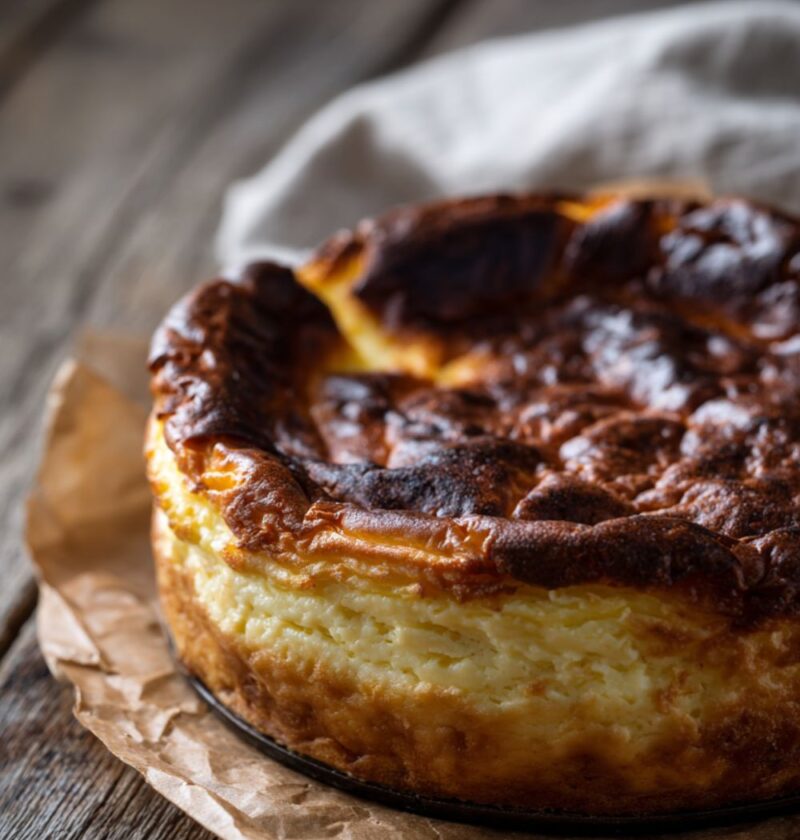
James Martin Basque Cheesecake is a rustic, “burnt” cheesecake that breaks all the traditional baking rules. Originating from the San Sebastián region of Spain, this dessert has no crust and is baked at a high temperature to intentionally scorch the top, creating a dark, caramelized exterior that contrasts beautifully with the gooey, creamy center. Unlike a New York cheesecake which demands a water bath and slow cooling to prevent cracks, this cheesecake is meant to crack, sink, and look wonderfully imperfect. It is incredibly rich, heavily vanilla-scented, and arguably the easiest cheesecake you will ever make.
Try more Recipes:
Why You Will Love This Basque Cheesecake Recipe:
- No Water Bath: Forget the hassle of wrapping pans in foil and boiling water. This cake goes straight into the hot oven.
- Crustless Simplicity: There is no biscuit base to crush or bake. The “crust” is simply the caramelized outer layer of the cheesecake batter itself.
- Texture Contrast: The unique baking method creates three distinct textures: a firm, toasted edge, a creamy middle, and an almost liquid, custard-like center.
- Forgiving: Cracks, sinking, and browning are all desirable features here. You cannot “mess up” the look of this cake.
- Make-Ahead: Like all cheesecakes, it needs time to set, making it the perfect dessert to bake the day before a dinner party.
Basque Cheesecake Ingredients
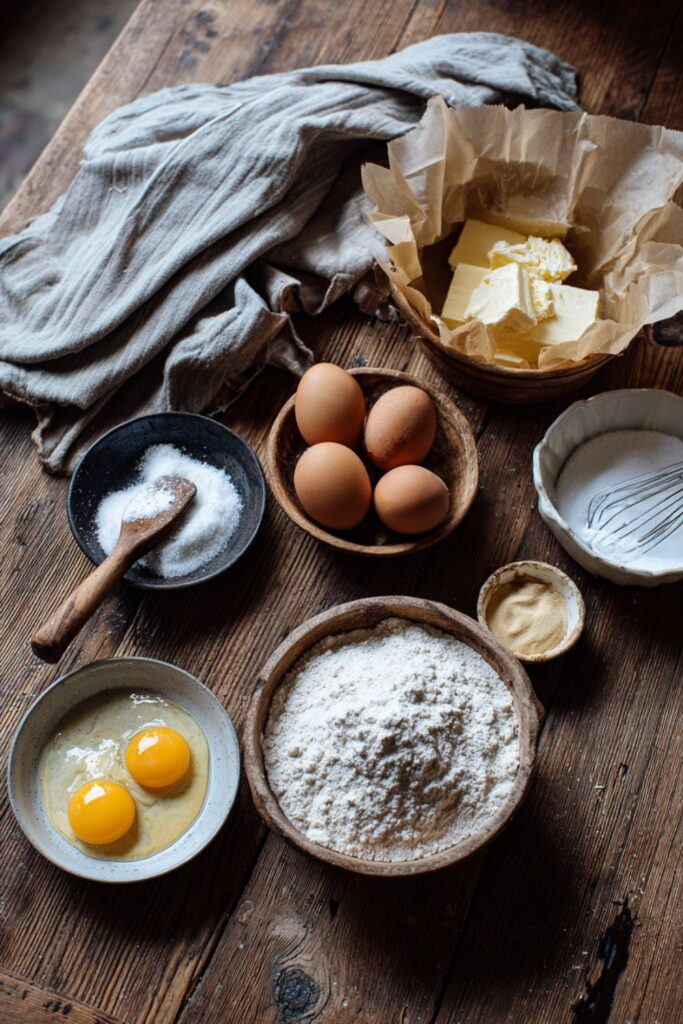
- 1kg (2.2 lbs) cream cheese (full fat), at room temperature
- 400g (2 cups) caster sugar (superfine sugar)
- 7 large eggs
- 500ml (2 cups) double cream (heavy cream)
- 1 tbsp vanilla bean paste (or high-quality vanilla extract)
- 30g (1/4 cup) plain flour (all-purpose flour), sifted
- Pinch of salt
How To Make James Martin Basque Cheesecake
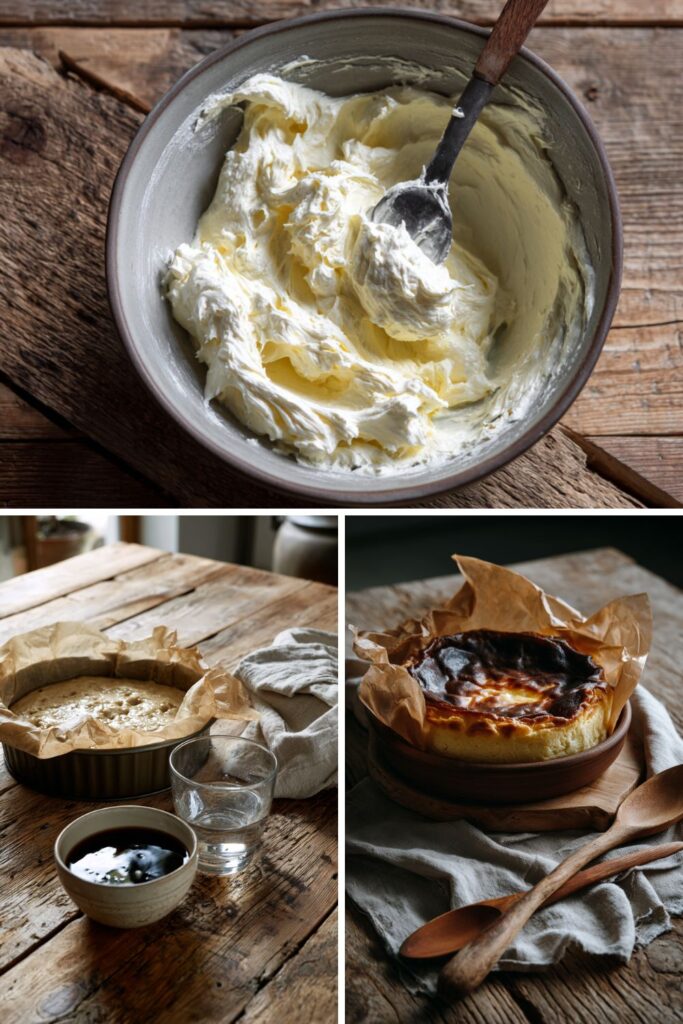
- Preheat and Prep: Preheat your oven to 200°C (400°F) fan-forced or 220°C (425°F) conventional. Line a 23cm (9-inch) springform cake tin with two large sheets of baking parchment (parchment paper). Press the paper into the tin, ensuring it covers the bottom and extends well up the sides. Do not worry about the creases; they give the cake its signature rustic look.
- Beat Cream Cheese and Sugar: In a large mixing bowl or stand mixer fitted with the paddle attachment, beat the room temperature cream cheese and sugar together on medium speed for 2 to 3 minutes. You want the sugar to dissolve and the mixture to be smooth, but do not whip too much air into it.
- Add Eggs: Add the eggs one at a time, beating well after each addition. Scrape down the sides of the bowl with a spatula to ensure no lumps of cream cheese remain at the bottom.
- Add Liquids: Pour in the double cream and the vanilla bean paste. Mix on low speed until combined. The batter will be quite liquid.
- Add Flour: Sprinkle the sifted flour and the pinch of salt over the batter. Fold it in gently or mix on the lowest speed just until the flour disappears. Do not overmix.
- Pour: Pour the batter into the prepared parchment-lined tin. Tap the tin firmly on the counter a few times to release any large air bubbles.
- Bake: Place in the center of the preheated oven and bake for 45 to 55 minutes.
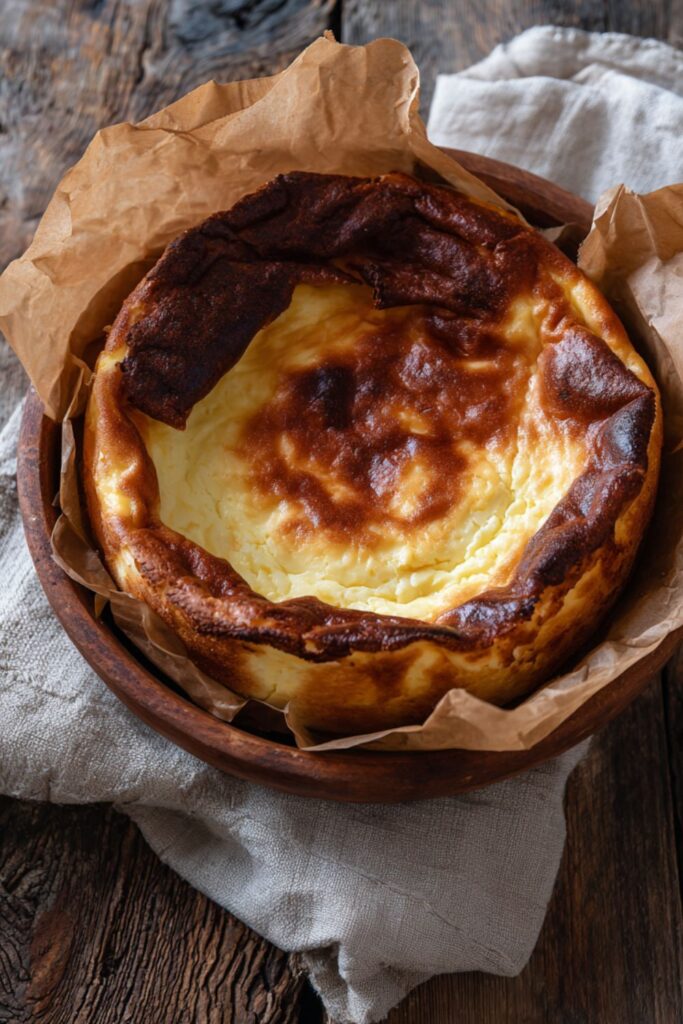
- The Wobble Test: The cake is done when the top is dark brown (almost burnt-looking) and the edges are set, but the center still has a significant wobble (like Jell-O). It should jiggle when you shake the tin.
- Cool: Remove from the oven. The cake will be puffed up but will collapse drastically as it cools—this is normal. Let it cool completely in the tin at room temperature.
- Chill: Once cool, refrigerate the cheesecake (still in the tin) for at least 4 hours, preferably overnight. This sets the custard center.
- Serve: To serve, unclip the tin and lift the cake out using the parchment paper. Peel back the paper and slice.
Recipe Tips
- Room Temperature Ingredients: It is crucial that the cream cheese and eggs are at room temperature. Cold cream cheese will result in a lumpy batter that won’t bake evenly.
- Paper Height: Ensure the parchment paper stands at least 2-3 inches above the rim of the tin. The cheesecake puffs up significantly like a soufflé during baking before sinking back down.
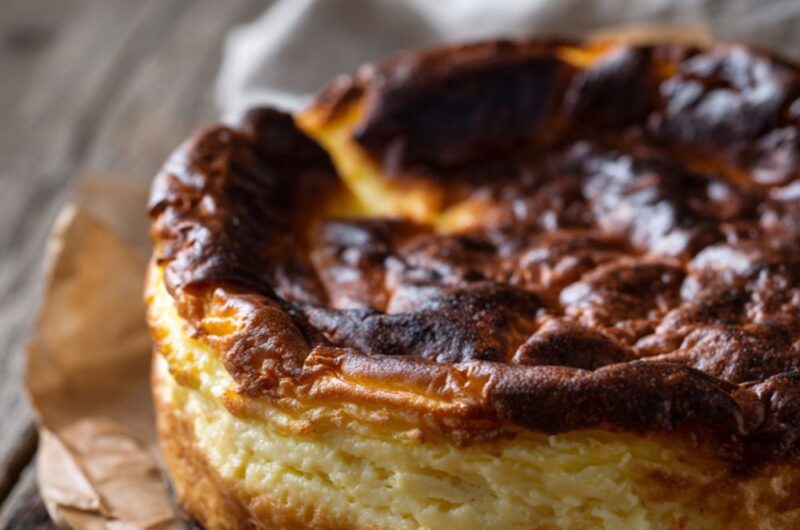
- Don’t Fear the Burn: The top should look very dark brown, bordering on black in spots. This bitterness balances the sweetness of the sugar and cream. If it looks too pale, it won’t have the authentic flavor.
- Slicing: For clean slices, dip a sharp knife into hot water and wipe it dry before each cut.
What To Serve With Basque Cheesecake Recipe?
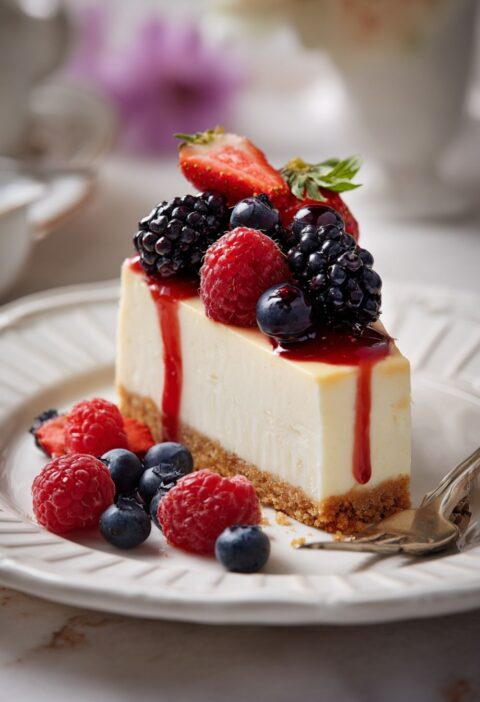
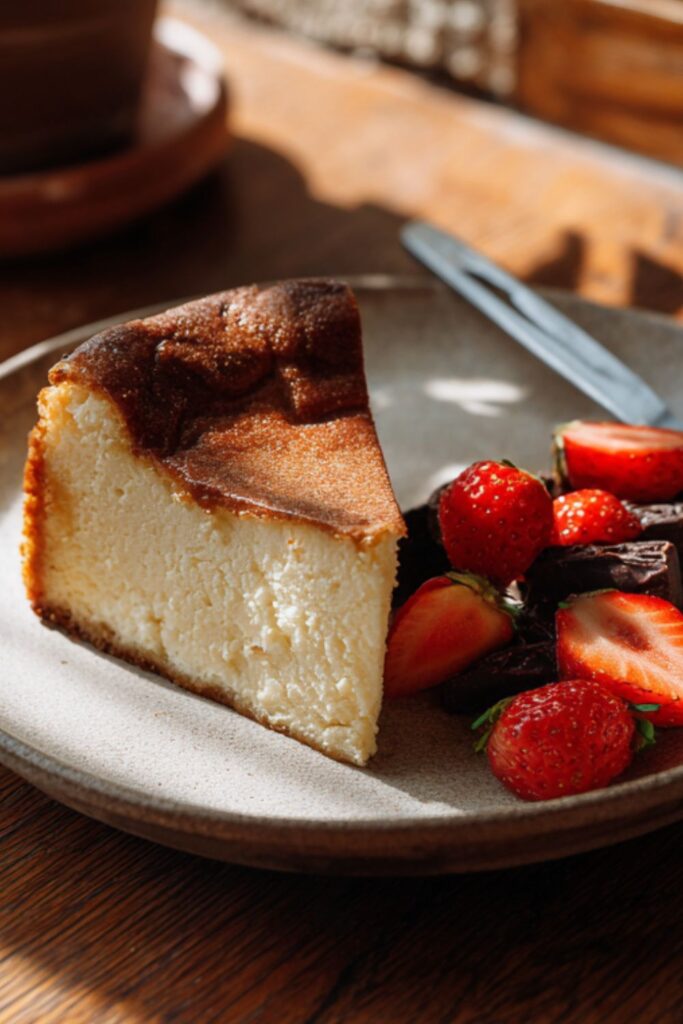
Because this cake is so rich, it pairs best with tart or acidic accompaniments. A spoonful of fruit compote (raspberry or cherry) works beautifully. James Martin often serves it with a simple drizzle of Sherry or a glass of Pedro Ximénez. Fresh figs or strawberries are also excellent.
How To Store Leftovers Basque Cheesecake?
- Refrigerate: Store leftover cheesecake in the fridge, loosely covered, for up to 4 days.
- Freeze: You can freeze slices of the cheesecake. Wrap individual slices in plastic wrap and foil. Freeze for up to 1 month. Thaw in the fridge overnight. Note that the texture may become slightly denser after freezing.
How To Reheat Leftovers Basque Cheesecake(Not Recommended)?
Basque cheesecake is served chilled or at room temperature. Reheating it will melt the creamy center and destroy the texture. If you prefer it softer, let the slice sit on the counter for 30 minutes before eating.
FAQs
If the center is actual soup, it needed 5-10 more minutes in the oven. However, the center should be very soft and creamy. It needs the overnight chill time to set properly.
Yes, you can swap the 30g of plain flour for a gluten-free flour blend or even cornstarch (cornflour). The texture will be virtually identical.
Yes, you can halve the Basque Cheesecake for a smaller cake. Use a 6-inch (15cm) tin and check for doneness around the 30-35 minute mark.
Try more Recipes:
Basque Cheesecake Nutrition Facts
Serving Size: 1 slice (1/12 of cake)
- Calories: 580 kcal
- Total Fat: 45g
- Saturated Fat: 28g
- Cholesterol: 190mg
- Sodium: 320mg
- Total Carbohydrate: 38g
- Dietary Fiber: 0g
- Sugars: 34g
- Protein: 8g
James Martin Basque Cheesecake
Course: Dessert, BreakfastCuisine: Spanish/Basque, BritishDifficulty: Easy12
servings15
minutes50
minutes580
kcalJames Martin’s Basque Cheesecake is a show-stopping dessert that breaks all the rules of traditional baking. Originating from San Sebastián, this rustic “burnt” cheesecake is baked at a high temperature to create a dark, caramelized crust that contrasts perfectly with a silky, custard-like center. There is no biscuit base and no water bath required—just pure, creamy indulgence. It is delightfully imperfect, incredibly rich, and best served simply with a glass of sherry or fresh berries.
Ingredients
1kg (2.2 lbs) cream cheese (full fat), at room temperature
400g (2 cups) caster sugar (superfine sugar)
7 large eggs
500ml (2 cups) double cream (heavy cream)
1 tbsp vanilla bean paste (or high-quality vanilla extract)
30g (1/4 cup) plain flour (all-purpose flour), sifted
Pinch of salt
Directions
- Preheat and Prep: Preheat your oven to 200°C (400°F) fan-forced or 220°C (425°F) conventional. Line a 23cm (9-inch) springform cake tin with two large sheets of baking parchment (parchment paper). Press the paper into the tin, ensuring it covers the bottom and extends well up the sides. Do not worry about the creases; they give the cake its signature rustic look.
- Beat Cream Cheese and Sugar: In a large mixing bowl or stand mixer fitted with the paddle attachment, beat the room temperature cream cheese and sugar together on medium speed for 2 to 3 minutes. You want the sugar to dissolve and the mixture to be smooth, but do not whip too much air into it.
- Add Eggs: Add the eggs one at a time, beating well after each addition. Scrape down the sides of the bowl with a spatula to ensure no lumps of cream cheese remain at the bottom.
- Add Liquids: Pour in the double cream and the vanilla bean paste. Mix on low speed until combined. The batter will be quite liquid.
- Add Flour: Sprinkle the sifted flour and the pinch of salt over the batter. Fold it in gently or mix on the lowest speed just until the flour disappears. Do not overmix.
- Pour: Pour the batter into the prepared parchment-lined tin. Tap the tin firmly on the counter a few times to release any large air bubbles.
- Bake: Place in the center of the preheated oven and bake for 45 to 55 minutes.
The Wobble Test: The cake is done when the top is dark brown (almost burnt-looking) and the edges are set, but the center still has a significant wobble (like Jell-O). It should jiggle when you shake the tin. - Cool: Remove from the oven. The cake will be puffed up but will collapse drastically as it cools—this is normal. Let it cool completely in the tin at room temperature.
- Chill: Once cool, refrigerate the cheesecake (still in the tin) for at least 4 hours, preferably overnight. This sets the custard center.
- Serve: To serve, unclip the tin and lift the cake out using the parchment paper. Peel back the paper and slice.
Notes
- Room Temperature Ingredients: It is crucial that the cream cheese and eggs are at room temperature. Cold cream cheese will result in a lumpy batter that won’t bake evenly.
Paper Height: Ensure the parchment paper stands at least 2-3 inches above the rim of the tin. The cheesecake puffs up significantly like a soufflé during baking before sinking back down.
Don’t Fear the Burn: The top should look very dark brown, bordering on black in spots. This bitterness balances the sweetness of the sugar and cream. If it looks too pale, it won’t have the authentic flavor.
Slicing: For clean slices, dip a sharp knife into hot water and wipe it dry before each cut.