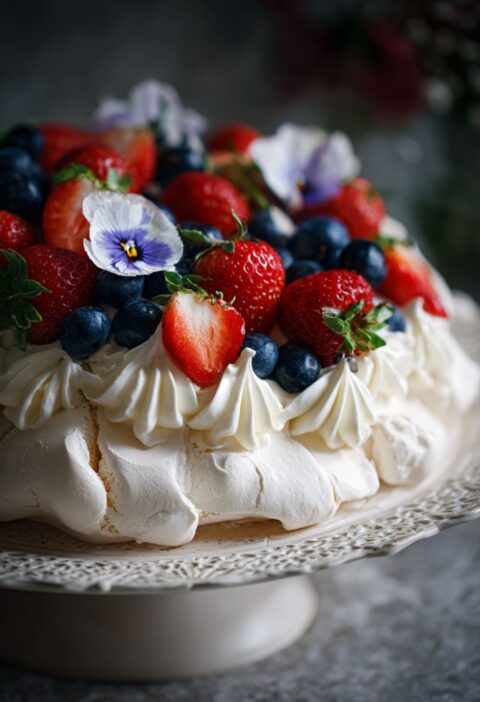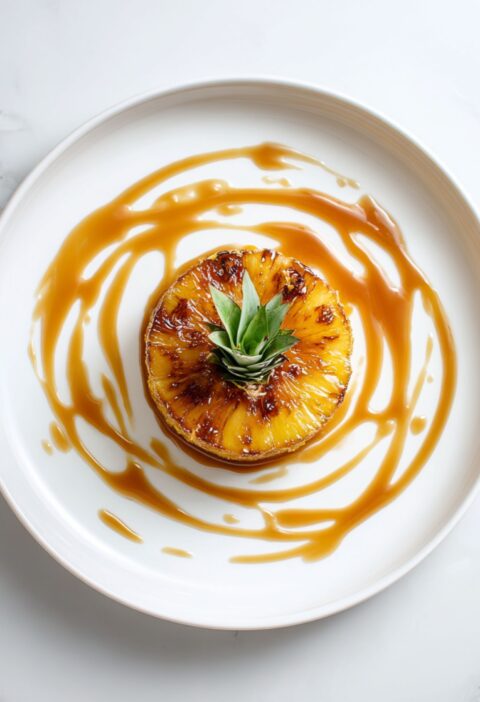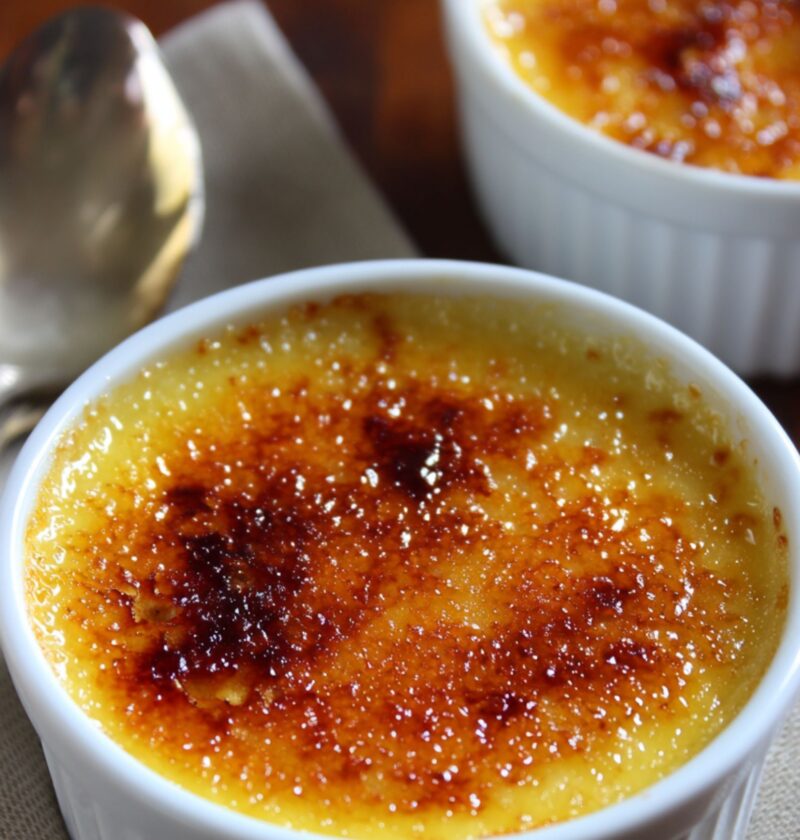
James Martin Crème Brûlée is the definitive dessert for those who appreciate the finer things in life. James Martin doesn’t complicate this French classic; instead, he relies on the quality of ingredients—specifically fresh vanilla pods and rich double cream—to create a custard that is impossibly silky and smooth. The magic lies in the contrast: the satisfying “crack” of the burnt sugar crust giving way to the cool, velvety cream beneath. It is a restaurant-standard dessert that is surprisingly achievable at home.
Try More Recipes:
Why You Will Love This Crème Brûlée Recipe:
- The Perfect Texture: Using a water bath (bain-marie) ensures the custard sets gently without becoming rubbery or scrambled.
- Make-Ahead Magic: The baked custards can be kept in the fridge for up to 3 days, making them the ideal stress-free dessert for dinner parties.
- Real Vanilla Flavor: There are no essences here; the use of a whole vanilla pod infuses the cream with distinct black seeds and a deep, floral aroma.
- Interactive Eating: Breaking the hard sugar shell with a spoon is arguably the most satisfying moment in the culinary world.
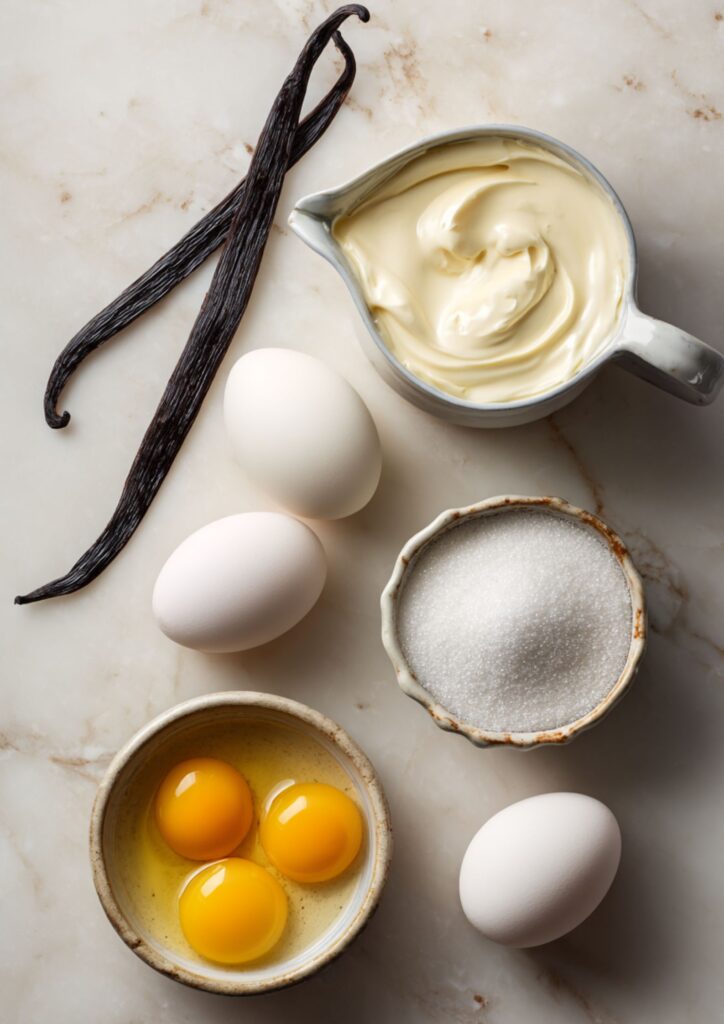
James Martin Crème Brûlée Ingredients
- 500ml Double Cream: (Heavy cream).
- 1 Vanilla Pod: Split lengthways, seeds scraped out.
- 6 Large Egg Yolks: Free-range for the best color.
- 100g Caster Sugar: Plus extra for the topping (approx. 1 tbsp per ramekin).
- Boiling Water: For the bain-marie.
How To Make James Martin Crème Brûlée
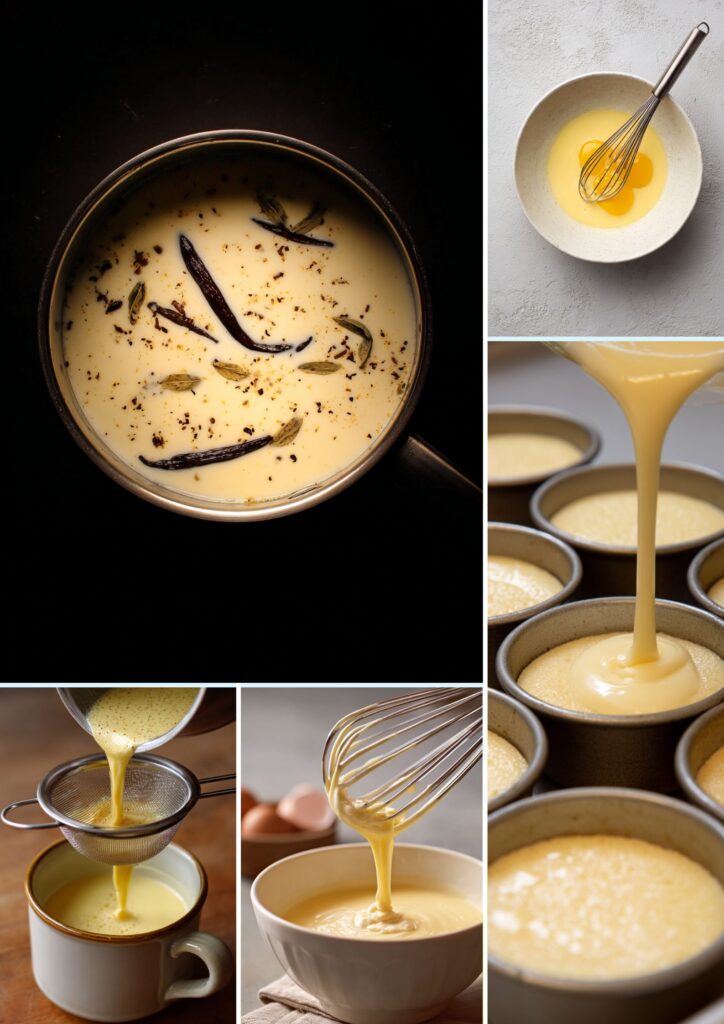
- Infuse the Cream: Pour the double cream into a saucepan. Add the vanilla pod and the scraped seeds. Bring to a gentle simmer over medium heat (do not let it boil rapidly). Remove from the heat and let it sit for 10–15 minutes to infuse.
- Prepare the Yolks: In a large heatproof bowl, whisk the egg yolks and the 100g of caster sugar together. Crucial: Whisk gently. You want to combine them, not create lots of air bubbles or foam.
- Temper the Mixture: Remove the vanilla pod from the cream. Pour a small splash of the warm cream onto the egg mixture, stirring constantly to temper the eggs (so they don’t scramble). Gradually pour in the rest of the cream, stirring continuously.
- Strain: Pour the custard mixture through a fine sieve into a jug. This removes any chalaza (white bits of egg) and any vanilla pod husk, leaving a perfectly smooth liquid.
- Fill and Bathe: Place 4–6 ramekins into a deep roasting tin. Pour the custard into the ramekins, filling them almost to the top. Pour boiling water into the roasting tin until it reaches halfway up the sides of the ramekins.
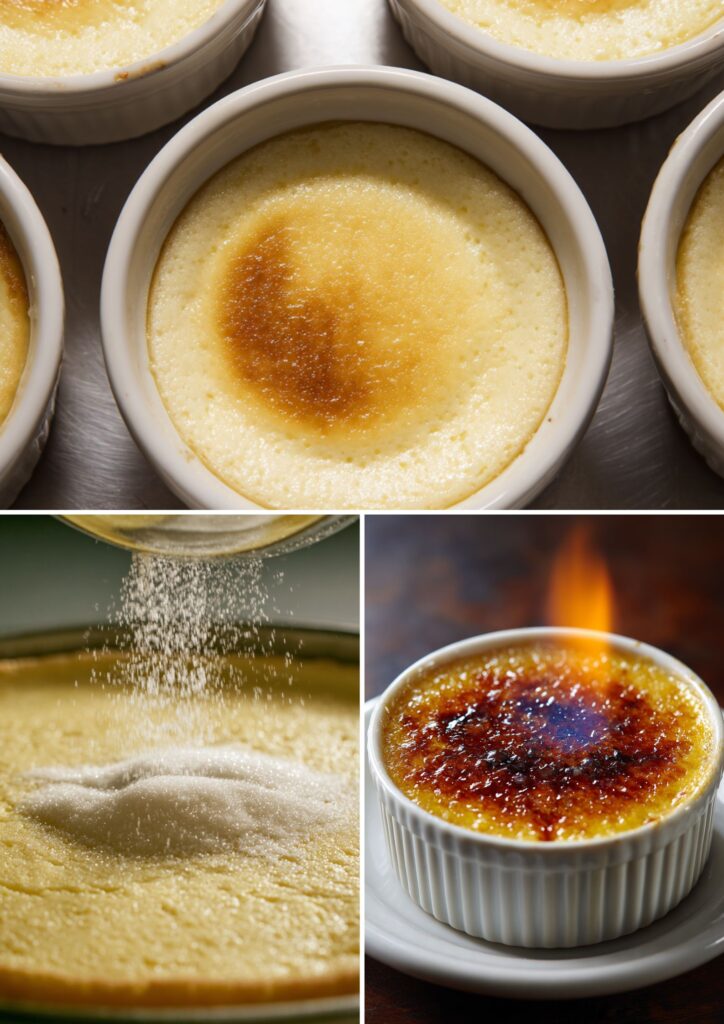
- Bake: Place the tin carefully in a preheated oven at 150°C (300°F). Bake for 30–40 minutes. The custard is done when it is set around the edges but still has a slight “wobble” like jelly in the very center.
- Chill: Remove the ramekins from the water bath immediately. Let them cool to room temperature, then refrigerate for at least 3 hours (or overnight) to set completely.
- The Brûlée: Just before serving, sprinkle a thin, even layer of sugar over the surface of each cold custard. Use a blowtorch to caramelize the sugar until it melts and turns deep amber. Let it sit for 2 minutes to harden before serving.
Recipe Tips
- Bubble Trouble: If you have foam on top of your custard after pouring it into the ramekins, skim it off with a spoon or use a kitchen towel to dab it. Bubbles will ruin the smooth surface needed for the sugar crust.
- Don’t Overcook: If the custard is firm in the middle when you take it out, it is overcooked and will taste grainy. Trust the “wobble.”
- The Sugar Layer: Do not pile the sugar too high for the topping. A thin, even layer melts quickly and snaps better. If you want a thicker crust, do one thin layer, torch it, let it cool, then add a second layer and torch again.
- Torch vs. Grill: A kitchen blowtorch gives the best results. Using an oven grill (broiler) heats up the custard below, turning it into soup before the sugar caramelizes.
What To Serve With Crème Brûlée?
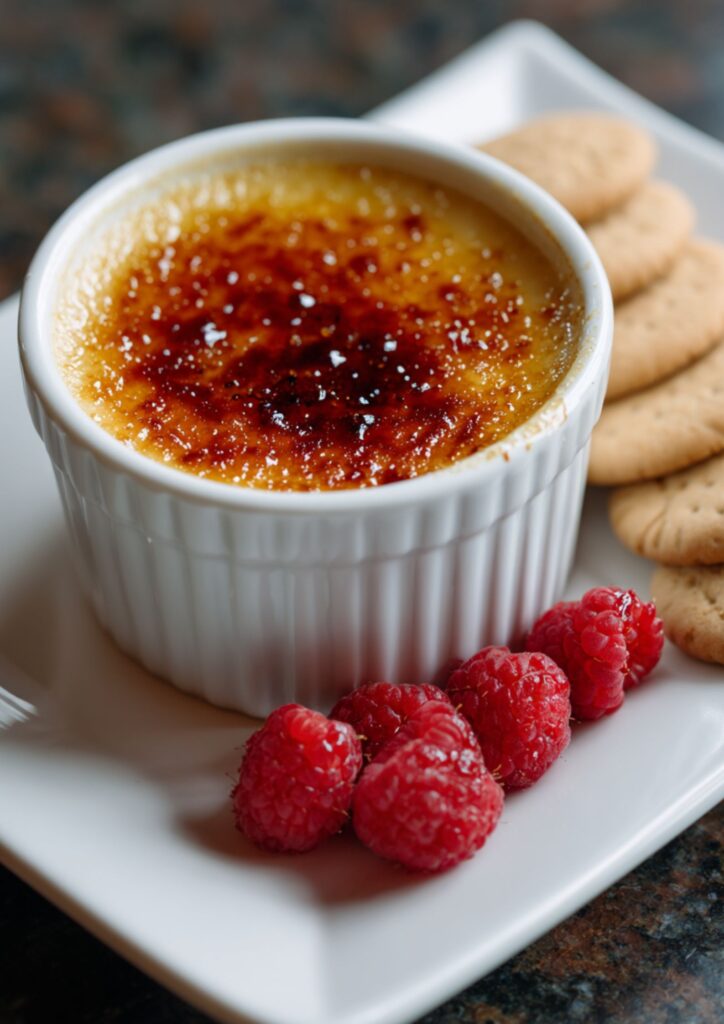
The Crème Brûlée is rich, so it needs something crisp or acidic to cut through. Homemade shortbread biscuits are the traditional accompaniment for dipping. A small pile of fresh raspberries or a tart fruit compote on the side also works beautifully to balance the sweetness of the cream.
How To Store Leftovers Crème Brûlée?
- Fridge: The baked custards (without the burnt sugar topping) can be stored in the fridge for up to 3 days.
- The Topping: Once you have torched the sugar, it must be eaten within 20–30 minutes, otherwise, the humidity from the fridge will make the sugar soft and sticky.
- Freezer: Not recommended. Freezing alters the texture of the custard, making it grainy and watery upon thawing.
Do Not Reheat: This Crème Brûlée is a cold The only “heating” involved is the blowtorching of the sugar, which warms the top surface slightly while keeping the custard underneath cool.
FAQs
You can use 1–2 tsp of high-quality vanilla bean paste or extract, but a real pod gives a superior depth of flavor and the classic speckled look.
You can put the ramekins under a very hot grill (broiler) for 2–3 minutes. Watch them like a hawk and ensure the custards are ice cold before doing this to prevent melting.
It was likely undercooked or not chilled for long enough. It needs at least 3 hours in the fridge to firm up into a spoonable texture.
More Recipes:
Crème Brûlée Nutrition Facts
- Calories: ~480 kcal
- Total Fat: 42g
- Saturated Fat: 25g
- Cholesterol: 310mg
- Sodium: 40mg
- Total Carbohydrate: 22g
- Protein: 5g
James Martin Crème Brûlée
Course: DessertCuisine: French, AmericanDifficulty: Easy4-6
servings20
minutes40
minutes480
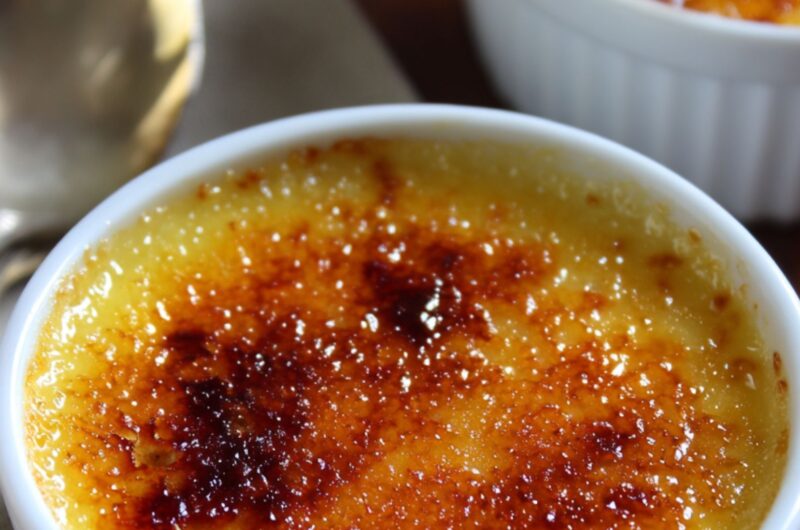
kcalJames Martin Crème Brûlée is a luxurious classic. Smooth, vanilla-flecked custard made with double cream and egg yolks is baked gently in a water bath and finished with a signature shard of caramelized sugar.
Ingredients
500ml Double Cream: (Heavy cream).
1 Vanilla Pod: Split lengthways, seeds scraped out.
6 Large Egg Yolks: Free-range for the best color.
100g Caster Sugar: Plus extra for the topping (approx. 1 tbsp per ramekin).
Boiling Water: For the bain-marie.
Directions
- Infuse the Cream: Pour the double cream into a saucepan. Add the vanilla pod and the scraped seeds. Bring to a gentle simmer over medium heat (do not let it boil rapidly). Remove from the heat and let it sit for 10–15 minutes to infuse.
- Prepare the Yolks: In a large heatproof bowl, whisk the egg yolks and the 100g of caster sugar together. Crucial: Whisk gently. You want to combine them, not create lots of air bubbles or foam.
- Temper the Mixture: Remove the vanilla pod from the cream. Pour a small splash of the warm cream onto the egg mixture, stirring constantly to temper the eggs (so they don’t scramble). Gradually pour in the rest of the cream, stirring continuously.
- Strain: Pour the custard mixture through a fine sieve into a jug. This removes any chalaza (white bits of egg) and any vanilla pod husk, leaving a perfectly smooth liquid.
- Fill and Bathe: Place 4–6 ramekins into a deep roasting tin. Pour the custard into the ramekins, filling them almost to the top. Pour boiling water into the roasting tin until it reaches halfway up the sides of the ramekins.
- Bake: Place the tin carefully in a preheated oven at 150°C (300°F). Bake for 30–40 minutes. The custard is done when it is set around the edges but still has a slight “wobble” like jelly in the very center.
- Chill: Remove the ramekins from the water bath immediately. Let them cool to room temperature, then refrigerate for at least 3 hours (or overnight) to set completely.
- The Brûlée: Just before serving, sprinkle a thin, even layer of sugar over the surface of each cold custard. Use a blowtorch to caramelize the sugar until it melts and turns deep amber. Let it sit for 2 minutes to harden before serving.
Notes
- Bubble Trouble: If you have foam on top of your custard after pouring it into the ramekins, skim it off with a spoon or use a kitchen towel to dab it. Bubbles will ruin the smooth surface needed for the sugar crust.
Don’t Overcook: If the custard is firm in the middle when you take it out, it is overcooked and will taste grainy. Trust the “wobble.”
The Sugar Layer: Do not pile the sugar too high for the topping. A thin, even layer melts quickly and snaps better. If you want a thicker crust, do one thin layer, torch it, let it cool, then add a second layer and torch again.
Torch vs. Grill: A kitchen blowtorch gives the best results. Using an oven grill (broiler) heats up the custard below, turning it into soup before the sugar caramelizes.