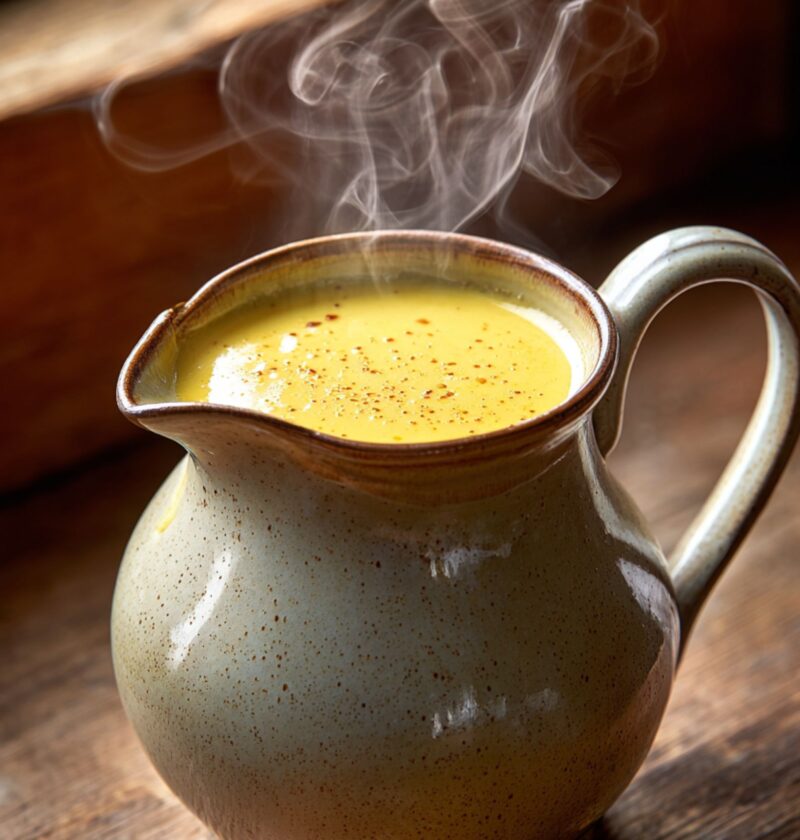
James Martin Custard Recipe is made with fresh double cream, plenty of egg yolks, and real vanilla, coming together in just 25 minutes. The magic happens when the pale liquid gently thickens into a rich, golden sauce that perfectly coats the back of your spoon. I absolutely love serving this warm over a steamed sponge pudding for the ultimate comfort food treat.
Try More Recipes:
The Secret To Getting Custard Recipe Right:
- Making proper custard is one of those kitchen skills that feels intimidating until you understand the science of the egg yolks. I used to rush the process by turning the heat up too high, which always resulted in a grainy, scrambled mess rather than a smooth sauce. The real secret is patience and keeping the temperature low enough that the eggs thicken without cooking into solids.
- Another lesson I learned is the importance of sieving the mixture at the end. Even if you think you have whisked everything perfectly, there are often tiny bits of chalaza (the white stringy bit of the egg) or vanilla pod husk that can ruin the texture. Passing it through a fine sieve guarantees that restaurant-quality, glass-like finish that James Martin is famous for.
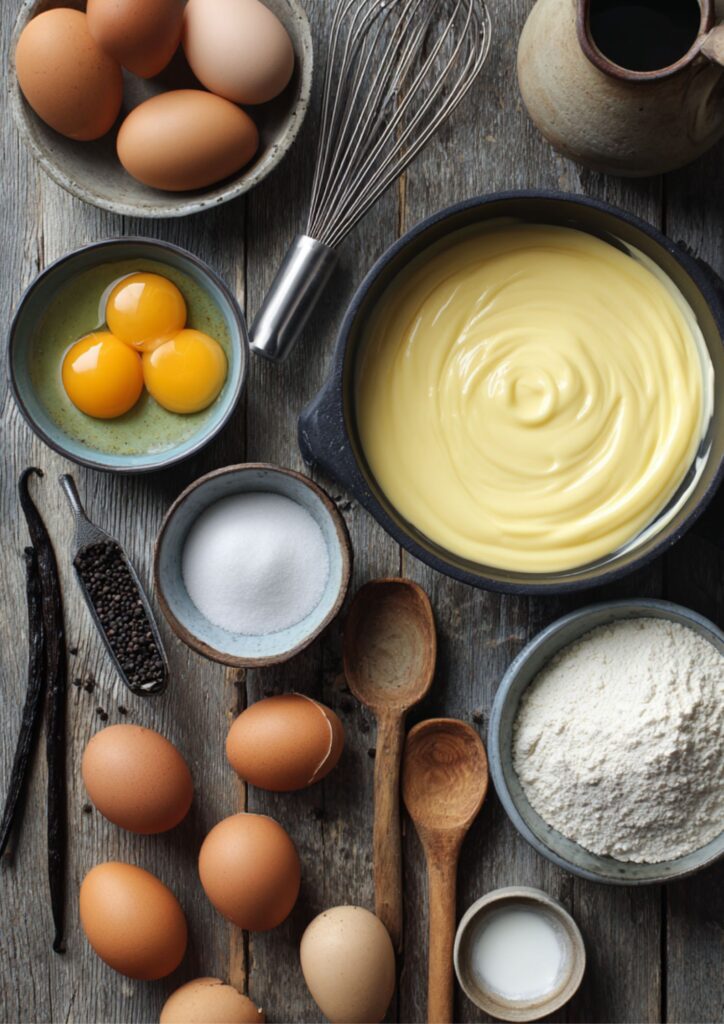
James Martin Custard Recipe Ingredients
- 300ml double cream
- 300ml full-fat milk
- 8 large egg yolks (free-range are best for colour)
- 75g caster sugar
- 1 vanilla pod (split and seeds scraped) OR 1 tsp quality vanilla bean paste
How To Make James Martin Custard Recipe
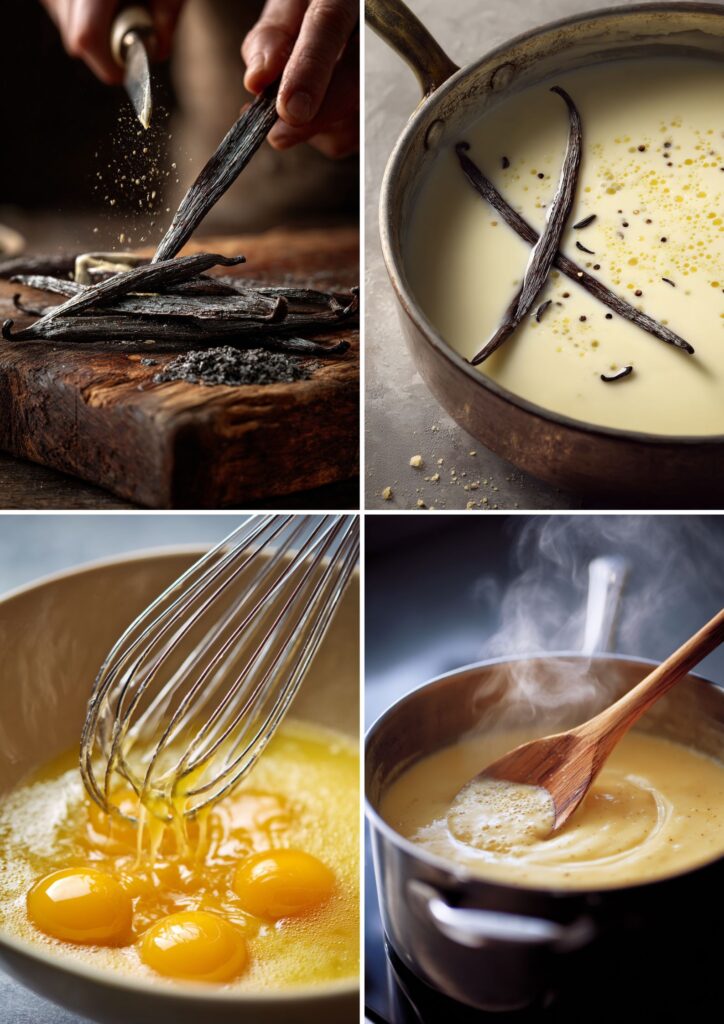
- Infuse the Dairy: Pour the milk and double cream into a heavy-based saucepan. Add the vanilla pod and scraped seeds. Place over medium heat and bring it gently to the boil. As soon as you see bubbles rising, remove it from the heat and let it sit for a few minutes to infuse.
- Prepare the Yolks: While the cream cools slightly, whisk the egg yolks and caster sugar together in a large heatproof bowl. You don’t need to whisk air into it; just mix until the sugar is dissolved and the yolks are pale.
- Temper the Eggs: Pour a small amount of the hot cream mixture onto the egg yolks while whisking continuously. This ‘tempers’ the eggs so they don’t scramble. Gradually whisk in the rest of the liquid until combined.
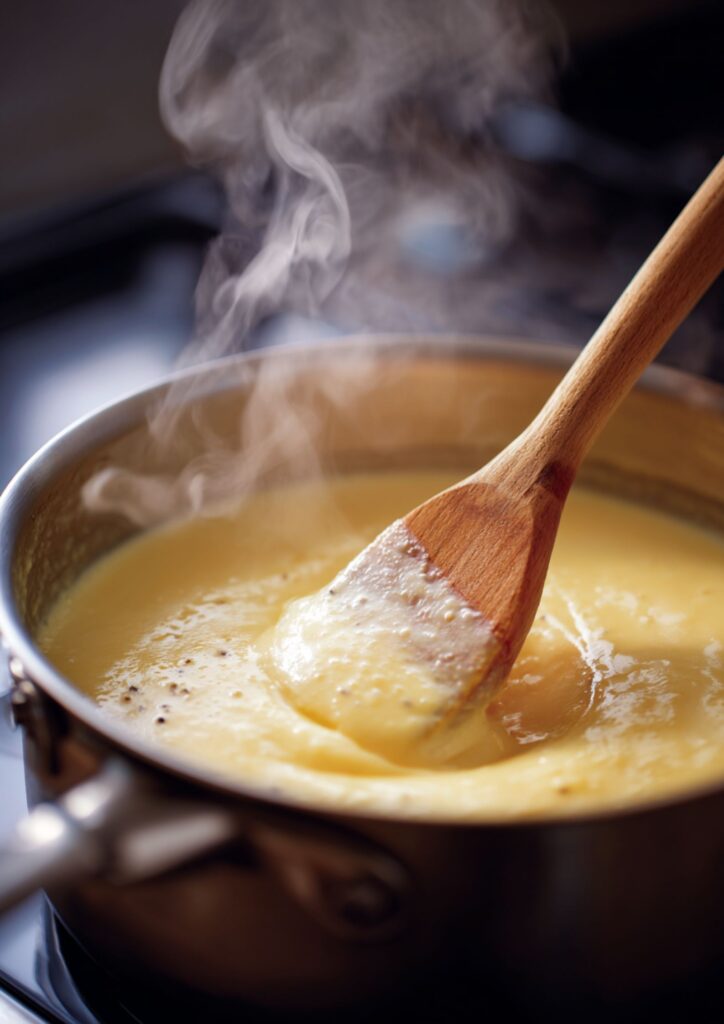
- Thicken the Custard: Pour the mixture back into the clean saucepan (rinse it first if there is milk skin). Cook over a low heat, stirring constantly with a wooden spoon or spatula. Do not let it boil. Continue stirring for about 10–15 minutes until the custard thickens enough to coat the back of the spoon.
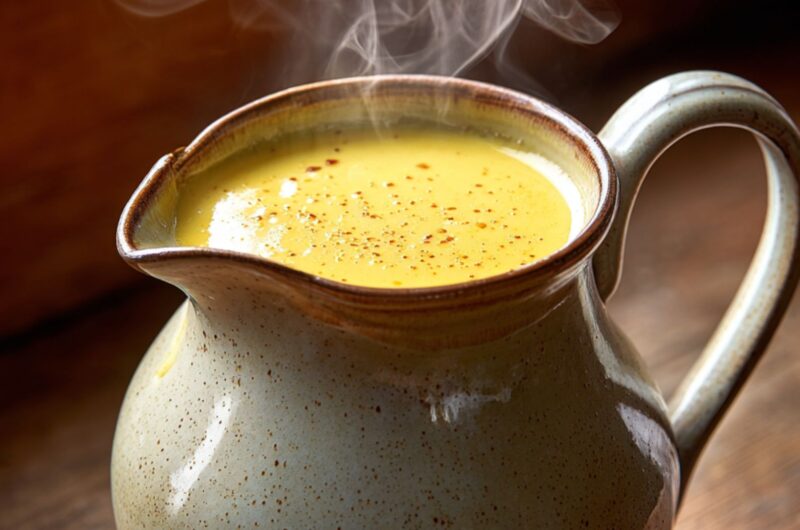
- Strain and Serve: Pour the finished custard through a fine sieve into a clean jug or bowl to remove the vanilla pod and any small lumps. Serve immediately or cover with cling film touching the surface to prevent a skin forming.
Recipe Tips
- The Spoon Test: To check if your custard is ready, dip a wooden spoon in and draw a line through the sauce on the back with your finger. If the line stays clean and doesn’t run, it is ready.
- Rescue Split Custard: If you accidentally overheat it and it looks grainy, plunge the pan into a bowl of ice water immediately and whisk vigorously. This can often bring it back to a smooth emulsion.
- Use a Heavy Pan: A thin-bottomed pan creates hot spots that scramble the eggs. A heavy-based saucepan distributes heat evenly, giving you more control.
- Room Temperature Eggs: Cold eggs mixed with hot cream are more likely to shock and scramble. Try to take your eggs out of the fridge 30 minutes before starting.
What To Serve With Custard Recipe?
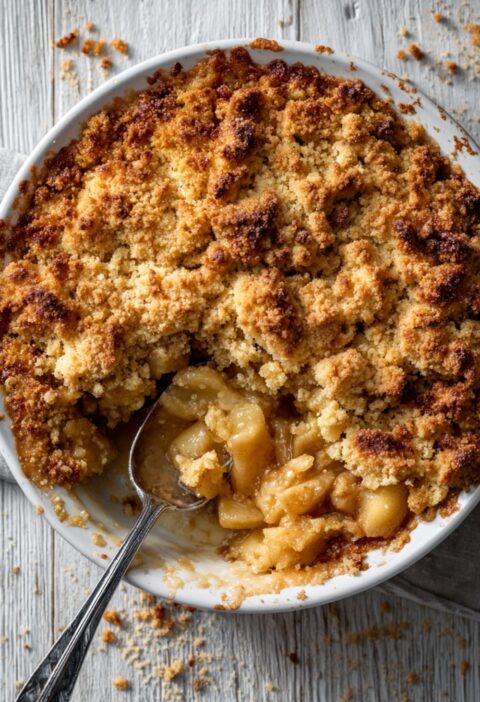
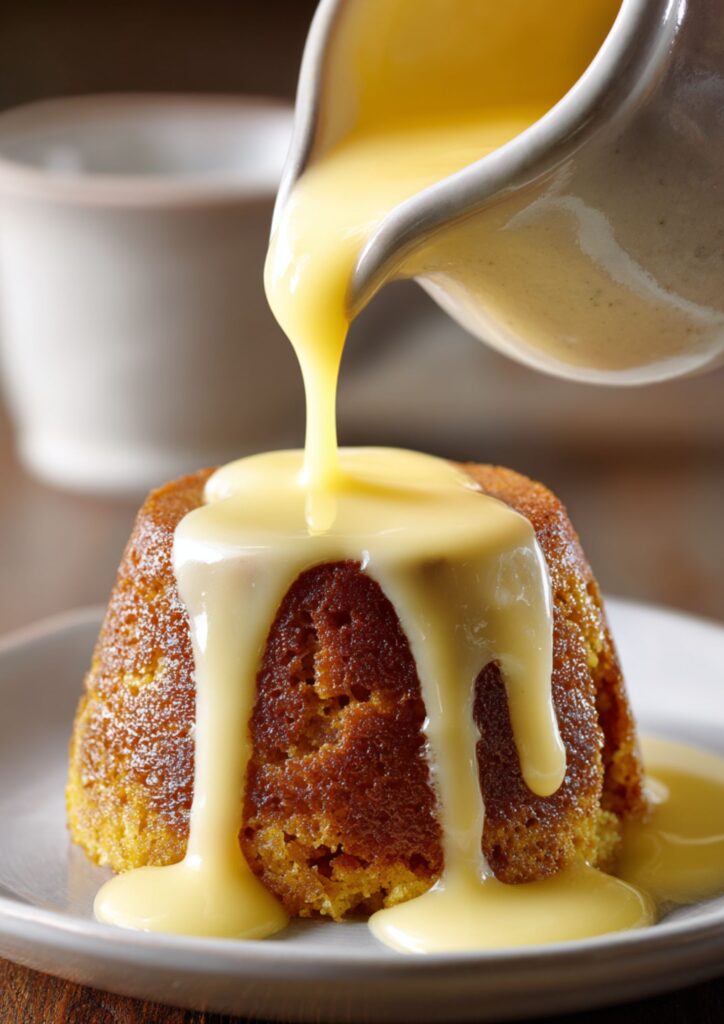
This rich Custard sauce is the classic partner for a traditional spotted dick or a steamed syrup sponge pudding. It also works beautifully poured over a sharp fruit crumble, where the creamy sweetness balances the tartness of apples or rhubarb. For a simpler option, serve it alongside roasted plums or poached pears.
How To Store Leftovers Custard?
- Refrigerate (Best Method): Pour the cooled custard into a container and press a piece of plastic wrap directly onto the surface of the custard. Store it in the fridge for up to 3 days.
- Freeze (Not Recommended): Avoid freezing traditional egg-based custard, as the mixture will separate, split, and become grainy when thawed.
How To Reheat Leftovers Custard?
- Stovetop (Best Method): Pour the custard into a heavy-bottomed saucepan over low heat and whisk constantly for 3 to 5 minutes until smooth and warmed through.
- Microwave (Quickest): Heat the custard in a microwave-safe bowl on 50% power in 15 to 30-second bursts, whisking vigorously after each interval until hot.
FAQs
It is not recommended to freeze this recipe because the high fat content and eggs tend to split and separate when thawed. It is best enjoyed fresh or from the fridge.
It likely hasn’t been cooked long enough or the heat was too low. Keep stirring over gentle heat until it noticeably thickens; remember it will thicken slightly more as it cools.
You can, but the result will be thinner and less luxurious. James Martin’s version relies on the double cream and egg yolks for that signature velvety texture.
Try More Recipes:
Custard Nutrition Facts
- Calories: 380
- Total Fat: 32g
- Saturated Fat: 19g
- Cholesterol: 285mg
- Sodium: 45mg
- Total Carbohydrate: 18g
- Protein: 5g
James Martin Custard Recipe
Course: DessertsCuisine: BritishDifficulty: Easy6
servings10
minutes15
minutes380
kcal25
minutesThis silky, rich James Martin Custard Recipe combines double cream, milk, and eight egg yolks for a luxurious finish. Ready in just 25 minutes, it’s the perfect easy homemade sauce for your favourite puddings.
Ingredients
300ml double cream
300ml full-fat milk
8 large egg yolks
75g caster sugar
1 vanilla pod (or 1 tsp bean paste)
Directions
- Infuse the Dairy: Pour milk, cream, and vanilla into a pan. Bring to a boil, then remove from heat and infuse for a few minutes.
- Prepare the Yolks: Whisk yolks and sugar in a bowl until pale and combined.
- Temper the Eggs: Pour a splash of hot cream onto the yolks while whisking. Gradually add the rest.
- Thicken the Custard: Return mixture to the pan. Cook over low heat, stirring constantly, until it coats the back of a spoon (approx 10-15 mins). Do not boil.
- Strain and Serve: Sieve into a jug to remove the vanilla pod and ensure a smooth texture.
Notes
- The Spoon Test: To check if your custard is ready, dip a wooden spoon in and draw a line through the sauce on the back with your finger. If the line stays clean and doesn’t run, it is ready.
Rescue Split Custard: If you accidentally overheat it and it looks grainy, plunge the pan into a bowl of ice water immediately and whisk vigorously. This can often bring it back to a smooth emulsion.
Use a Heavy Pan: A thin-bottomed pan creates hot spots that scramble the eggs. A heavy-based saucepan distributes heat evenly, giving you more control.
Room Temperature Eggs: Cold eggs mixed with hot cream are more likely to shock and scramble. Try to take your eggs out of the fridge 30 minutes before starting.