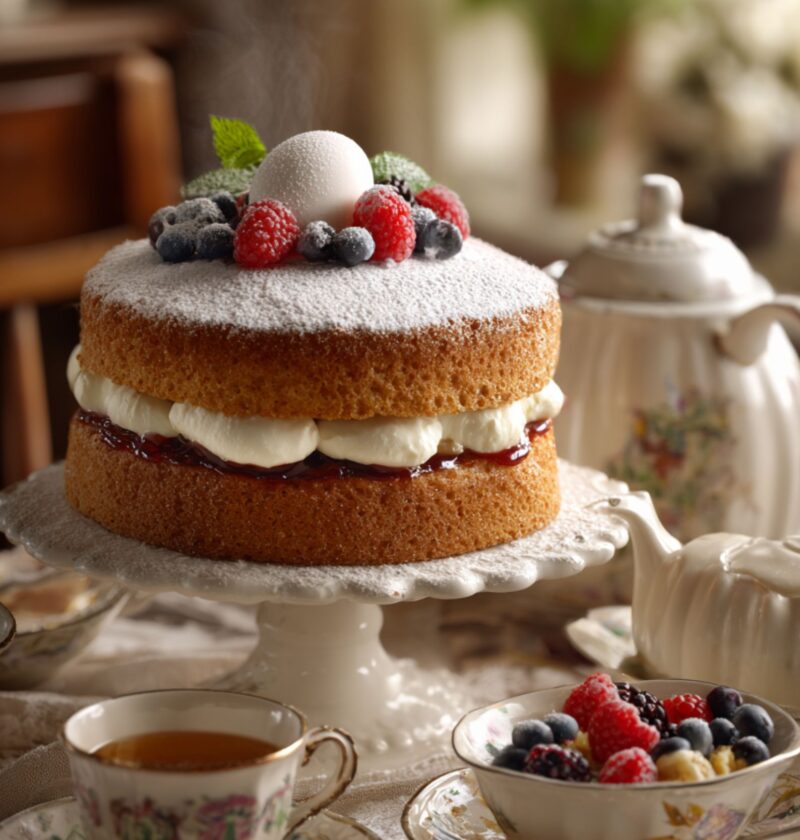
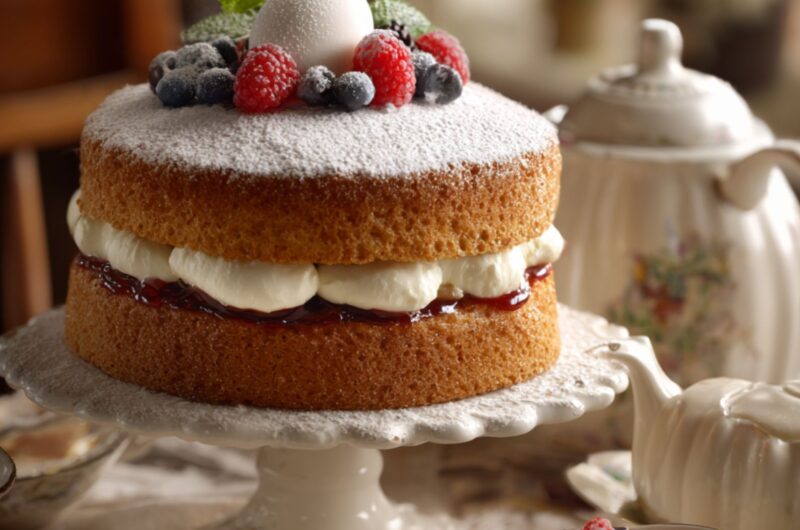
James Martin’s Duck Egg Victoria Sponge is the ultimate upgrade to the classic British cake. James swears by duck eggs for baking because their larger yolks and higher fat content create a sponge that is richer, taller, and lighter than anything made with standard hen’s eggs. Filled with fresh cream and high-quality jam (James often favors strawberry or raspberry), and dusted simply with caster sugar, this is the gold standard of afternoon tea.
Try More Recipes:
Why You Will Love This Duck Egg Victoria Sponge Recipe:
- Superior Rise: Duck eggs have more protein in the whites, which gives the sponge an incredible, airy structure that holds its shape beautifully.
- Richer Flavor: The extra fat in the duck egg yolks adds a creamy richness and a deeper golden color to the crumb.
- Simple & Classic: No baking powder needed if you use self-raising flour; the eggs do all the heavy lifting.
- The “All-in-One” Method: You can often just chuck everything into a mixer (if you’re careful), though James prefers the traditional creaming method for maximum fluffiness.
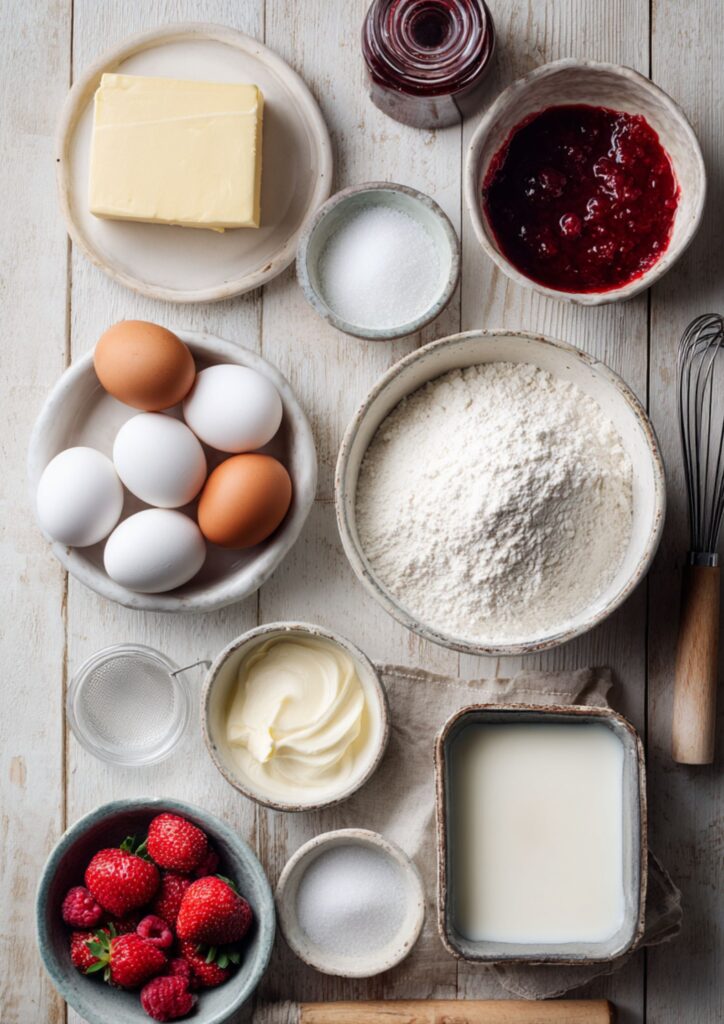
James Martin Duck Egg Victoria Sponge Ingredients
- 250g Unsalted Butter: Very soft (room temperature).
- 250g Caster Sugar: Plus extra for dusting.
- 4 Duck Eggs: Room temperature (crucial for emulsion).
- 250g Self-Raising Flour: Sifted.
- 1 tsp Vanilla Bean Paste: (Optional) For flavor.
- For the Filling:
- 300ml Double Cream: Whipped.
- 200g Strawberry or Raspberry Jam: Good quality conserve.
- Fresh Berries: (Optional) To decorate inside or on top.
How To Make James Martin Duck Egg Victoria Sponge
- Prep: Preheat your oven to 180°C (350°F) / 160°C Fan. Grease and line two 20cm (8-inch) sandwich tins with baking parchment.
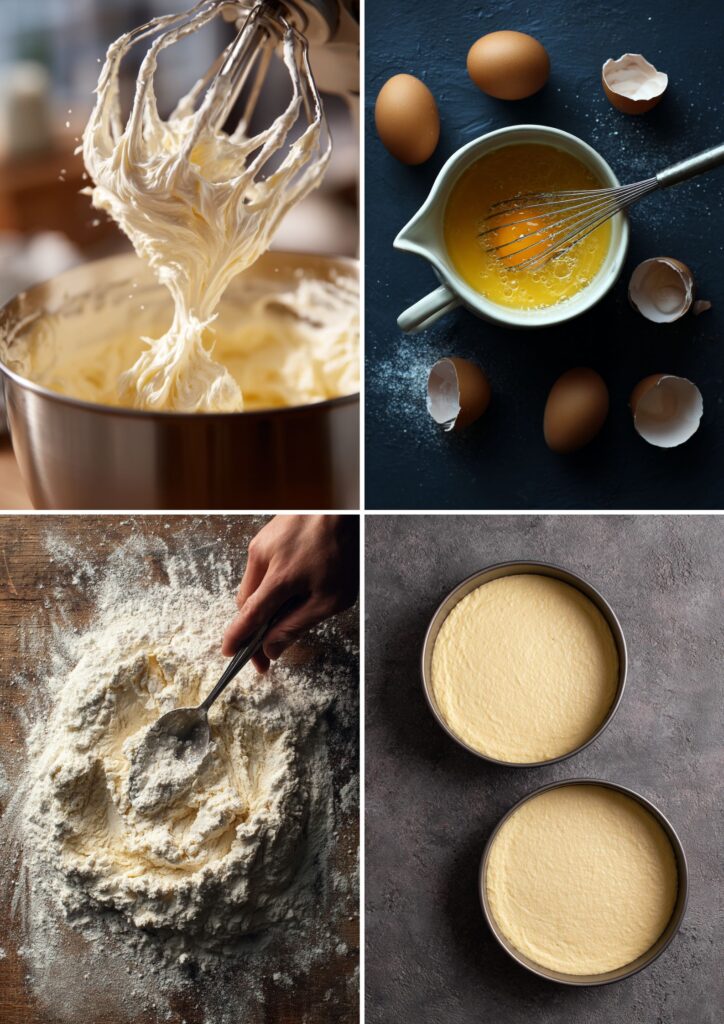
- Cream: In a stand mixer (or with an electric hand whisk), beat the softened butter and caster sugar together for 5–8 minutes. It must be incredibly pale, almost white, and very fluffy. This traps the air needed for the rise.
- Add Eggs: Break the duck eggs into a jug and whisk lightly. With the mixer running on medium speed, slowly pour in the eggs, a little at a time. Beat well between each addition. Tip: If the mixture looks like it’s curdling (splitting), add a tablespoon of the flour. Add the vanilla here if using.
- Fold Flour: Remove the bowl from the mixer. Sift the self-raising flour over the batter. Using a large metal spoon or spatula, gently fold the flour in. Use a “figure of 8” motion. Do not overmix, or you will knock out the air bubbles you created in step 2. Stop as soon as the flour disappears.
- Bake: Divide the batter evenly between the two prepared tins. Smooth the tops gently. Bake in the center of the oven for 20–25 minutes.
- Check: The cakes are done when they are risen, golden brown, and spring back when gently pressed with a finger. (Or a skewer comes out clean).
- Cool: Leave in the tins for 5 minutes, then turn out onto a wire rack to cool completely. Do not fill warm cakes or the cream will melt!
- Assemble: Place one sponge upside down on a serving plate. Spread generously with jam. Top with a thick layer of whipped double cream (and fresh berries if you like). Place the second sponge on top (right side up).
- Finish: Dust heavily with caster sugar or icing sugar.
Recipe Tips
- Room Temperature: It is vital that your butter and duck eggs are at the same temperature (room temp). If the eggs are cold, they will shock the butter and curdle the batter.
- Weigh the Eggs: A classic sponge uses equal weights. Weigh your 4 duck eggs (in their shells). Whatever they weigh (e.g., 280g), use that exact weight for the butter, sugar, and flour.
- Oven Door: Do not open the oven door before the 20-minute mark, or the sudden drop in temperature will cause the sponge to collapse.
- Duck Egg Availability: If you can’t find duck eggs, use 5 medium hen eggs, but the texture won’t be quite as rich.

What To Serve With Duck Egg Victoria Sponge?
James Martin’s Duck Egg Victoria Sponge is the quintessential afternoon tea centrepiece, best enjoyed with a pot of Earl Grey tea to complement the sweet jam, or a classic English Breakfast brew. To balance the richness of the duck egg sponge and double cream, serve it with a bowl of fresh strawberries or raspberries on the side. For a celebratory twist, a glass of chilled Champagne pairs wonderfully with the buttery crumb.
How To Store Leftovers Duck Egg Victoria Sponge?
- Tin: Store in an airtight cake tin at cool room temperature. It is best eaten within 2 days (fresh cream cakes don’t last long).
- Fridge: If it’s a hot day, keep it in the fridge because of the cream, but bring it to room temperature before eating to soften the butter in the sponge.
- Freezer: You can freeze the unfilled sponges for up to 3 months. Wrap tightly in cling film.
Do Not Heat: This cake is served at room temperature. Heating it will melt the cream filling.
FAQs
Yes, but you must add baking powder (approx. 2 tsp for this amount of flour) to get the rise. Self-raising is safer.
Usually because the oven door was opened too early, or the batter was overmixed after adding the flour (knocking out the air).
Most large supermarkets (Waitrose/Sainsbury’s/Tesco) stock them, as do farm shops and local butchers.

Try More Recipes:
- James Martin Victoria sponge cake with raspberries
- James Martin Chocolate Fudge Cake
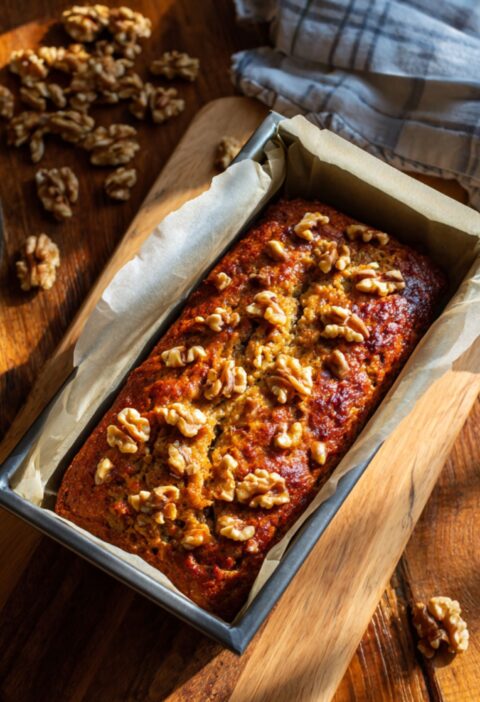
- James Martin Banana And Walnut Bread
Duck Egg Victoria Sponge Nutrition Facts
- Calories: ~550 kcal
- Total Fat: 35g
- Saturated Fat: 20g
- Cholesterol: 180mg
- Sodium: 250mg
- Total Carbohydrate: 55g
- Protein: 7g
James Martin Duck Egg Victoria Sponge
Course: Dessert, Afternoon TeaCuisine: BritishDifficulty: Easy8-10
servings20
minutes25
minutes550
kcalJames Martin’s Duck Egg Victoria Sponge uses rich duck eggs to create a lighter, fluffier, and taller cake than standard versions. Sandwiched with fresh cream and jam, it is the ultimate teatime treat.
Ingredients
Batter: 250g Butter, 250g Sugar, 250g Self-Raising Flour, 4 Duck Eggs.
Filling: 300ml Double Cream (whipped), 200g Strawberry Jam.
Finish: Caster Sugar for dusting.
Directions
- Prep: Preheat your oven to 180°C (350°F) / 160°C Fan. Grease and line two 20cm (8-inch) sandwich tins with baking parchment.
- Cream: In a stand mixer (or with an electric hand whisk), beat the softened butter and caster sugar together for 5–8 minutes. It must be incredibly pale, almost white, and very fluffy. This traps the air needed for the rise.
- Add Eggs: Break the duck eggs into a jug and whisk lightly. With the mixer running on medium speed, slowly pour in the eggs, a little at a time. Beat well between each addition. Tip: If the mixture looks like it’s curdling (splitting), add a tablespoon of the flour. Add the vanilla here if using.
- Fold Flour: Remove the bowl from the mixer. Sift the self-raising flour over the batter. Using a large metal spoon or spatula, gently fold the flour in. Use a “figure of 8” motion. Do not overmix, or you will knock out the air bubbles you created in step 2. Stop as soon as the flour disappears.
- Bake: Divide the batter evenly between the two prepared tins. Smooth the tops gently. Bake in the center of the oven for 20–25 minutes.
- Check: The cakes are done when they are risen, golden brown, and spring back when gently pressed with a finger. (Or a skewer comes out clean).
- Cool: Leave in the tins for 5 minutes, then turn out onto a wire rack to cool completely. Do not fill warm cakes or the cream will melt!
- Assemble: Place one sponge upside down on a serving plate. Spread generously with jam. Top with a thick layer of whipped double cream (and fresh berries if you like). Place the second sponge on top (right side up).
- Finish: Dust heavily with caster sugar or icing sugar.
Notes
- Room Temperature: It is vital that your butter and duck eggs are at the same temperature (room temp). If the eggs are cold, they will shock the butter and curdle the batter.
Weigh the Eggs: A classic sponge uses equal weights. Weigh your 4 duck eggs (in their shells). Whatever they weigh (e.g., 280g), use that exact weight for the butter, sugar, and flour.
Oven Door: Do not open the oven door before the 20-minute mark, or the sudden drop in temperature will cause the sponge to collapse.
Duck Egg Availability: If you can’t find duck eggs, use 5 medium hen eggs, but the texture won’t be quite as rich.