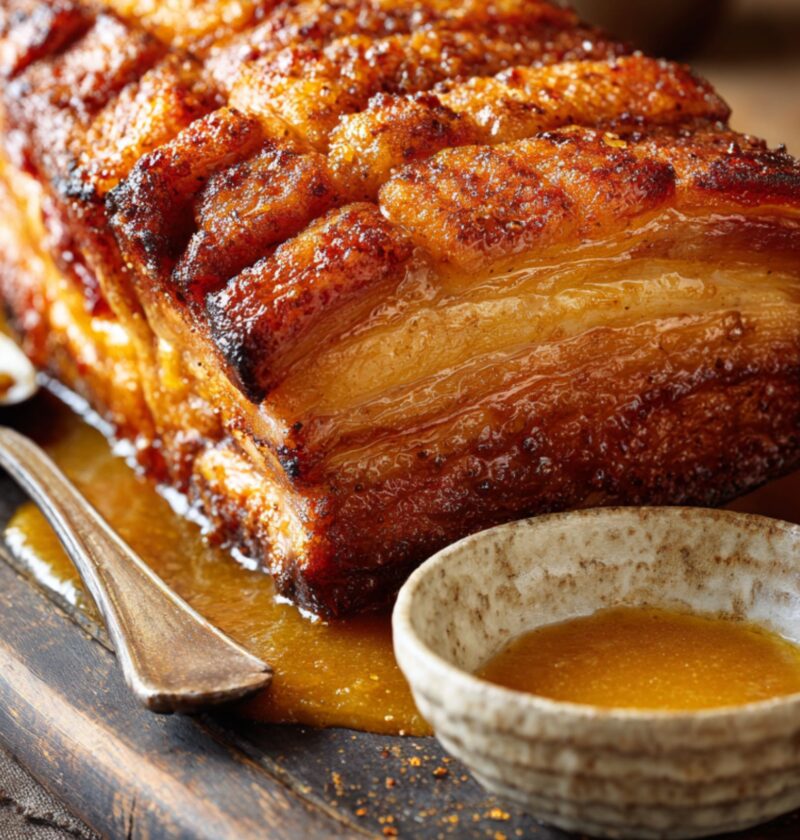
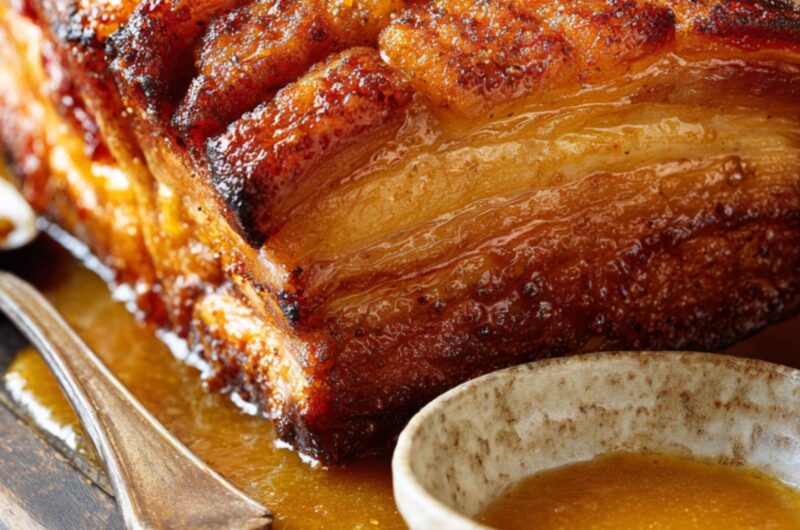
James Martin Pork Belly Recipe is made with a high-quality joint of pork, fresh sage, and a rich cider apple sauce, ready in just over 3 hours. The skin blisters into golden, glass-like crackling while the meat below stays incredibly succulent and tender. I absolutely love serving this for a relaxed Sunday lunch when I want maximum flavour with minimal hands-on time.
Try More Recipes:
The Secret To Getting Pork Belly Right:
- I learned the hard way that moisture is the absolute enemy of perfect crackling. If you put the pork straight from the fridge into the oven without drying it thoroughly, the skin steams instead of crisping up, leaving you with a chewy, leathery disappointment rather than that satisfying snap. The trick I now swear by is taking the meat out of the packaging an hour before cooking and patting the skin bone-dry with kitchen paper—sometimes I even leave it uncovered in the fridge overnight to dry out further.
- Another game-changer was understanding the two-stage temperature method. Blasting the joint at a high heat initially shocks the fat and starts the blistering process, but dropping the temperature for the remaining time allows the connective tissue to break down slowly. It’s this combination that gives you the best of both worlds: shattering crackling and meat that you could almost eat with a spoon.
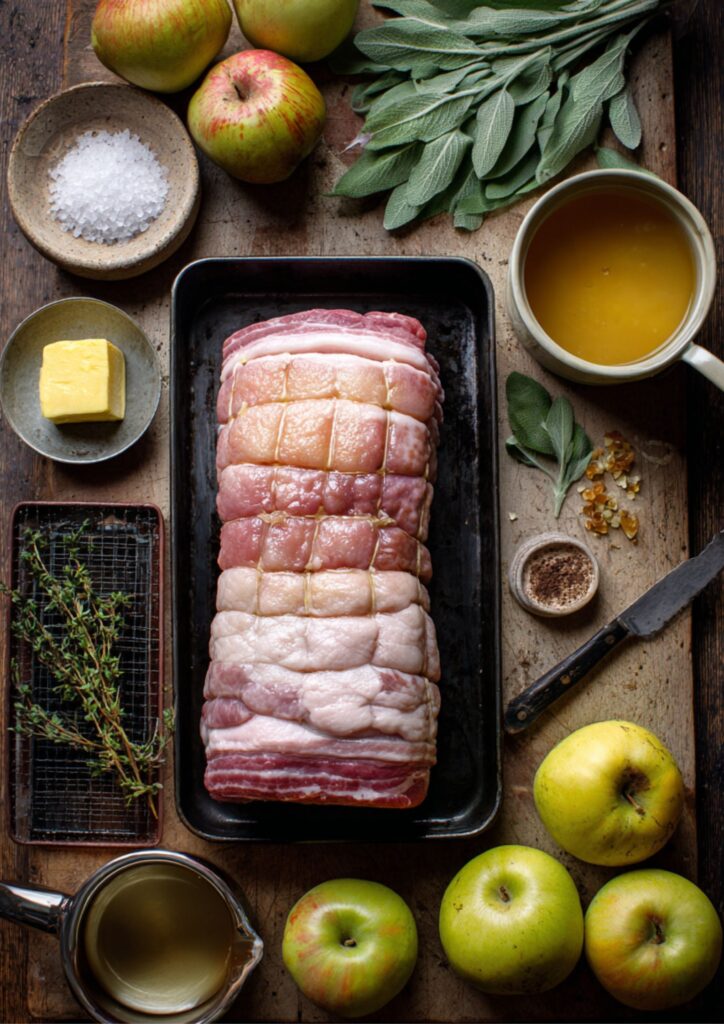
James Martin Pork Belly Recipe Ingredients
- 1.5kg – 2kg pork belly: Boned and rolled, skin scored (ask your butcher to do this or use a sharp knife).
- 2 tbsp sea salt flakes: Crucial for drawing out moisture and crisping the skin.
- 1 tbsp vegetable oil: To help the salt stick and conduct heat.
- 12 fresh sage leaves: Rubbed over the meat for earthy flavour.
- 1 lemon: Zest only, to cut through the richness.
- For the Cider Apple Sauce:
- 500g Bramley apples: Peeled, cored, and chopped into chunks.
- 30g butter: Unsalted is best.
- 2 tbsp dry cider: Adds a lovely sharpness.
- 30g soft dark brown sugar: Adjust to taste depending on the tartness of the apples.
How To Make James Martin Pork Belly Recipe
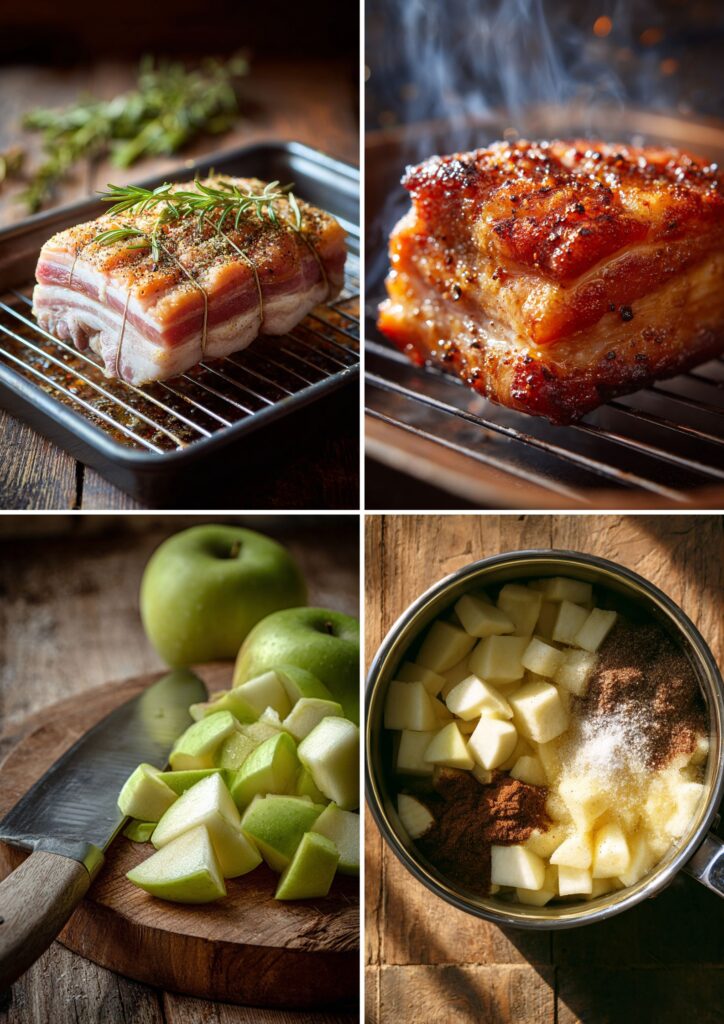
- Prep the Pork: Remove the pork belly from the fridge at least 30 minutes before cooking. Pat the skin thoroughly dry with kitchen paper. If the scoring isn’t deep enough, go over the lines with a Stanley knife or very sharp blade, cutting through the skin but not into the meat.
- Season the Meat: Preheat your oven to 220°C (200°C fan). Rub the vegetable oil over the skin. Mix the lemon zest and sage leaves together, then rub this mixture into the flesh side (underside) of the pork. Generously massage the sea salt into the scored skin, ensuring it gets right into the cracks.
- The High Heat Blast: Place the pork belly skin-side up on a wire rack sitting over a roasting tin. Roast in the hot oven for 20–30 minutes until the skin is blistered, bubbling, and starting to harden.
- Slow Roast: Reduce the oven temperature to 160°C (140°C fan). Continue to roast the pork for another 2 to 2.5 hours. The meat should be tender enough to pull apart easily, and the juices should run clear.
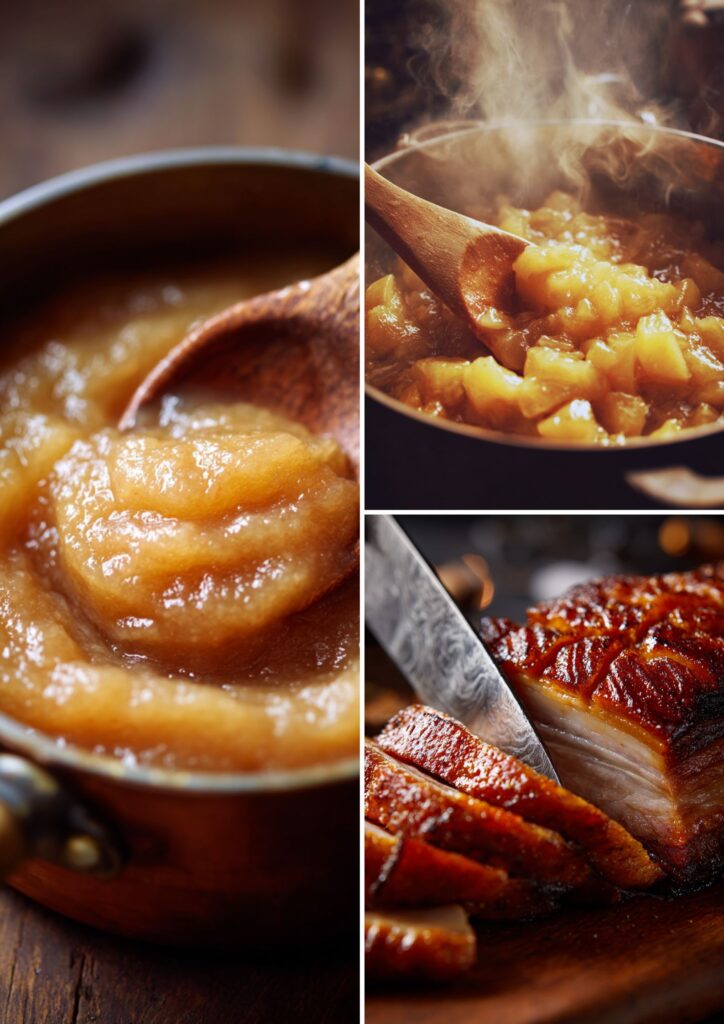
- Make the Sauce: While the pork is finishing, place the chopped apples, butter, cider, and sugar in a saucepan with a splash of water. Cover and cook over medium heat for 5–8 minutes until the apples collapse into a purée. Stir well and keep warm.
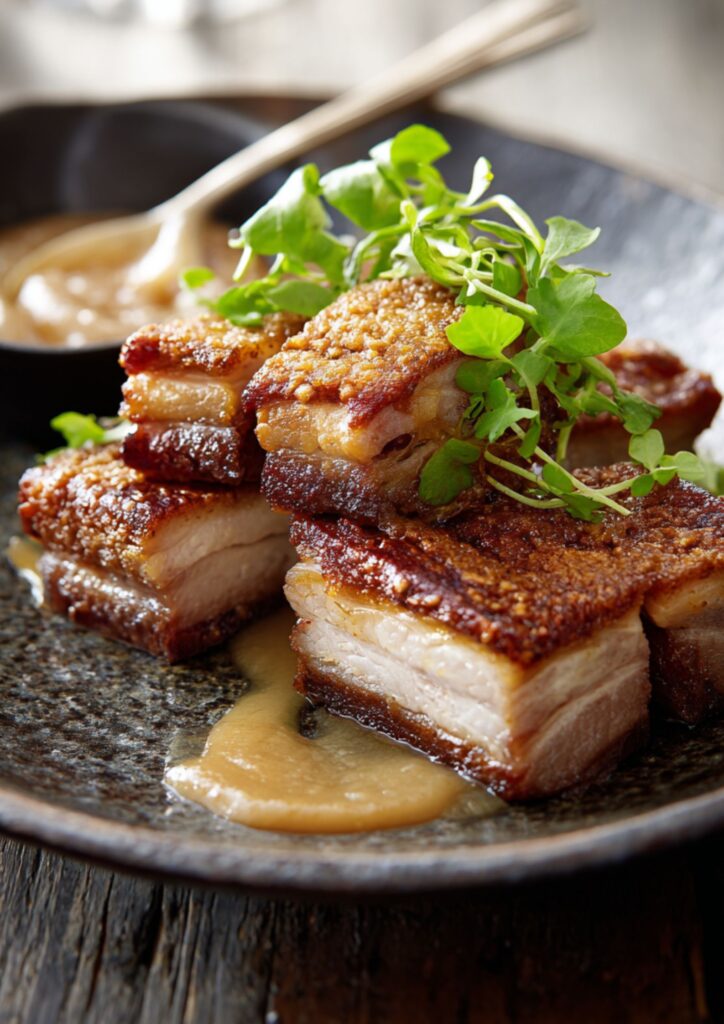
- Rest and Serve: Remove the pork from the oven. Transfer it to a board and let it rest for at least 20 minutes. Do not cover the crackling with foil, or it will go soft. Carve into thick slices and serve with the warm apple sauce.
Recipe Tips
- Score it properly: The score lines should be about 1cm apart. If they are too wide, the crackling won’t bubble up as effectively; too narrow, and it becomes difficult to carve.
- Don’t skip the rest: Resting the meat allows the juices to redistribute. If you cut it immediately, the meat will be dry, and the juice will run all over your board.
- Fixing soft crackling: If the skin isn’t quite crispy enough after the slow roast, slice the crackling off the meat and place it on a baking tray. Grill it on high for 2–3 minutes, watching it like a hawk so it doesn’t burn.
- Room temperature matters: Cooking a cold joint leads to uneven cooking. Always let the pork come up to room temperature before it goes near the oven.
What To Serve With Pork Belly?
You really need something to balance the rich, fatty nature of the belly. A pile of creamy mashed potatoes is traditional, but I also love serving this with braised red cabbage or tenderstem broccoli to add some freshness. The sharp cider apple sauce provided in the recipe is essential for cutting through the richness of the meat.
How To Store Leftovers Pork Belly?
- Refrigerate: Place the completely cooled pork belly in an airtight container for up to 3 to 4 days. If you want to protect the crispy crackling skin, wrap it loosely in foil rather than sealing it in an airtight plastic tub, which can trap moisture and make it soggy.
- Freeze: Wrap individual portions tightly in plastic wrap and a layer of aluminum foil, or seal them in a heavy-duty freezer bag, for up to 3 months. Thaw overnight in the fridge before reheating.
How To Reheat Leftovers Pork Belly?
Microwave (Not Recommended): Avoid the microwave entirely, as it will turn that beautiful crispy skin rubbery and tough.
- Oven (Best Method): Place the pork belly on a wire rack over a foil-lined baking sheet. Heat at 400°F (200°C) for 10 to 15 minutes until the meat is hot and the skin is beautifully blistered and crisp.
- Air Fryer (Quickest): Pop the pieces in at 350°F (175°C) for 5 to 8 minutes to get a super fast, satisfying crunch.
- Stovetop (Best for Slices): Pan-fry cold, thick slices in a dry skillet over medium heat for 3 to 4 minutes per side until golden, sizzling, and caramelized.
FAQs
This usually happens because the skin wasn’t dry enough before cooking or the oven wasn’t hot enough initially. Always dry the skin with paper towels and ensure your oven is fully preheated for the initial blast.
You can score and salt the pork the day before and leave it uncovered in the fridge. This actually helps dry the skin out further, leading to even better crackling.
No, do not baste pork belly. Basting adds moisture to the skin, which will prevent it from becoming crispy. Let the fat render naturally.
Try More Recipes:
Pork Belly Nutrition
- Calories: 850 kcal
- Total Fat: 65g
- Saturated Fat: 22g
- Cholesterol: 180mg
- Sodium: 1200mg
- Total Carbohydrate: 25g
- Protein: 35g
James Martin Pork Belly Recipe
Course: Dinners, Lunch, MainCuisine: BritishDifficulty: Easy6
servings20
minutes5
hours10
minutes850
kcal5
hours30
minutesThis crispy James Martin Pork Belly Recipe features tender, slow-roasted meat and perfect golden crackling. Made with fresh sage, sea salt, and a sharp cider apple sauce, it is ready in just over 3 hours. It’s an easy, impressive Sunday lunch classic that delivers restaurant-quality results at home.
Ingredients
1.5kg – 2kg pork belly (boned, rolled, scored)
2 tbsp sea salt flakes
1 tbsp vegetable oil
12 fresh sage leaves
1 lemon (zest only)
500g Bramley apples (peeled and chopped)
30g butter
2 tbsp dry cider
30g soft dark brown sugar
Directions
- Remove pork from fridge 30 mins before cooking and pat skin completely dry.
- Preheat oven to 220°C (200°C fan). Score skin deeper if needed.
- Rub oil on skin. Rub sage and lemon zest on the underside of the meat.
- Massage sea salt generously into the scored skin.
- Roast on a wire rack at 220°C for 20-30 minutes until skin blisters.
- Reduce heat to 160°C (140°C fan) and roast for 2 to 2.5 hours until tender.
- Simmer apples, butter, cider, and sugar in a pan for 5-8 mins to make sauce.
- Rest pork for 20 minutes (uncovered) before carving.
Notes
- Score it properly: The score lines should be about 1cm apart. If they are too wide, the crackling won’t bubble up as effectively; too narrow, and it becomes difficult to carve.
Don’t skip the rest: Resting the meat allows the juices to redistribute. If you cut it immediately, the meat will be dry, and the juice will run all over your board.
Fixing soft crackling: If the skin isn’t quite crispy enough after the slow roast, slice the crackling off the meat and place it on a baking tray. Grill it on high for 2–3 minutes, watching it like a hawk so it doesn’t burn.
Room temperature matters: Cooking a cold joint leads to uneven cooking. Always let the pork come up to room temperature before it goes near the oven.