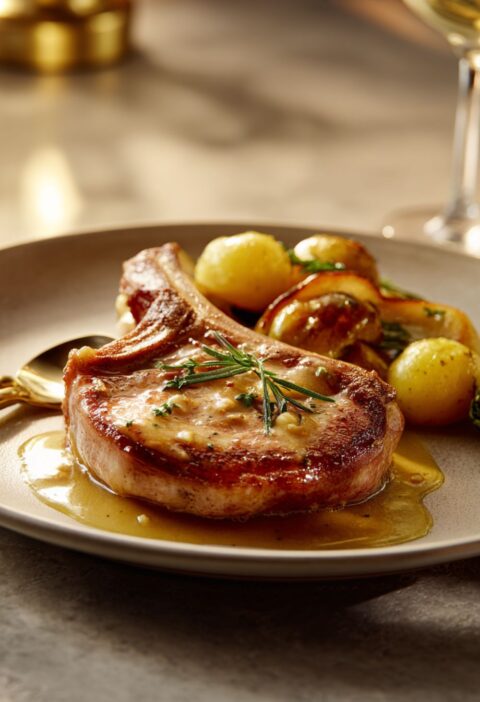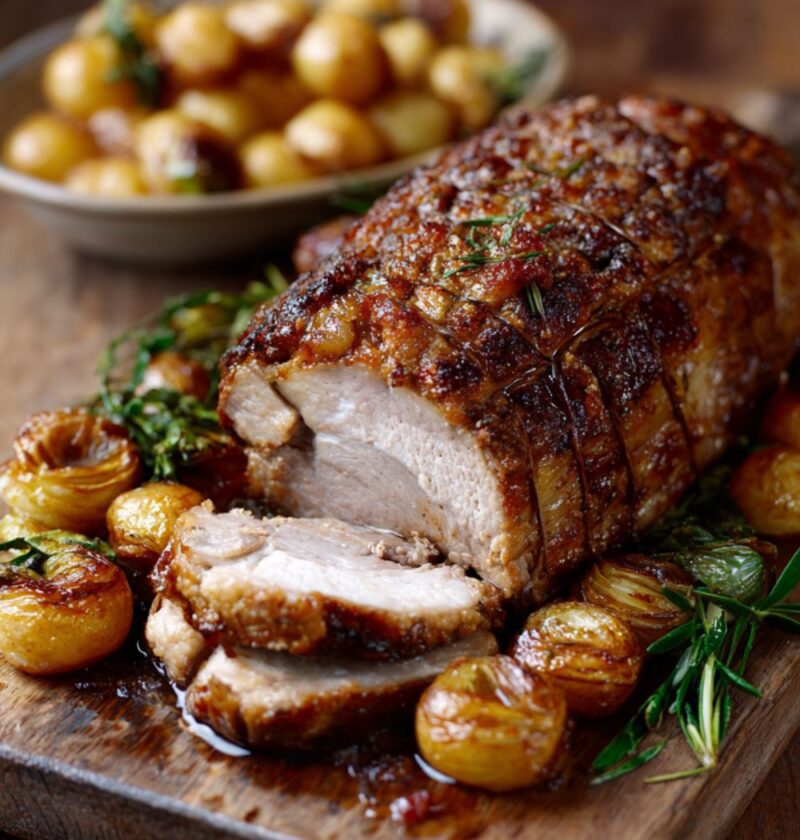
James Martin Pork Roast is the centerpiece of a perfect British Sunday lunch. The focus of this recipe is achieving the “holy grail” of pork roasting: meat that is succulent and juicy on the inside, topped with a layer of shattering, golden, salty crackling on the outside. James Martin’s method relies on high heat initially to blister the skin, followed by a gentle roast over a bed of aromatics to keep the meat moist and create a foundation for a rich cider gravy.
Try More Recipes:
Why You Will Love This Pork Roast Recipe:
- The Crackling: The technique of scoring, drying, and salting the skin, combined with a blast of high heat, guarantees the crackling bubbles up and becomes perfectly crisp rather than chewy.
- Moist Meat: Pork loin can notoriously dry out. By roasting it on a “trivet” of vegetables and using liquid in the tray (which steams the meat from below while roasting), the pork stays tender.
- One-Pan Gravy: The vegetables and meat juices caramelize in the roasting tin, providing a flavor-packed base that transforms into a delicious cider gravy with minimal extra washing up.
- Classic Flavor Pairing: The use of fennel seeds, thyme, and cider complements the natural sweetness of the pork without overpowering it.
- Impressive Presentation: A whole roasted loin with bubbly crackling looks spectacular on the table and is easy to carve.
James Martin Pork Roast Ingredients
For the Pork:
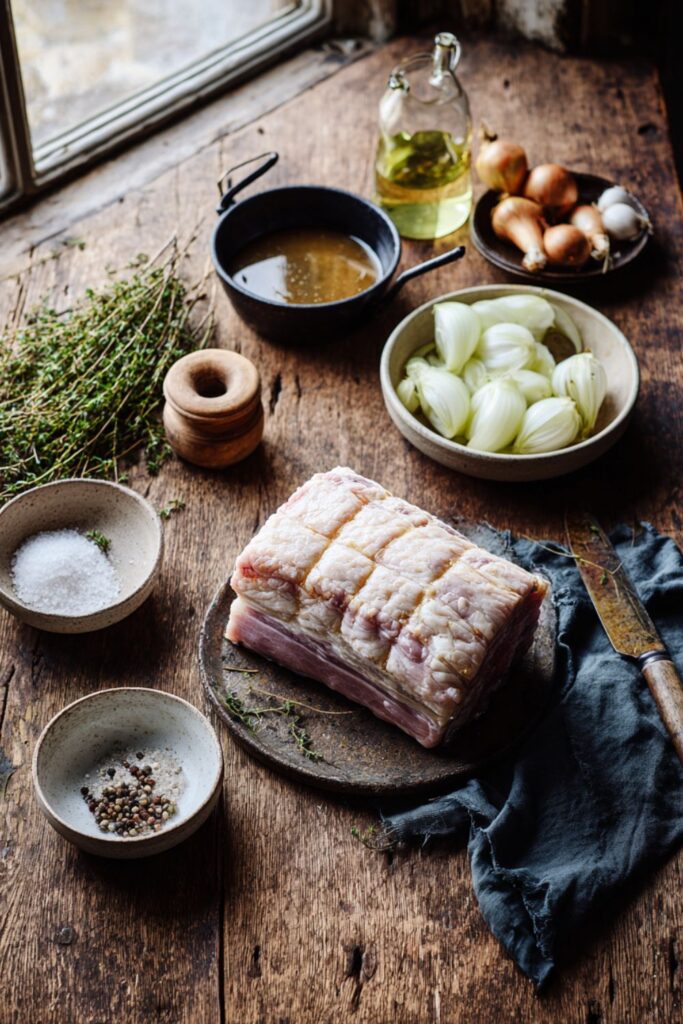
- 1.5kg to 2kg loin of pork (boned and rolled), skin on and scored
- 2 tbsp sea salt flakes (crucial for crackling)
- 1 tbsp olive oil or vegetable oil
- 1 tbsp fennel seeds (optional, but highly recommended)
- 1 tsp black peppercorns, crushed
For the Vegetable Trivet & Gravy:
- 2 onions, peeled and thickly sliced
- 2 carrots, roughly chopped
- 2 sticks celery, roughly chopped
- 1 bulb garlic, cut in half horizontally
- 1 bunch fresh thyme
- 500ml dry cider
- 400ml chicken or pork stock
- 1 tbsp butter (cold)
- 1 tbsp plain flour (optional, for thicker gravy)
How To Make James Martin Pork Roast
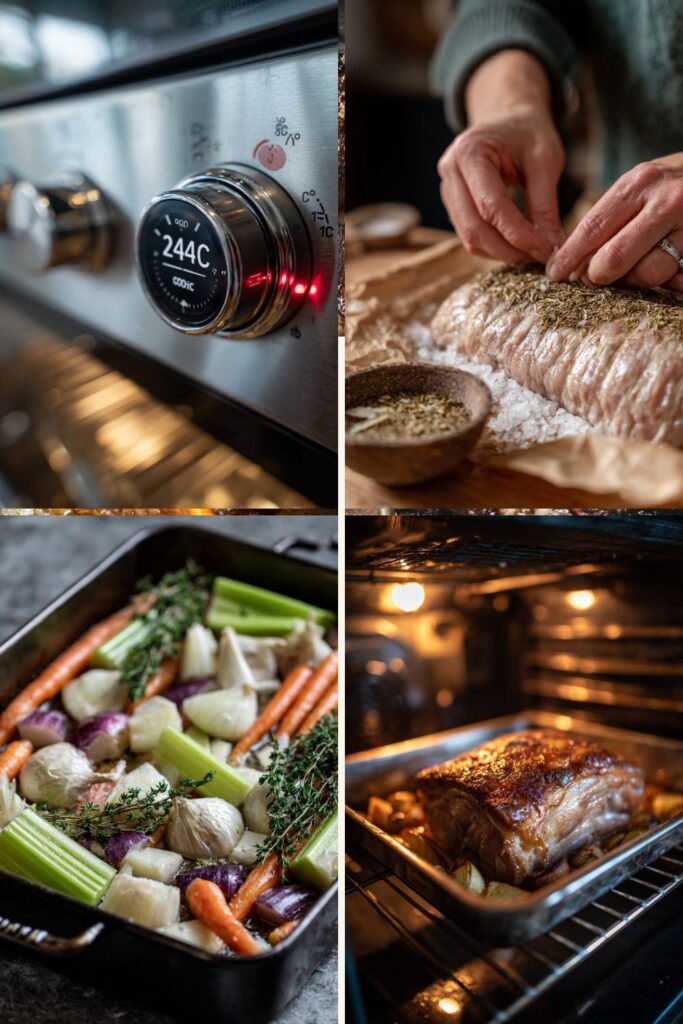
- Prepare the Skin (Crucial Step): Remove the pork from the packaging and pat the skin thoroughly dry with kitchen paper. If the skin is moist, it will not crackle. If the butcher hasn’t done it, score the skin with a sharp craft knife or razor blade in thin lines, being careful not to cut into the meat. Leave the pork uncovered in the fridge for a few hours (or overnight) to dry out further if possible.
- Preheat: Preheat your oven to full power, 240°C (460°F).
- Season: Rub the skin with the oil. Crush the fennel seeds and peppercorns and rub them into the scores. Finally, massage the sea salt flakes generously into the skin and cuts.
- Prepare the Trivet: Place the sliced onions, carrots, celery, garlic, and thyme in the bottom of a large, heavy roasting tray.
- Blast the Heat: Place the pork loin on top of the vegetables. Roast in the hot oven for 20 to 30 minutes. You should see the skin starting to blister and bubble into crackling.
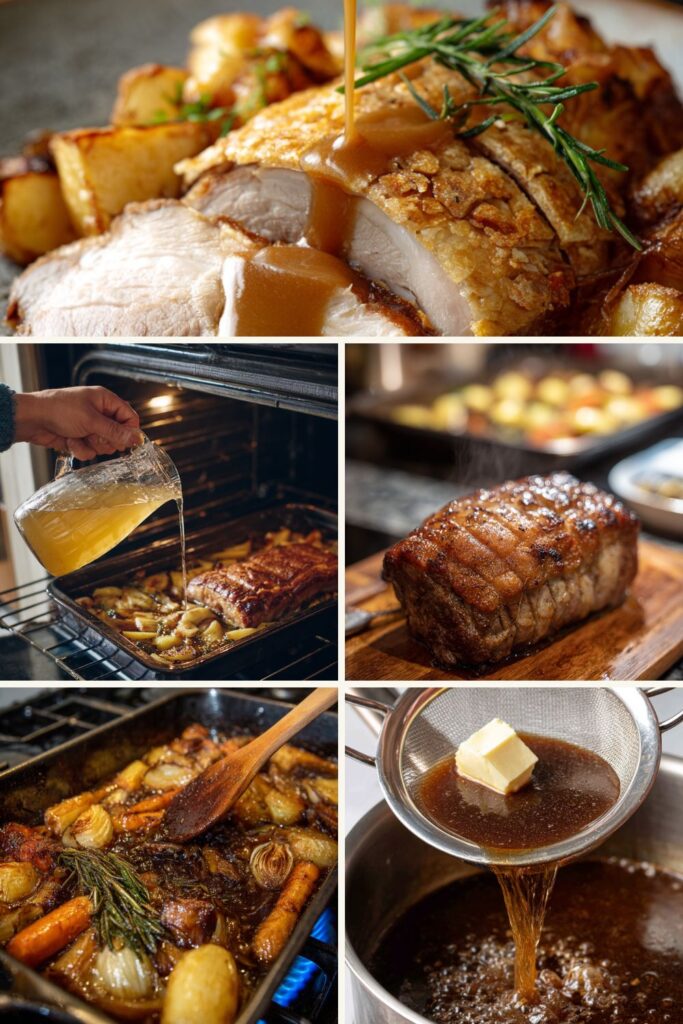
- Lower and Roast: Turn the oven down to 180°C (350°F). Pour half of the cider (250ml) into the bottom of the tray (do not pour it over the crackling!). Roast for roughly 20 minutes per 500g (about 1 hour to 1 hour 15 minutes total depending on weight), or until the internal temperature reaches 65°C – 70°C.
- Rest: Remove the pork from the tray and transfer to a warm board. Leave it uncovered (covering makes crackling soggy) to rest for at least 20 to 30 minutes.
- Make the Gravy: Place the roasting tray with the veg and juices on the stovetop over medium heat. Pour in the remaining cider and scrape the bottom to release the sticky bits (fond). Simmer until reduced by half. Add the stock and simmer for another 5 minutes.
- Finish Gravy: Strain the liquid through a sieve into a saucepan, pushing down on the veg to extract flavor. Whisk in the cold butter for shine. (If you prefer thick gravy, whisk a little flour into the fat in the tray before adding the liquids).
- Serve: Carve the pork into thick slices and serve with the hot gravy.
Recipe Tips
- Dry Skin is Key: Water is the enemy of crackling. If you don’t have time to air-dry the pork in the fridge, use a hair dryer (on cool/warm setting) to dry the skin before oiling.
- Don’t Baste: Never baste the top of the pork roast. If liquid touches the crackling during cooking, it will become soft and rubbery.
- Check the Score: Ensure the score lines go through the skin and into the fat, but not into the flesh. If you cut the flesh, meat juices will bubble up and make the crackling soggy.
- The Vegetable Trivet: Using vegetables lifts the meat off the bottom of the pan, allowing heat to circulate underneath while preventing the bottom of the roast from boiling in the juices.
What To Serve With Pork Roast?
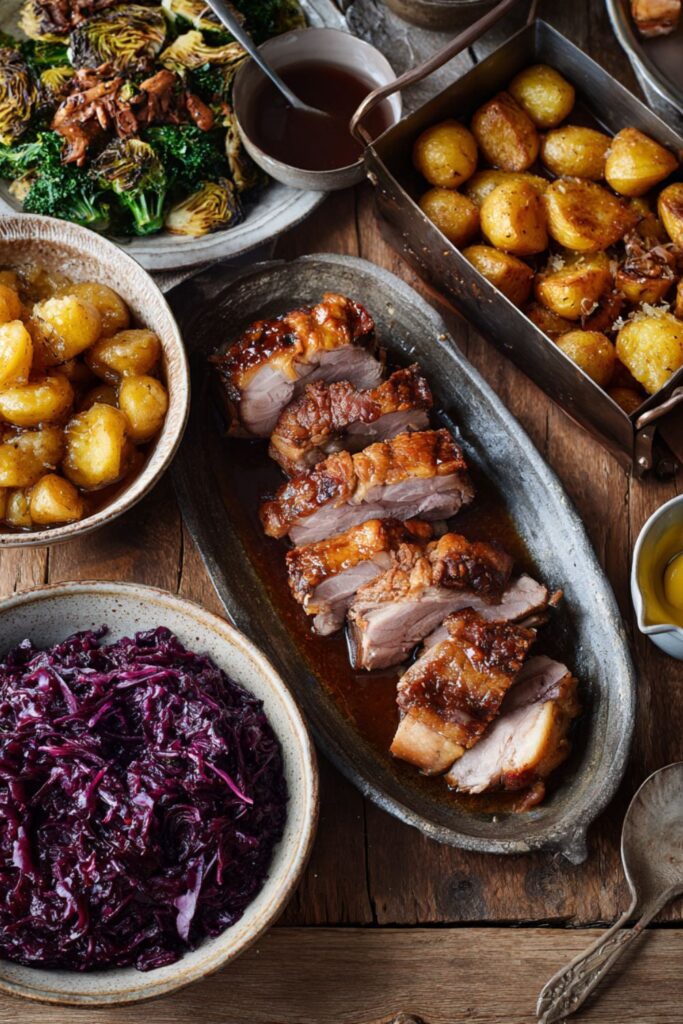
The classic Pork Roast accompaniment is Apple Sauce, as the tartness cuts through the rich fat. Serve with Roast Potatoes (cooked in the same oven), Braised Red Cabbage, or seasonal greens like Savoy Cabbage with bacon. A dollop of English Mustard is also traditional.
How To Store Leftovers Pork Roast?
- Refrigerate: Wrap the leftover meat tightly in foil or place in an airtight container. Store in the fridge for up to 3 days. Remove the crackling and store it separately wrapped in paper towel to keep it crisp.
- Freeze: Slices of roast pork freeze well in gravy for up to 3 months. Thawed crackling will likely lose its crunch.
How To Reheat Leftovers Pork Roast?
Important Tip: Reheating roast pork can dry it out. Use moisture.
- Oven: Place slices in a dish with a splash of leftover gravy or stock. Cover tightly with foil to steam the meat. Heat at 180°C (350°F) for 15 to 20 minutes.
- Cold: Leftover roast pork is arguably better eaten cold in sandwiches with apple sauce or pickles.
FAQs
The oven wasn’t hot enough at the start, or the skin was wet. You can try to rescue it by cutting the skin off the rested meat and placing it under a hot broiler (grill) for a few minutes—watch it like a hawk, as it burns instantly.
Yes. Pork shoulder needs a longer, slower cook (roughly 3 to 4 hours at 160°C) to become tender, but it produces excellent flavor and crackling.
The juices should run clear when you pierce the thickest part of the meat with a skewer. If using a thermometer, pull it out at 65°C (150°F); the temperature will rise to 70°C (160°F) while resting.
Try More Recipes:
Pork Roast Nutrition Facts
Serving Size: 1 slice (approx 150g)
- Calories: 380 kcal
- Total Fat: 22g
- Saturated Fat: 8g
- Cholesterol: 95mg
- Sodium: 400mg
- Total Carbohydrate: 2g
- Dietary Fiber: 0g
- Sugars: 1g
- Protein: 42g
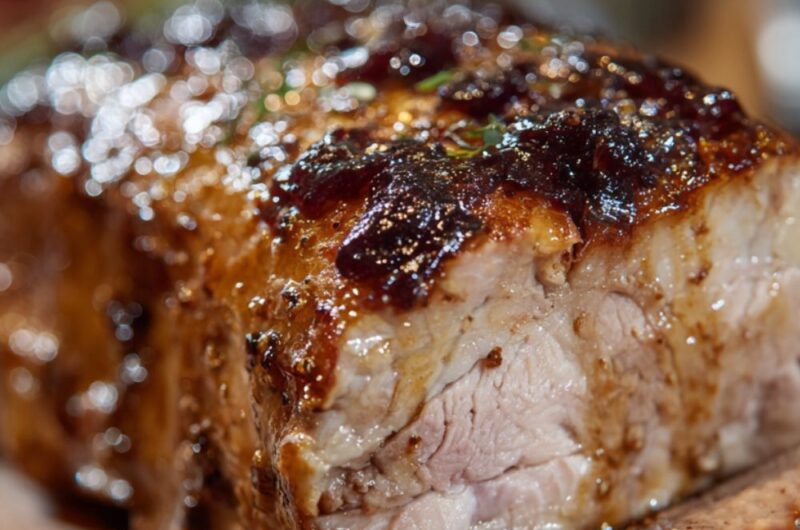
James Martin Pork Roast
Course: Dinner, Lunch, MainCuisine: American, BritishDifficulty: Easy6
servings20
minutes1
hour30
minutes380
kcalJames Martin Pork Roast is the centerpiece of a perfect British Sunday lunch. The focus of this recipe is achieving the “holy grail” of pork roasting: meat that is succulent and juicy on the inside, topped with a layer of shattering, golden, salty crackling on the outside. James Martin’s method relies on high heat initially to blister the skin, followed by a gentle roast over a bed of aromatics to keep the meat moist and create a foundation for a rich cider gravy.
Ingredients
1.5kg to 2kg loin of pork (boned and rolled), skin on and scored
2 tbsp sea salt flakes (crucial for crackling)
1 tbsp olive oil or vegetable oil
1 tbsp fennel seeds (optional, but highly recommended)
1 tsp black peppercorns, crushed
- For the Vegetable Trivet & Gravy:
2 onions, peeled and thickly sliced
2 carrots, roughly chopped
2 sticks celery, roughly chopped
1 bulb garlic, cut in half horizontally
1 bunch fresh thyme
500ml dry cider
400ml chicken or pork stock
1 tbsp butter (cold)
1 tbsp plain flour (optional, for thicker gravy)
Directions
- Prepare the Skin (Crucial Step): Remove the pork from the packaging and pat the skin thoroughly dry with kitchen paper. If the skin is moist, it will not crackle. If the butcher hasn’t done it, score the skin with a sharp craft knife or razor blade in thin lines, being careful not to cut into the meat. Leave the pork uncovered in the fridge for a few hours (or overnight) to dry out further if possible.
- Preheat: Preheat your oven to full power, 240°C (460°F).
- Season: Rub the skin with the oil. Crush the fennel seeds and peppercorns and rub them into the scores. Finally, massage the sea salt flakes generously into the skin and cuts.
- Prepare the Trivet: Place the sliced onions, carrots, celery, garlic, and thyme in the bottom of a large, heavy roasting tray.
- Blast the Heat: Place the pork loin on top of the vegetables. Roast in the hot oven for 20 to 30 minutes. You should see the skin starting to blister and bubble into crackling.
- Lower and Roast: Turn the oven down to 180°C (350°F). Pour half of the cider (250ml) into the bottom of the tray (do not pour it over the crackling!). Roast for roughly 20 minutes per 500g (about 1 hour to 1 hour 15 minutes total depending on weight), or until the internal temperature reaches 65°C – 70°C.
- Rest: Remove the pork from the tray and transfer to a warm board. Leave it uncovered (covering makes crackling soggy) to rest for at least 20 to 30 minutes.
- Make the Gravy: Place the roasting tray with the veg and juices on the stovetop over medium heat. Pour in the remaining cider and scrape the bottom to release the sticky bits (fond). Simmer until reduced by half. Add the stock and simmer for another 5 minutes.
- Finish Gravy: Strain the liquid through a sieve into a saucepan, pushing down on the veg to extract flavor. Whisk in the cold butter for shine. (If you prefer thick gravy, whisk a little flour into the fat in the tray before adding the liquids).
- Serve: Carve the pork into thick slices and serve with the hot gravy.
Notes
- Dry Skin is Key: Water is the enemy of crackling. If you don’t have time to air-dry the pork in the fridge, use a hair dryer (on cool/warm setting) to dry the skin before oiling.
Don’t Baste: Never baste the top of the pork roast. If liquid touches the crackling during cooking, it will become soft and rubbery.
Check the Score: Ensure the score lines go through the skin and into the fat, but not into the flesh. If you cut the flesh, meat juices will bubble up and make the crackling soggy.
The Vegetable Trivet: Using vegetables lifts the meat off the bottom of the pan, allowing heat to circulate underneath while preventing the bottom of the roast from boiling in the juices.