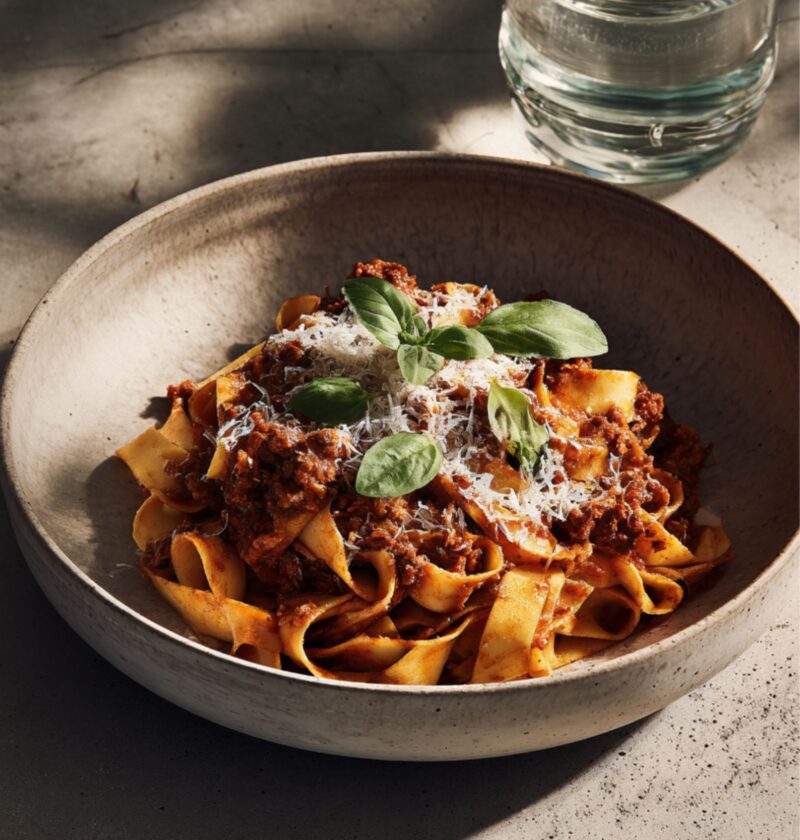
James Martin Ragu Bolognese (often called his “Pasta Ragu”) is a definitive, chef-quality version of the Italian classic. It is made with a rich blend of two meats—beef mince for depth and pork mince (or sausage meat) for sweetness and fat content. The secret lies in the long, slow simmer; unlike a quick weeknight sauce, this ragu bubbles away for up to3 hours until the liquid reduces into a thick, glossy, intense coating that clings to the pasta rather than sliding off. It is perfect for a lazy Sunday afternoon or a big family feast.
Try more Recipes:
Why You Will Love This Ragu Bolognese Recipe:
- The “Two-Meat” Rule: Using both beef and pork balances the flavor. Beef provides the savory “meatiness,” while pork adds richness and a softer texture.
- Richness: The addition of pancetta (or bacon) provides a smoky, salty base note that permeates the sauce.
- Texture: The long cooking time breaks down the vegetables and meat into a unified, velvety sauce, avoiding the watery separation common in quicker recipes.
- Versatility: This sauce doubles perfectly as a filling for cannelloni or lasagna.
James Martin Ragu Bolognese Ingredients
- 500g beef mince (ground beef, preferably 15-20% fat)
- 500g pork mince (ground pork) or sausage meat
- 150g pancetta or smoked bacon lardons
- 2 tbsp olive oil
- 1 large onion, peeled and finely diced
- 2 carrots, peeled and finely diced
- 2 celery sticks, finely diced
- 1 leek, washed and finely diced (James often adds this for extra sweetness)
- 3 cloves garlic, crushed or finely chopped
- 2 tbsp tomato purée
- 150ml red wine (a dry Italian red like Chianti is best)
- 2 x 400g tins chopped tomatoes (San Marzano are best)
- 300ml beef stock
- 1 bay leaf
- 1 bunch fresh basil (stalks for cooking, leaves for garnish)
- Salt and freshly ground black pepper
- To Serve: Fresh egg tagliatelle or spaghetti, and plenty of grated Parmesan or Pecorino cheese.
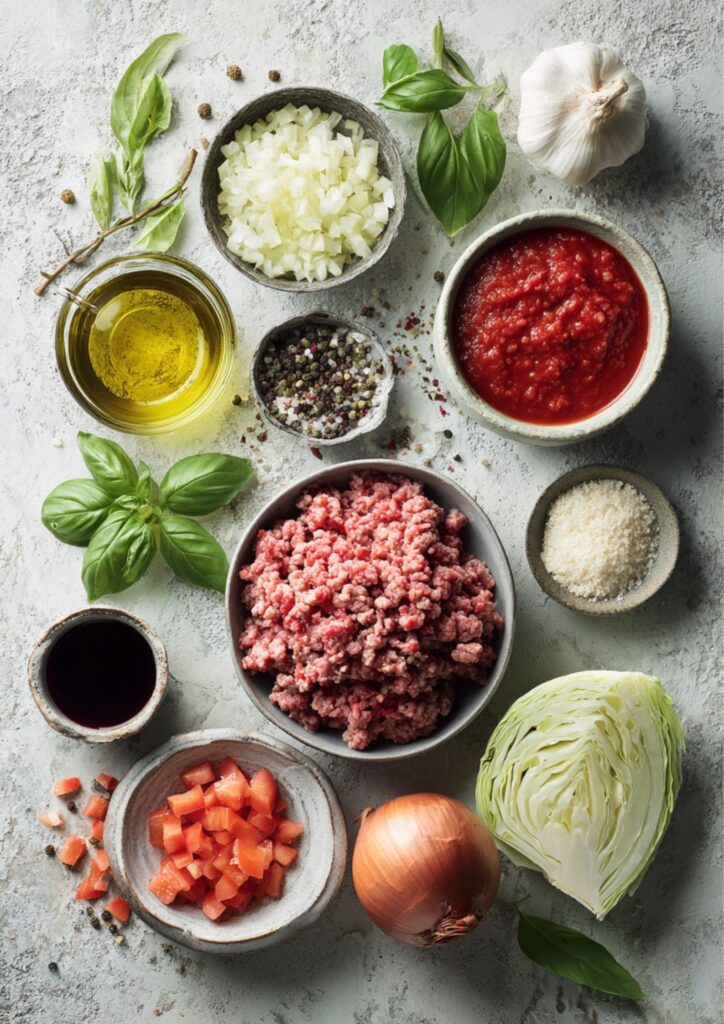
How To Make James Martin Ragu Bolognese
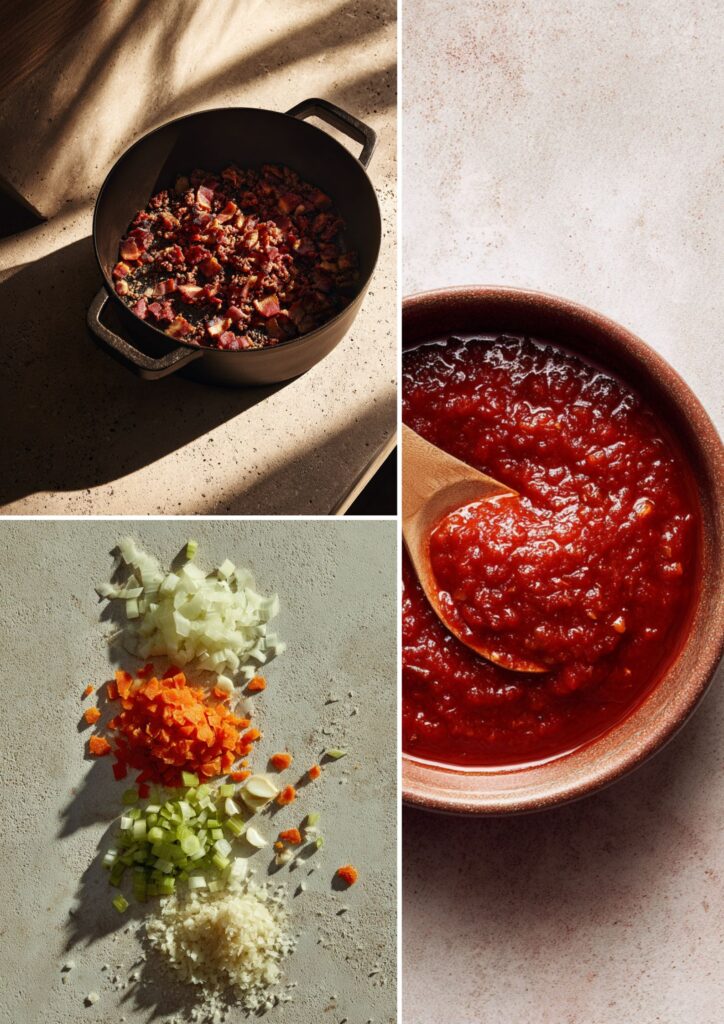
- Render the fat: Heat a large heavy-based casserole dish or Dutch oven over medium heat. Add the olive oil and the pancetta (or bacon). Fry for 4 to 5 minutes until the fat has rendered and the bacon is crisp.
- Brown the meats: Turn the heat up to high. Add the beef and pork mince in batches. Cook until the meat is deeply browned and caramelized, not just grey. (James stresses that “colour is flavour”). Remove the browned meat and bacon from the pan and set aside in a bowl.
- Make the soffritto: Reduce the heat to medium. In the same pan (don’t clean it—keep those flavorful brown bits!), add the onion, carrot, celery, leek, and garlic. Cook gently for 8 to 10 minutes until the vegetables are very soft and sweet, but not burnt.
- Cook the aromatics: Stir in the tomato purée and cook for 2 minutes. This “cooks out” the metallic taste of the paste and deepens the flavor.
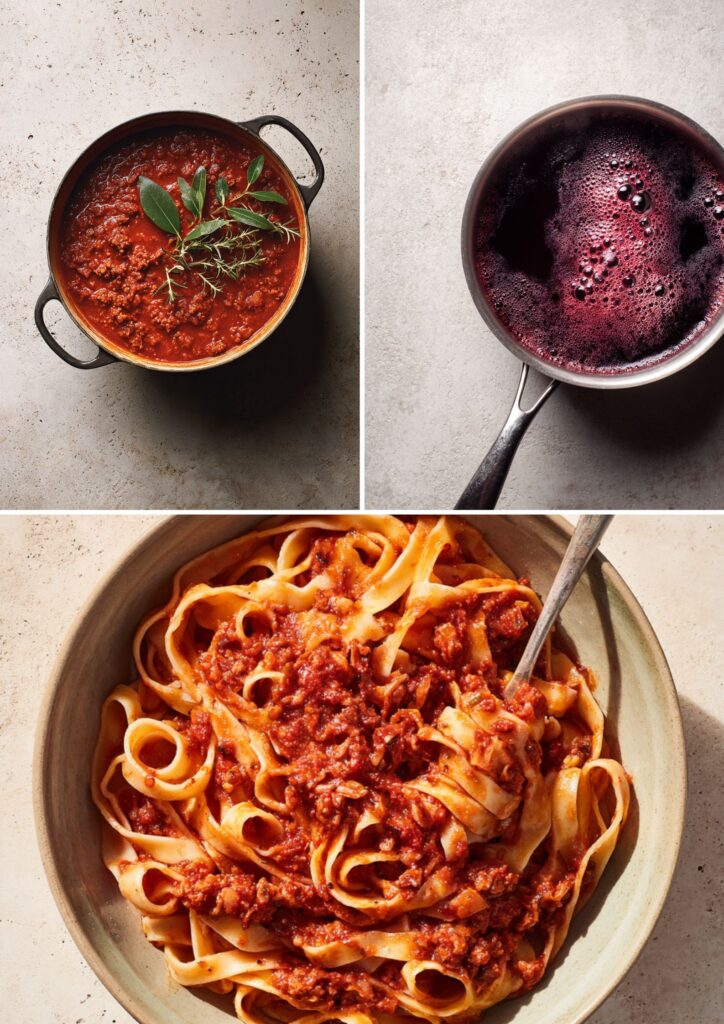
- Deglaze: Pour in the red wine. Turn up the heat and let it bubble rapidly for 2 to 3 minutes, scraping the bottom of the pan to release the sticky caramelized bits (fond).
- Simmer: Return the browned meat to the pan. Add the tinned tomatoes, beef stock, bay leaf, and the stalks from the basil bunch. Stir well and bring to a boil.
- The long wait: Reduce the heat to a very low simmer. Cover with a lid (slightly ajar to let steam escape) and cook for 2 to 3 hours. Stir occasionally to prevent sticking. The sauce should become thick, dark, and rich.
- Finish: Remove the bay leaf and basil stalks. Taste and season generously with salt and pepper. Stir in the torn fresh basil leaves just before serving.
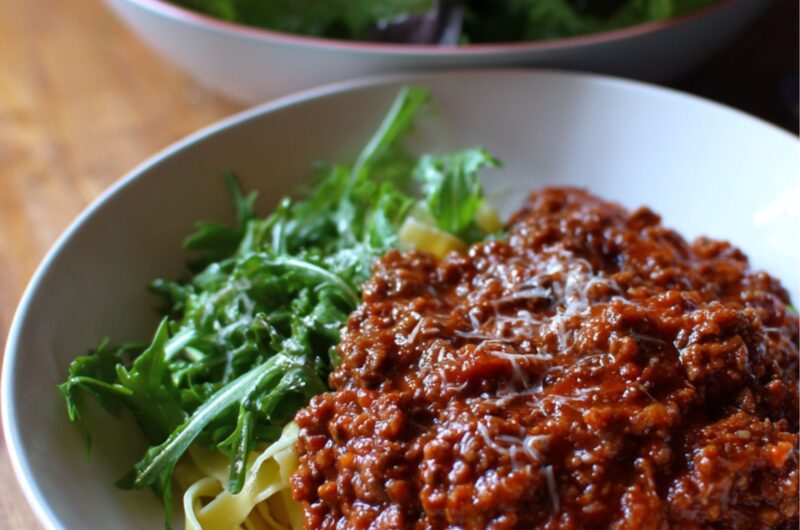
- Serve: Toss the cooked pasta into the sauce (don’t just spoon sauce on top) and add a splash of pasta water to help it emulsify. Serve with grated Parmesan.
Recipe Tips
- The “Milk” Trick: While not always in every James Martin iteration, traditional Bolognese often uses a splash of full-fat milk (about 100ml) added before the wine. This tenderizes the meat and adds a subtle creamy sweetness.
- Pasta Water: Always save a mug of the starchy water the pasta cooked in. Adding a splash to the sauce right at the end helps the sauce stick to the pasta strands.
- Batch Cook: This recipe freezes exceptionally well. In fact, the flavors often improve after freezing as they have more time to meld.
- Finely Chop: Take time to chop your vegetables (onion, carrot, celery) very finely. They should almost melt into the sauce rather than being chunky obstacles.
What To Serve With Ragu Bolognese Recipe?
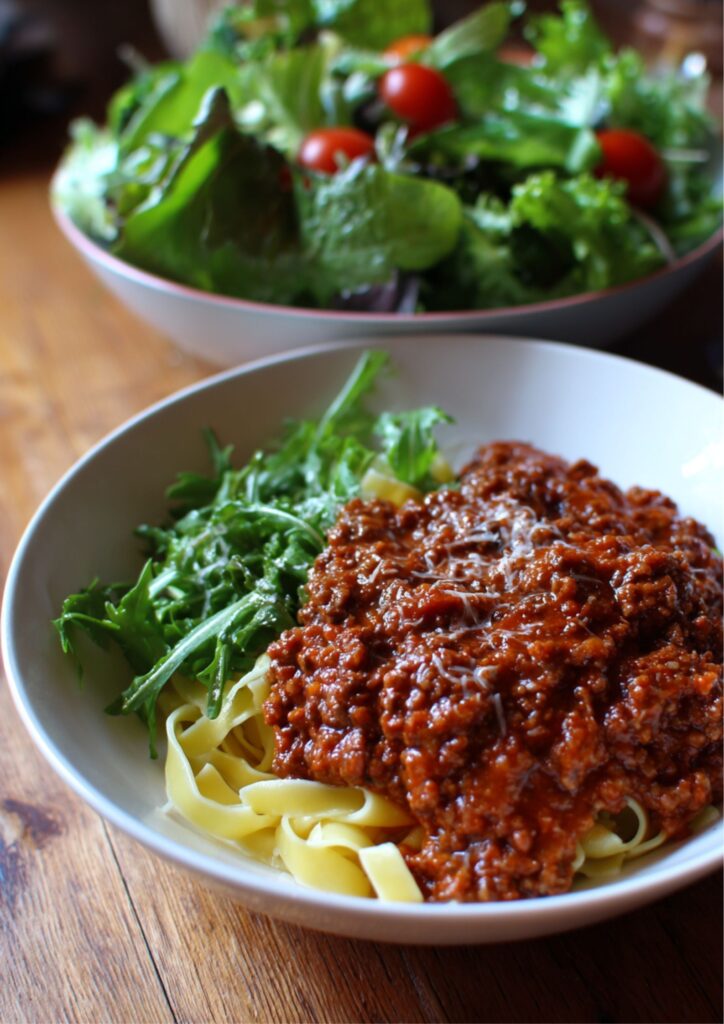
The ideal partner for this rich, heavy sauce is broad, flat pasta like fresh tagliatelle or pappardelle, which holds the meat much better than spaghetti. On the side, a basket of warm, buttery garlic bread is essential for mopping up the plate. To cut through the richness of the pork and beef fat, serve a crisp green salad dressed with a sharp vinaigrette, and finish everything with a generous dusting of freshly grated Parmesan cheese.
How To Store Leftovers Ragu Bolognese?
- Refrigerate: Allow the sauce to cool completely, then store in an airtight container in the fridge for up to 3 to 4 days. The flavor often improves overnight.
- Freeze: This sauce freezes perfectly. Portion it into freezer bags or containers and freeze for up to 3 months. Lay bags flat to save space.
How To Reheat Leftovers Ragu Bolognese?
- Stovetop (Best Quality): Place the ragu in a saucepan over medium-low heat. Add a splash of water, beef stock, or red wine to loosen the sauce (it will be thick after chilling). Simmer gently for 5 to 10 minutes until bubbling hot.
- Microwave: Transfer a portion to a microwave-safe bowl. Cover loosely to prevent splatters. Heat on high for 2 to 3 minutes, pausing halfway to stir so it heats evenly.
- With Pasta: If the pasta and sauce were mixed before storing, add a little water to the bowl before reheating to steam the pasta slightly so it doesn’t dry out.
FAQs
Yes, adding a splash of full-fat milk (about 100ml) before the wine is a classic Bolognese secret often recommended by chefs. It helps tenderize the meat and gives the sauce a silkier, creamier finish.
James Martin recommends using a dry Italian red wine, such as Chianti. This adds a deep, robust flavor and dark color. Avoid sweet wines, which can throw off the savory balance.
Absolutely, If you cannot find Italian pancetta, you can use smoked bacon lardons or chopped streaky bacon. The goal is to render the fat to create a smoky, salty base for the vegetables.
Try more Recipes:
Ragu Bolognese Nutrition Facts
- Calories: 650 kcal
- Total Fat: 35g
- Saturated Fat: 12g
- Cholesterol: 95mg
- Sodium: 800mg
- Total Carbohydrate: 45g (with pasta)
- Dietary Fiber: 4g
- Sugars: 8g
- Protein: 35g
James Martin Ragu Bolognese Recipe
Course: Sides, Dinner, LunchCuisine: American, BrtitishDifficulty: Easy6
servings20
minutes3
hours650
kcalJames Martin Ragu Bolognese (often called his “Pasta Ragu”) is a definitive, chef-quality version of the Italian classic. It is made with a rich blend of two meats—beef mince for depth and pork mince (or sausage meat) for sweetness and fat content. The secret lies in the long, slow simmer; unlike a quick weeknight sauce, this ragu bubbles away for up to3 hours until the liquid reduces into a thick, glossy, intense coating that clings to the pasta rather than sliding off. It is perfect for a lazy Sunday afternoon or a big family feast.
Ingredients
500g beef mince (ground beef, preferably 15-20% fat)
500g pork mince (ground pork) or sausage meat
150g pancetta or smoked bacon lardons
2 tbsp olive oil
1 large onion, peeled and finely diced
2 carrots, peeled and finely diced
2 celery sticks, finely diced
1 leek, washed and finely diced (James often adds this for extra sweetness)
3 cloves garlic, crushed or finely chopped
2 tbsp tomato purée
150ml red wine (a dry Italian red like Chianti is best)
2 x 400g tins chopped tomatoes (San Marzano are best)
300ml beef stock
1 bay leaf
1 bunch fresh basil (stalks for cooking, leaves for garnish)
Salt and freshly ground black pepper
To Serve: Fresh egg tagliatelle or spaghetti, and plenty of grated Parmesan or Pecorino cheese.
Directions
- Render the fat: Heat a large heavy-based casserole dish or Dutch oven over medium heat. Add the olive oil and the pancetta (or bacon). Fry for 4 to 5 minutes until the fat has rendered and the bacon is crisp.
- Brown the meats: Turn the heat up to high. Add the beef and pork mince in batches. Cook until the meat is deeply browned and caramelized, not just grey. (James stresses that “colour is flavour”). Remove the browned meat and bacon from the pan and set aside in a bowl.
- Make the soffritto: Reduce the heat to medium. In the same pan (don’t clean it—keep those flavorful brown bits!), add the onion, carrot, celery, leek, and garlic. Cook gently for 8 to 10 minutes until the vegetables are very soft and sweet, but not burnt.
- Cook the aromatics: Stir in the tomato purée and cook for 2 minutes. This “cooks out” the metallic taste of the paste and deepens the flavor.
- Deglaze: Pour in the red wine. Turn up the heat and let it bubble rapidly for 2 to 3 minutes, scraping the bottom of the pan to release the sticky caramelized bits (fond).
- Simmer: Return the browned meat to the pan. Add the tinned tomatoes, beef stock, bay leaf, and the stalks from the basil bunch. Stir well and bring to a boil.
- The long wait: Reduce the heat to a very low simmer. Cover with a lid (slightly ajar to let steam escape) and cook for 2 to 3 hours. Stir occasionally to prevent sticking. The sauce should become thick, dark, and rich.
- Finish: Remove the bay leaf and basil stalks. Taste and season generously with salt and pepper. Stir in the torn fresh basil leaves just before serving.
- Serve: Toss the cooked pasta into the sauce (don’t just spoon sauce on top) and add a splash of pasta water to help it emulsify. Serve with grated Parmesan.
Notes
- The “Milk” Trick: While not always in every James Martin iteration, traditional Bolognese often uses a splash of full-fat milk (about 100ml) added before the wine. This tenderizes the meat and adds a subtle creamy sweetness.
Pasta Water: Always save a mug of the starchy water the pasta cooked in. Adding a splash to the sauce right at the end helps the sauce stick to the pasta strands.
Batch Cook: This recipe freezes exceptionally well. In fact, the flavors often improve after freezing as they have more time to meld.
Finely Chop: Take time to chop your vegetables (onion, carrot, celery) very finely. They should almost melt into the sauce rather than being chunky obstacles.