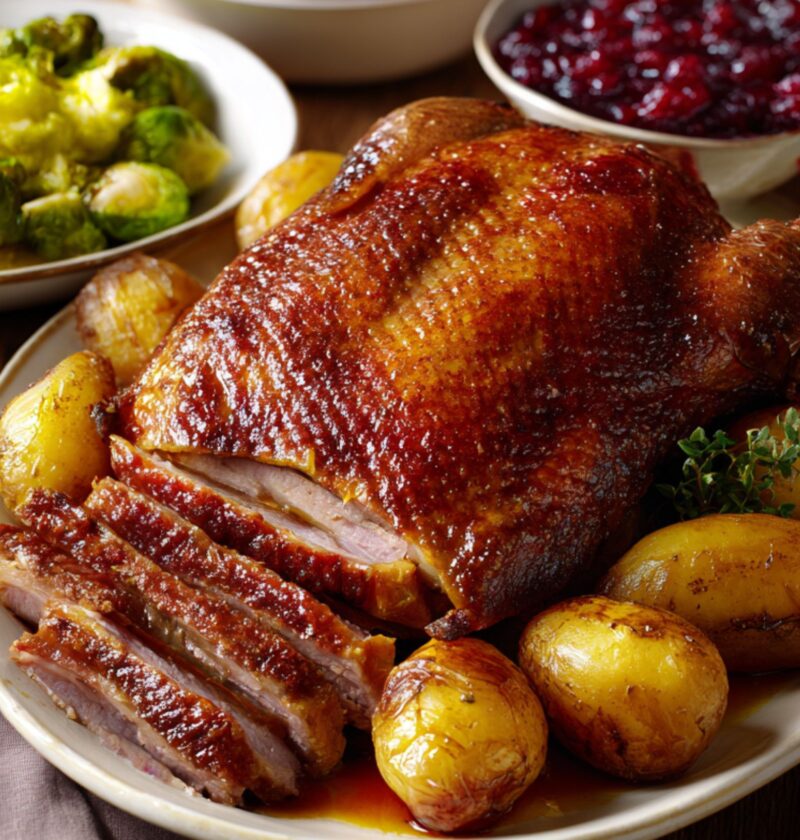
James Martin Roast Duck Recipe features a whole bird rubbed with aromatic five-spice, roasted over a layer of tender boulangère potatoes, and ready in just over 2 hours. The rich fat renders down during cooking to golden-crisp the skin while flavouring the vegetables below with incredible depth. I find this method delivers a stunning Sunday lunch centrepiece that feels far more special than the usual chicken roast.
Try More Recipes:
Why This Classic Roast Duck Works
- What makes this version stand out is the clever use of the duck fat. Instead of letting all that precious rendering go to waste in a tin, you roast the bird directly on a rack above the potatoes and onions. The fat drips down as it cooks, essentially confit-ing the vegetables in savoury juices so they become meltingly tender on the inside and crisp on the edges.
- I learned the hard way that you must prick the skin thoroughly before roasting to release that fat, otherwise, the skin stays flabby rather than shattering like glass. The addition of Chinese five-spice and clementine cuts through the richness, giving the meat a subtle warmth that pairs perfectly with the tart cranberry sauce.
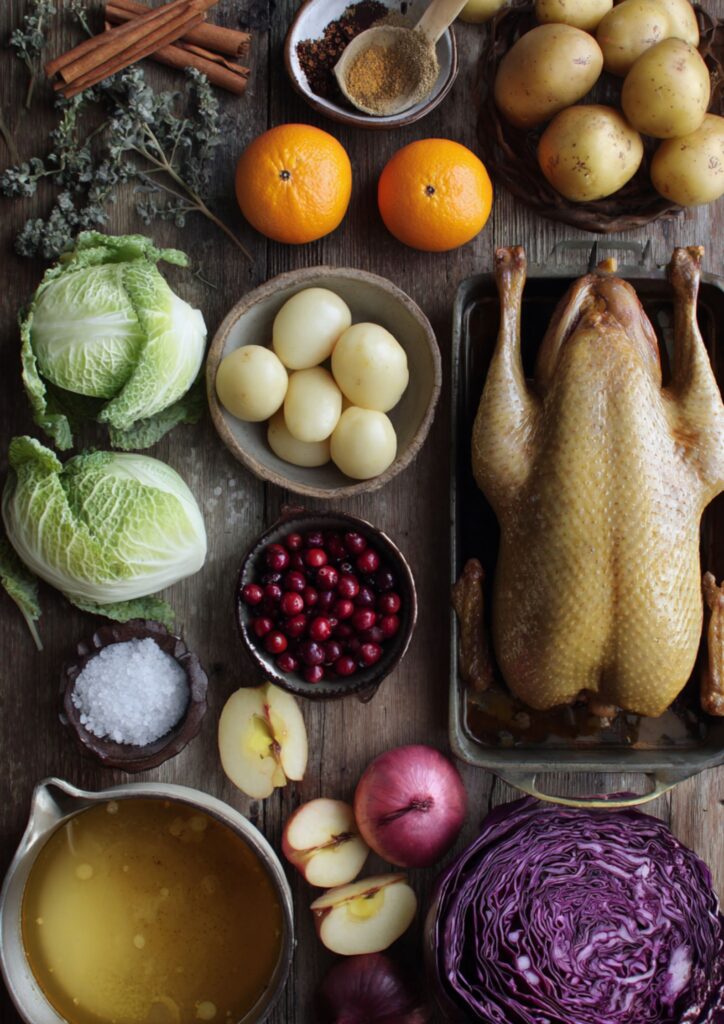
James Martin Roast Duck Recipe Ingredients
For the Roast Duck:
- 1 x 2kg whole duck, giblets removed
- 1 clementine or orange, halved
- 1 cinnamon stick
- ½ tsp Chinese five-spice powder
- Sea salt and freshly ground black pepper
For the Potatoes (The Base):
- 1.5kg potatoes, peeled and thinly sliced
- 2 onions, thinly sliced
- 500ml chicken stock
For the Cranberry Apple Sauce:
- 2 Bramley apples, peeled, cored and chopped
- 50g dried cranberries
- 5 tbsp dry cider
- 1-2 tbsp caster sugar (to taste)
For the Cabbage (Optional Side):
- 1 head Savoy cabbage, shredded
- 50g butter
How To Make James Martin Roast Duck Recipe
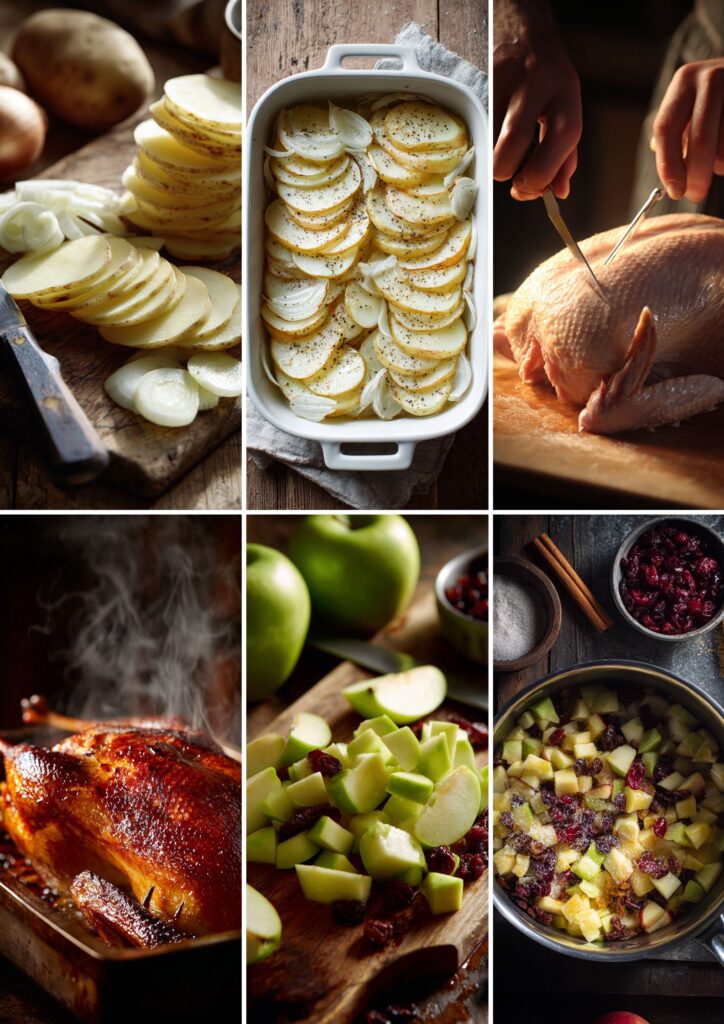
- Prepare the Potato Base: Preheat your oven to 180°C (160°C Fan). Layer the sliced potatoes and onions in a deep roasting tin or ovenproof dish, seasoning each layer with salt and pepper. Pour the chicken stock over the vegetables and press the top layer down flat to submerge them slightly. Place this on the lower shelf of the oven.
- Prep the Duck: Prick the duck skin all over with a fork or skewer, being careful not to pierce the meat itself. Stuff the cavity with the clementine halves and the cinnamon stick. Rub the five-spice powder thoroughly into the skin and season generously with salt and pepper.
- Roast the Bird: Place the duck directly on the oven rack positioned immediately above the potato dish. This ensures the fat drips down onto the potatoes as it renders. Roast for 1 hour 30 minutes to 1 hour 45 minutes, until the skin is deep golden and the juices run clear when the thigh is pierced.
- Make the Sauce: While the duck roasts, place the chopped apples, dried cranberries, and cider in a saucepan. Bring to a boil, then reduce the heat and simmer for 10 minutes until the apples collapse and the sauce thickens. Taste and add sugar if it needs sweetening.
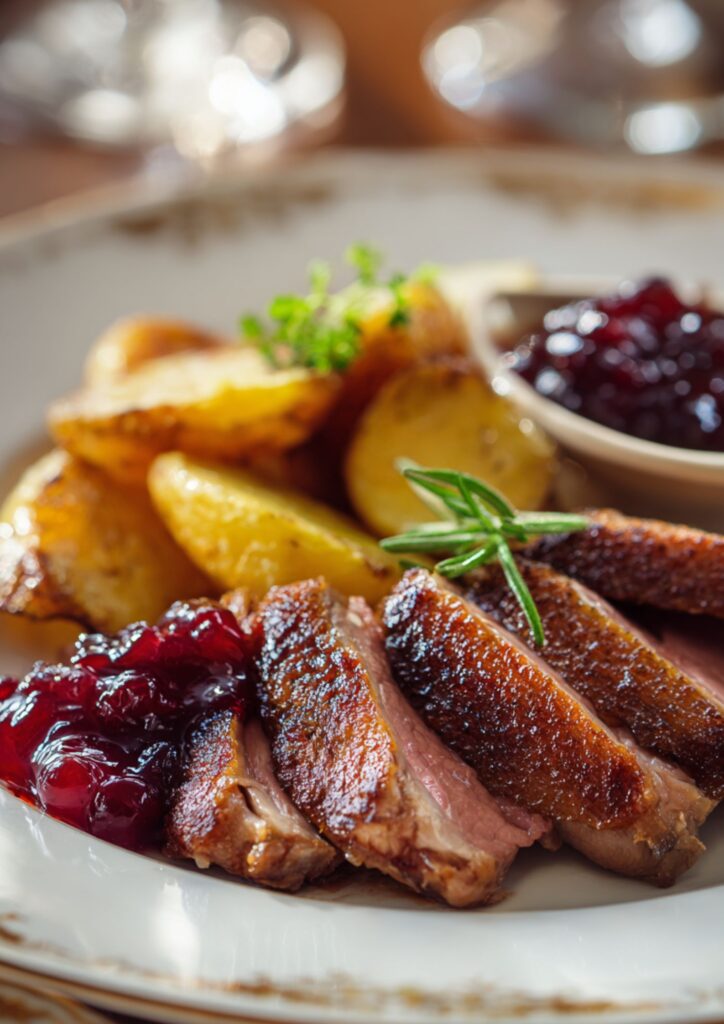
- Rest and Serve: Once cooked, remove the duck and let it rest on a warm platter for at least 15-20 minutes. Check the potatoes are tender and golden; if not, return them to the oven while the duck rests. Serve the carved duck with a scoop of the savoury potatoes and the tart apple sauce.
Recipe Tips
- Pricking is Key: Take time to prick the skin, especially around the legs and breast where the fat is thickest. This acts as an escape route for the fat, ensuring the skin crisps up rather than steaming.
- The Potato Texture: If the potatoes look like they are browning too quickly on top before the duck is done, you can cover the dish loosely with foil for the last 30 minutes.
- Testing Doneness: Duck is safe to eat when the internal temperature reaches 75°C at the thickest part of the leg, though some chefs prefer the breast slightly pink.
- Resting Time: Do not skip the resting step. Duck meat relaxes significantly as it sits, making it easier to carve and much juicier to eat.
What To Serve With Roast Duck?
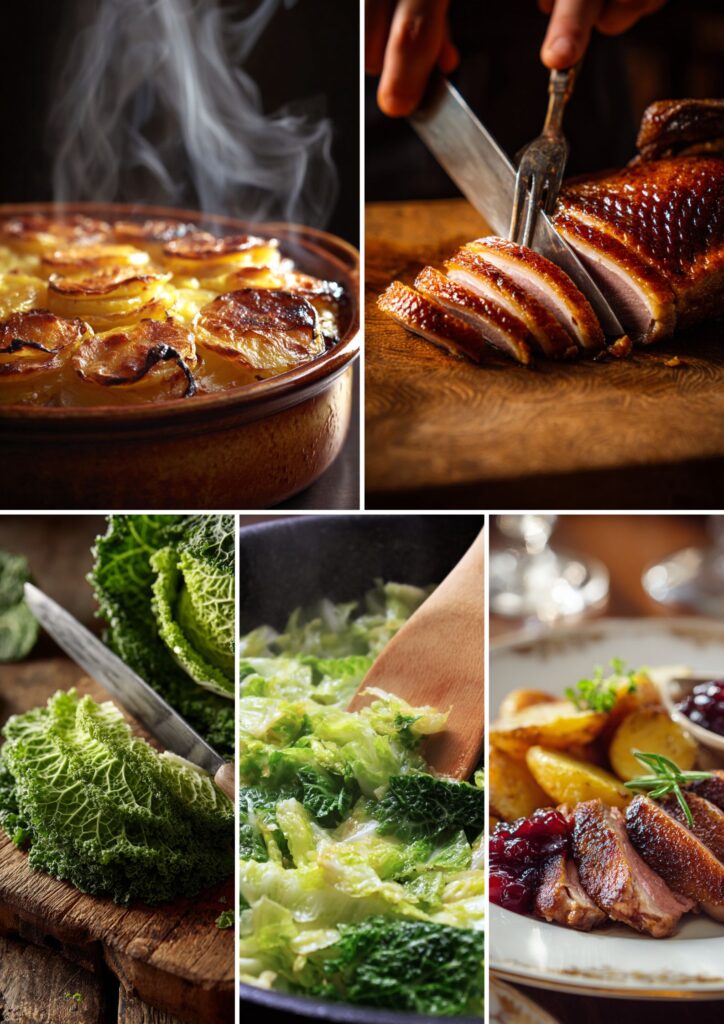
Since the potatoes are cooked in the duck fat, you already have your starch covered beautifully. A simple side of buttered Savoy cabbage or steamed tenderstem broccoli works best to cut through the richness of the meat and the creamy potatoes. The sharp cranberry apple sauce included in this recipe provides the necessary acidity to balance the plate.
How To Store Leftovers Roast Duck?
- Refrigerate: Carve the leftover meat off the bone and place it in an airtight container. Store it in the fridge for up to 3 to 4 days.
- Freeze: Wrap the meat tightly in plastic wrap and a layer of aluminum foil, or seal it in a heavy-duty freezer bag, and freeze for up to 3 months. Thaw overnight in the fridge before reheating.
How To Reheat Leftovers Roast Duck?
Microwave (Not Recommended): Avoid the microwave entirely if you want crispy skin, as it will turn the skin rubbery and tough.
- Oven (Best Method): Place the duck pieces skin-side up on a wire rack over a baking sheet. Heat at 350°F (175°C) for 10 to 15 minutes until the meat is hot and the skin is crisp.
- Air Fryer (Quickest): Pop the pieces in at 350°F (175°C) for 4 to 6 minutes for a super fast, satisfying crunch.
- Stovetop (Best for Slices): Pan-fry cold, sliced or shredded duck in a dry skillet over medium heat for 3 to 5 minutes until sizzling and caramelized in its own fat.
FAQs
No, leave the duck uncovered. You want the hot air to circulate directly around the skin to dry it out and make it crisp. Covering it would steam the skin and make it soggy.
You can, but chicken or vegetable stock adds a savoury depth that water lacks. Since the potatoes absorb all the liquid, using a good quality stock makes a huge difference to the final flavour.
This usually happens if the oven wasn’t hot enough or the skin wasn’t pricked sufficiently to let the fat render out. Ensure the skin is dry before seasoning and don’t overcrowd the oven.
Try More Recipes:
Roast Duck Nutrition Facts
- Calories: 850 kcal
- Total Fat: 65g
- Saturated Fat: 22g
- Cholesterol: 140mg
- Sodium: 320mg
- Total Carbohydrate: 45g
- Protein: 35g
James Martin Roast Duck Recipe
Course: DinnersCuisine: BritishDifficulty: Easy4
servings20
minutes3
hours10
minutes850
kcal3
hours30
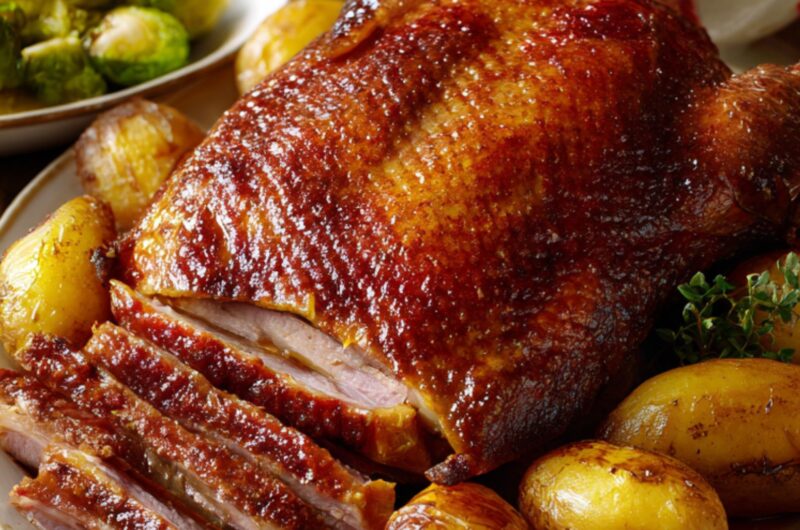
minutesThis James Martin Roast Duck Recipe delivers crispy skin, tender meat, and savoury potatoes cooked in the rendered fat. Spiced with cinnamon and clementine, it’s a whole bird roast ready in 2 hours that makes a stunning weekend feast.
Ingredients
For the Roast Duck:
1 x 2kg whole duck, giblets removed
1 clementine or orange, halved
1 cinnamon stick
1/2 tsp Chinese five-spice powder
Sea salt and freshly ground black pepper
For the Potatoes (The Base):
1.5kg potatoes, peeled and thinly sliced
2 onions, thinly sliced
500ml chicken stock
For the Cranberry Apple Sauce:
2 Bramley apples, peeled, cored and chopped
50g dried cranberries
5 tbsp dry cider
1-2 tbsp caster sugar (to taste)
For the Cabbage (Optional Side):
1 head Savoy cabbage, shredded
50g butter
Directions
- Preheat your oven to 180°C (160°C Fan). Layer the sliced potatoes and onions in a deep roasting tin or ovenproof dish, seasoning each layer with salt and pepper.
- Pour the chicken stock over the vegetables and press the top layer down flat to submerge them slightly. Place this on the lower shelf of the oven.
- Prick the duck skin all over with a fork or skewer, being careful not to pierce the meat itself. Stuff the cavity with the clementine halves and the cinnamon stick.
- Rub the five-spice powder thoroughly into the skin and season generously with salt and pepper.
- Place the duck directly on the oven rack positioned immediately above the potato dish. This ensures the fat drips down onto the potatoes as it renders.
- Roast for 1 hour 30 minutes to 1 hour 45 minutes, until the skin is deep golden and the juices run clear when the thigh is pierced.
- While the duck roasts, place the chopped apples, dried cranberries, and cider in a saucepan. Bring to a boil, then reduce the heat and simmer for 10 minutes until the apples collapse and the sauce thickens. Taste and add sugar if it needs sweetening.
- Once cooked, remove the duck and let it rest on a warm platter for at least 15-20 minutes. Check the potatoes are tender and golden; if not, return them to the oven while the duck rests.
- Serve the carved duck with a scoop of the savoury potatoes and the tart apple sauce.
Notes
- Pricking is Key: Take time to prick the skin, especially around the legs and breast where the fat is thickest. This acts as an escape route for the fat, ensuring the skin crisps up rather than steaming.
The Potato Texture: If the potatoes look like they are browning too quickly on top before the duck is done, you can cover the dish loosely with foil for the last 30 minutes.
Testing Doneness: Duck is safe to eat when the internal temperature reaches 75°C at the thickest part of the leg, though some chefs prefer the breast slightly pink.
Resting Time: Do not skip the resting step. Duck meat relaxes significantly as it sits, making it easier to carve and much juicier to eat.