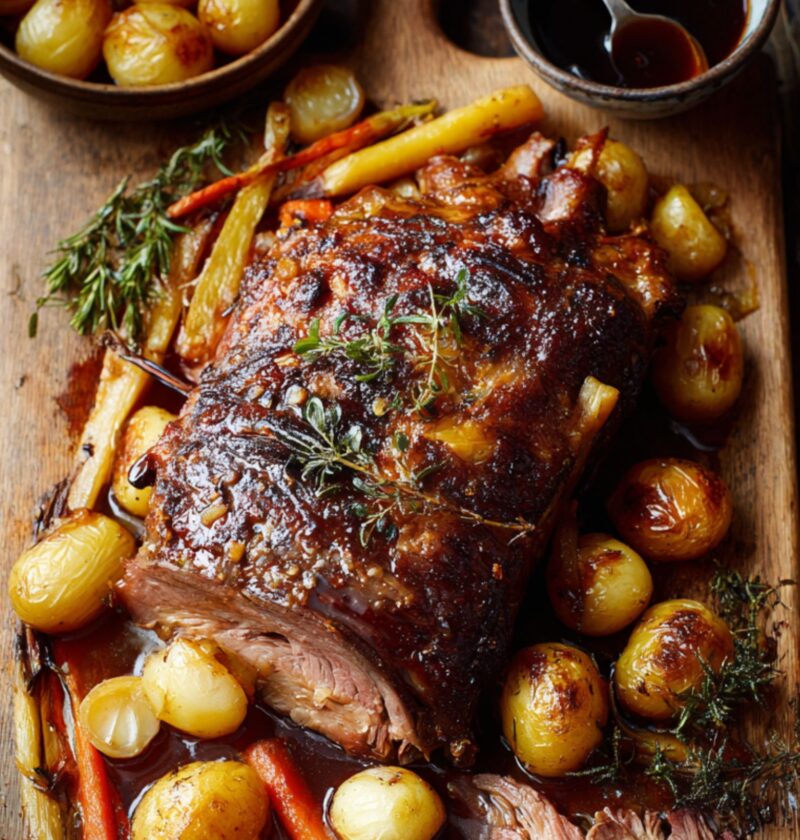
James Martin Slow Cooked Lamb is the definition of a Sunday feast. James has long championed the shoulder of lamb over the more expensive leg for slow cooking, arguing that the higher fat content and connective tissue in the shoulder break down over time to create meat that is infinitely more succulent and flavorful. This recipe requires very little hands-on effort; the oven does all the heavy lifting, transforming a tough cut into “spoon meat” that falls off the bone, all while creating its own rich, savory gravy in the pan.
Try More Recipes:
Why You Will Love This Slow Cooked Lamb Recipe:
- Fork-Tender Texture: The low and slow cooking method breaks down the collagen, resulting in meat so soft you can carve it with a spoon.
- Incredible Gravy: Cooking the lamb on a bed of vegetables with wine and stock creates a deep, intense sauce right in the roasting tin.
- Forgiving: Unlike a pink roasted leg of lamb which requires precise timing, it’s almost impossible to overcook a slow-roasted shoulder.
- Hands-Off: Once it’s in the oven, you can forget about it for 4 to 5 hours.
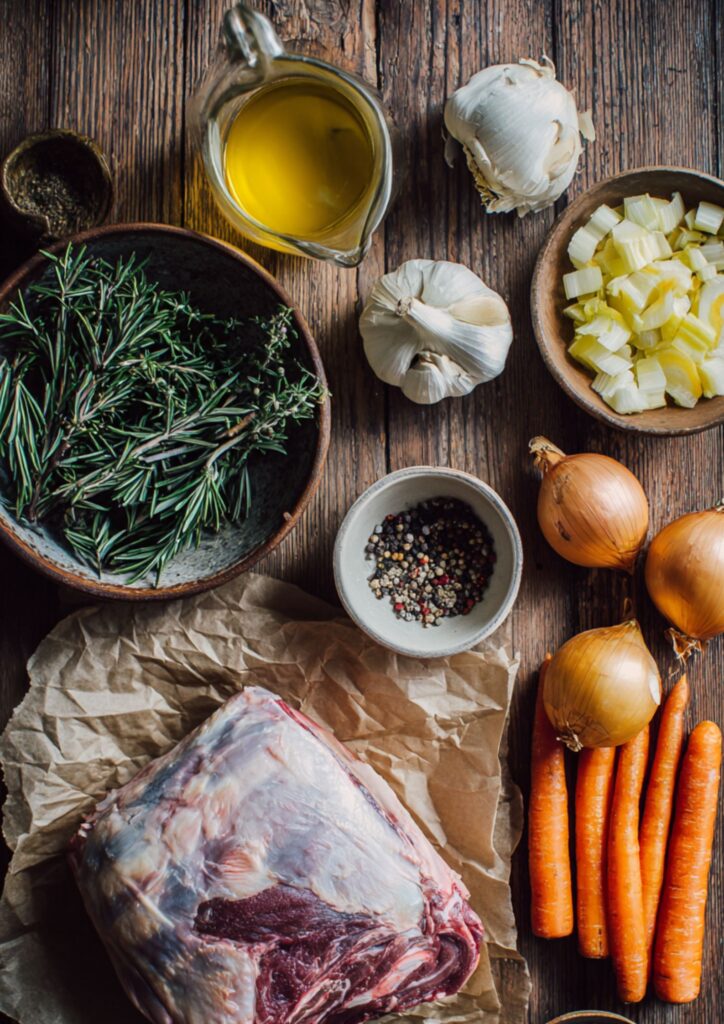
James Martin Slow Cooked Lamb Ingredients
- 2kg – 2.5kg Whole Lamb Shoulder: Bone-in.
- 1 Bulb of Garlic
- 1 Large Bunch Fresh Rosemary
- 2 Large Onions
- 2 Carrots
- 1 Leek
- 500ml Chicken or Lamb Stock: Hot.
- 200ml White Wine
- 2 tbsp Olive Oil: For rubbing.
- Salt & Black Pepper: Generous amounts.
How To Make James Martin Slow Cooked Lamb
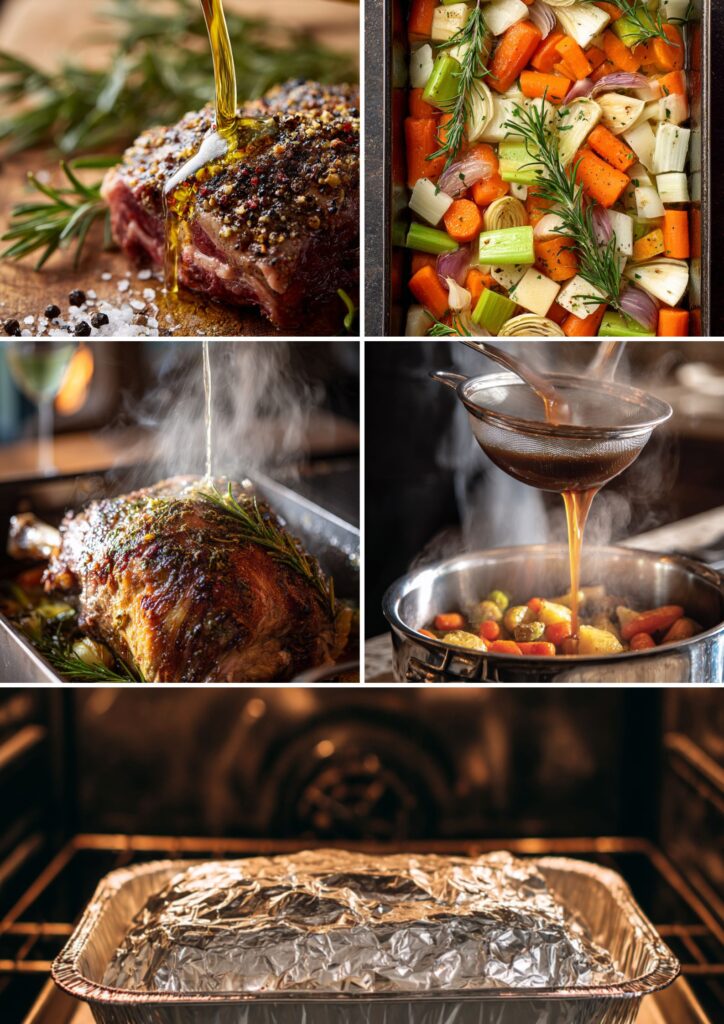
- Prep the Meat: Preheat your oven to 170°C (325°F). Take a small sharp knife and make small incisions all over the surface of the lamb shoulder. Push a slice of garlic and a small sprig of rosemary deep into each slit.
- Season: Drizzle the olive oil over the lamb and massage it in. Season generously with salt and freshly cracked black pepper.
- Prepare the Trivet: In a large, deep roasting tin, scatter the chopped onions, carrots, leeks, and the remaining whole garlic cloves. This creates a bed for the lamb to sit on.
- Assemble: Place the lamb shoulder on top of the vegetables. Pour the white wine and the hot stock into the tin (pour around the lamb, not over it, so you don’t wash off the seasoning).
- The Slow Roast: Cover the tray tightly with a layer of baking parchment followed by a layer of aluminum foil. Seal the edges well to keep the steam in. Roast in the oven for 4 hours.
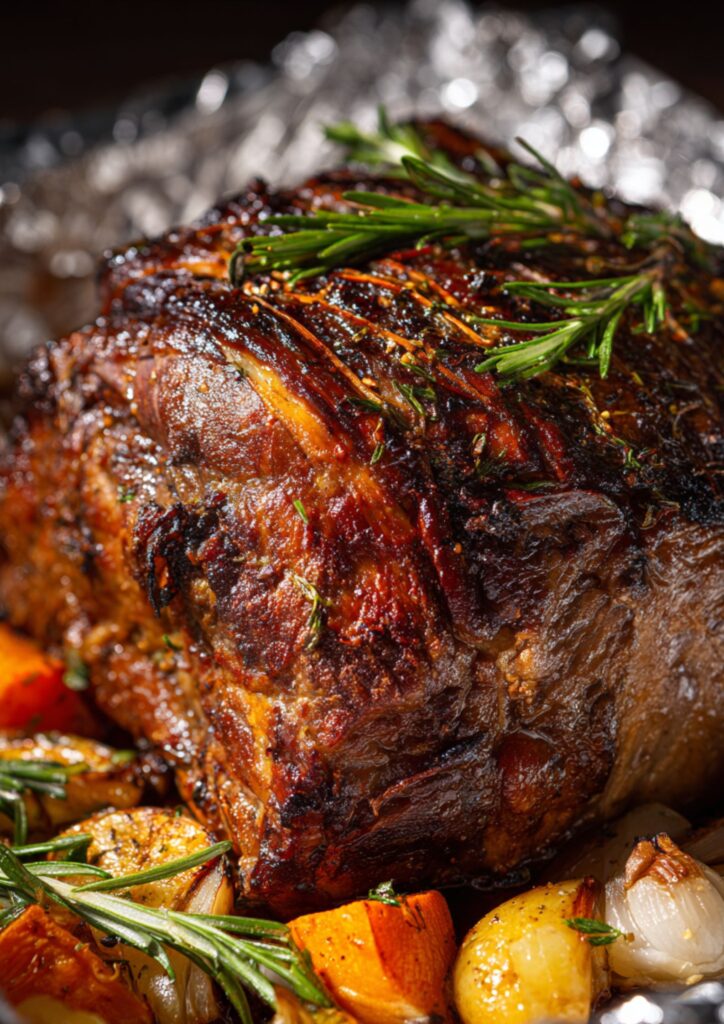
- Brown the Skin: After 4 hours, remove the foil and parchment. Turn the oven up to 200°C (400°F). Roast for a further 30–45 minutes until the skin is crisp and browned.
- Rest: Remove the lamb from the tin and transfer to a warm platter. Cover loosely with foil and let it rest for at least 20–30 minutes. This is crucial for the juices to settle.
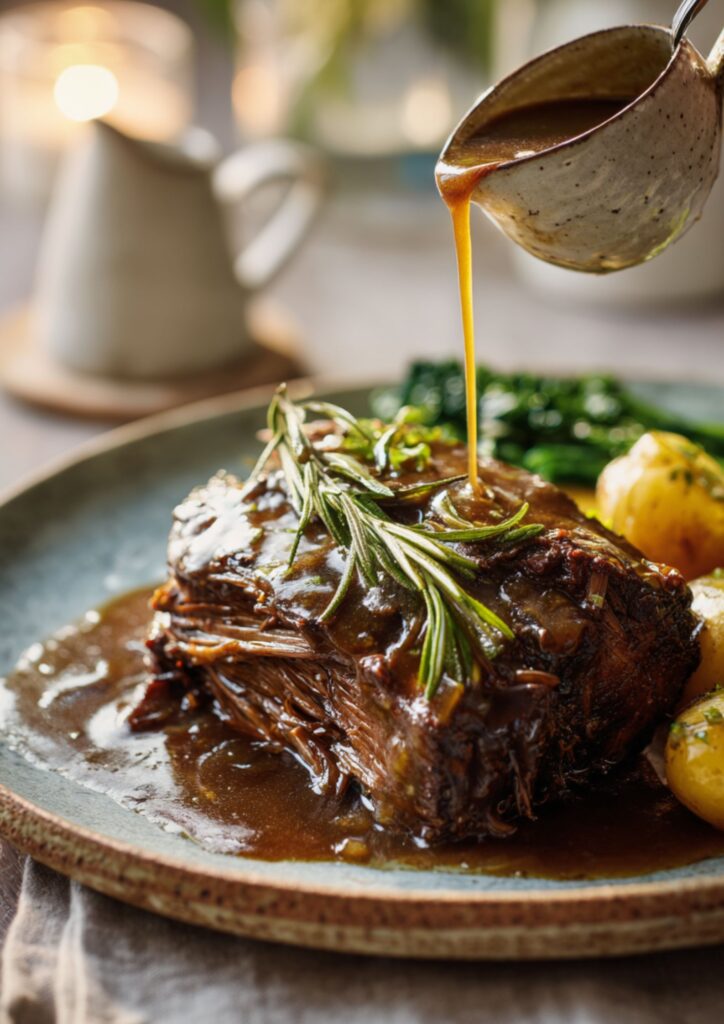
- The Gravy: While the meat rests, strain the juices from the roasting tin into a saucepan (pushing down on the veg to extract flavor). Skim off any excess fat floating on top. Simmer the liquid until reduced and thickened (add a splash of cornflour slurry if you like it thicker).
Recipe Tips
- Bone-In is Best: Always ask your butcher for the bone to be left in. It acts as a heat conductor and adds significant flavor to the sauce.
- Don’t Rush the Rest: Because the meat has been cooked at a high temperature at the end to crisp up, it needs a long rest to relax. If you cut it too soon, the juices will run out.
- Skim the Fat: Lamb shoulder is fatty. You will likely find a layer of clear oil on top of your pan juices. Use a spoon or a fat separator jug to remove this before making the gravy, or the sauce will be greasy.
- The “Pull” Test: You know it’s done when you can gently pull the meat away from the bone with a fork with zero resistance.
What To Serve With James Martin Slow Cooked Lamb?
This rich Slow Cooked Lamb needs sides that can stand up to the flavor. James Martin’s Roast Potatoes or a creamy Dauphinoise Potato are excellent pairings. For greens, serve with buttered kale or minted peas to cut through the richness. The gravy made from the pan juices is non-negotiable.
How To Store Leftovers Slow Cooked Lamb?
- Fridge: Shred the leftover meat and store it in an airtight container with a little gravy to keep it moist. It lasts 3–4 days.
- Freezer: Lamb freezes beautifully. Store in portion-sized bags for up to 3 months.
- Uses: Leftovers are perfect for Shepherd’s Pie, lamb ragu for pasta, or stuffed into pitas with tzatziki.
How To Reheat Leftovers Slow Cooked Lamb?
- Oven: Place meat in a dish with a splash of water or gravy, cover with foil, and heat at 180°C for 20 minutes.
- Pan-Fry: For a crispy treat, fry shredded cold lamb in a hot pan until crispy (great for tacos or salads).
FAQs
You can, but reduce the cooking time. Leg is leaner and can dry out if cooked for 5 hours. Shoulder is superior for this method.
No, you can replace the wine with extra stock and a splash of Worcestershire sauce or balsamic vinegar for acidity.
Brown the lamb in a pan first, then place on the veg in the slow cooker with the liquid. Cook on Low for 8–10 hours.
Try More Recipes:
Slow Cooked Lamb Nutrition Facts
- Calories: ~550 kcal
- Total Fat: 38g
- Saturated Fat: 16g
- Cholesterol: 130mg
- Sodium: 450mg
- Total Carbohydrate: 5g
- Protein: 45g
James Martin Slow Cooked Lamb
Course: Main, Lunch, DinnerCuisine: British, FrenchDifficulty: Easy4
servings20
minutes4
hours45
minutes550
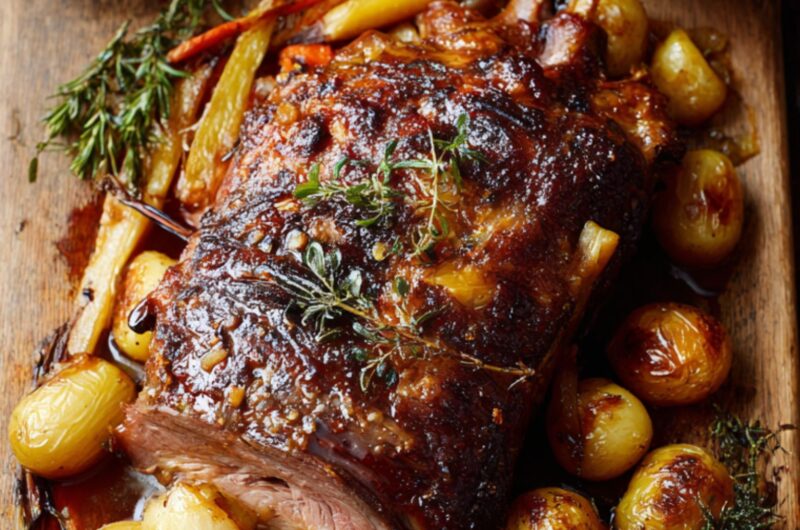
kcalJames Martin Slow Cooked Lamb transforms a humble shoulder of lamb into a meltingly tender masterpiece. Studded with garlic and rosemary and roasted over a bed of aromatics and wine, the meat becomes soft enough to eat with a spoon, creating its own rich gravy in the process.
Ingredients
2kg – 2.5kg Whole Lamb Shoulder: Bone-in.
1 Bulb of Garlic
1 Large Bunch Fresh Rosemary
2 Large Onions
2 Carrots
1 Leek
500ml Chicken or Lamb Stock: Hot.
200ml White Wine
2 tbsp Olive Oil: For rubbing.
Salt & Black Pepper: Generous amounts.
Directions
- Prep the Meat: Preheat your oven to 170°C (325°F). Take a small sharp knife and make small incisions all over the surface of the lamb shoulder. Push a slice of garlic and a small sprig of rosemary deep into each slit.
- Season: Drizzle the olive oil over the lamb and massage it in. Season generously with salt and freshly cracked black pepper.
- Prepare the Trivet: In a large, deep roasting tin, scatter the chopped onions, carrots, leeks, and the remaining whole garlic cloves. This creates a bed for the lamb to sit on.
Assemble: Place the lamb shoulder on top of the vegetables. Pour the white wine and the hot stock into the tin (pour around the lamb, not over it, so you don’t wash off the seasoning).- The Slow Roast: Cover the tray tightly with a layer of baking parchment followed by a layer of aluminum foil. Seal the edges well to keep the steam in. Roast in the oven for 4 hours.
- Brown the Skin: After 4 hours, remove the foil and parchment. Turn the oven up to 200°C (400°F). Roast for a further 30–45 minutes until the skin is crisp and browned.
- Rest: Remove the lamb from the tin and transfer to a warm platter. Cover loosely with foil and let it rest for at least 20–30 minutes. This is crucial for the juices to settle.
- The Gravy: While the meat rests, strain the juices from the roasting tin into a saucepan (pushing down on the veg to extract flavor). Skim off any excess fat floating on top. Simmer the liquid until reduced and thickened (add a splash of cornflour slurry if you like it thicker).
Notes
- Bone-In is Best: Always ask your butcher for the bone to be left in. It acts as a heat conductor and adds significant flavor to the sauce.
Don’t Rush the Rest: Because the meat has been cooked at a high temperature at the end to crisp up, it needs a long rest to relax. If you cut it too soon, the juices will run out.
Skim the Fat: Lamb shoulder is fatty. You will likely find a layer of clear oil on top of your pan juices. Use a spoon or a fat separator jug to remove this before making the gravy, or the sauce will be greasy.
The “Pull” Test: You know it’s done when you can gently pull the meat away from the bone with a fork with zero resistance.