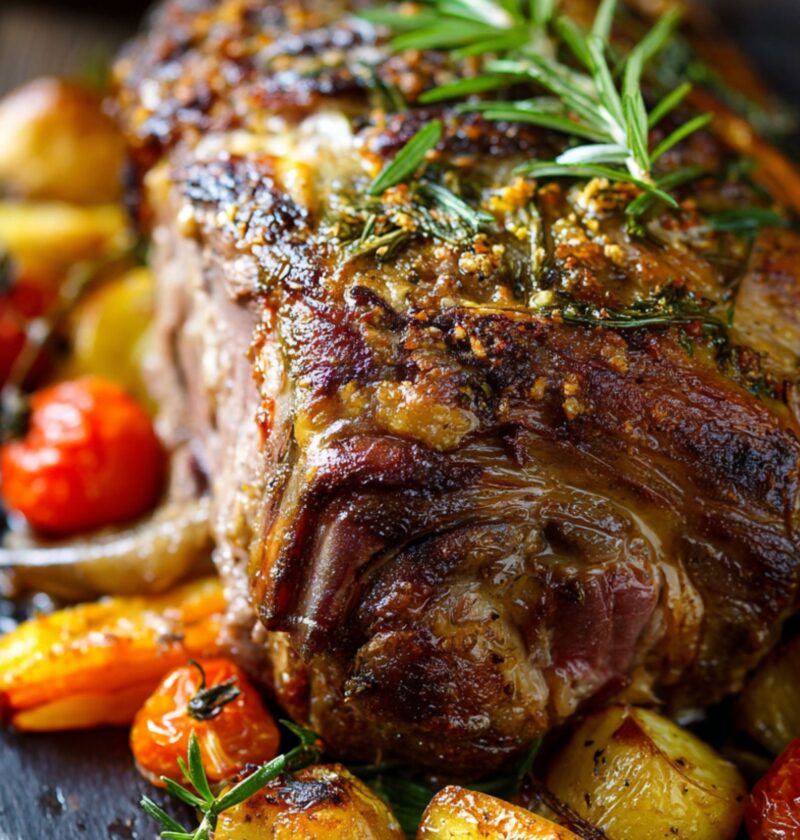
James Martin Slow Roast Shoulder Of Lamb is made with fresh rosemary, garlic, and a rich red wine gravy, ready in just under 5 hours. The meat becomes so tender that you can pull the bone out cleanly with your fingers and carve it with a spoon. I love how the house smells of roasting herbs while the oven does all the hard work for me.
Try More Recipes:
Why This Classic Slow Roast Shoulder of Lamb Works:
- Shoulder of lamb is a working muscle, which means it is full of connective tissue and marbling that can be tough if cooked quickly. By cooking it at a lower temperature for a longer time—often called “low and slow”—that collagen breaks down into gelatin, basting the meat from the inside out. This is why James Martin’s method is so reliable; it transforms an economical cut into something far superior to a quick-roasted leg.
- I used to rush my roasts, thinking higher heat meant faster dinner, but I learned the hard way that you simply cannot hurry a shoulder. The secret lies in the double-cooking method: steaming it gently under foil first to tenderise the meat, then blasting it with heat at the end to caramelise the skin. It guarantees that sticky, savoury finish everyone fights over.
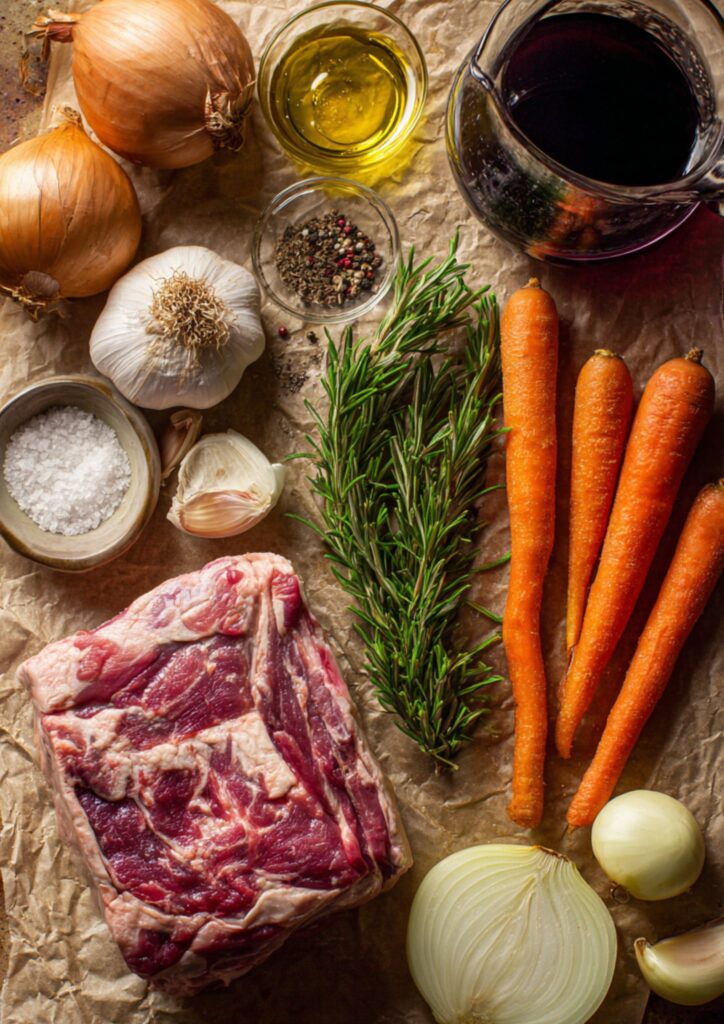
James Martin Slow Roast Shoulder of Lamb Ingredients
- 2kg lamb shoulder: Bone-in is essential for flavour and heat conduction.
- 1 whole garlic bulb: Halved horizontally (skin on) to roast in the gravy.
- 2 large onions: Roughly chopped or halved to create a trivet.
- 2 carrots: Roughly chopped (optional, but adds sweetness to the sauce).
- 1 bunch fresh rosemary: Woody herbs stand up best to long cooking times.
- 300ml red wine: A full-bodied red like Merlot or Shiraz works best.
- 500ml lamb or chicken stock: Use good quality stock for a rich gravy.
- Olive oil: For rubbing the meat.
- Sea salt and black pepper: Be generous with the seasoning.
How To Make James Martin Slow Roast Shoulder of Lamb
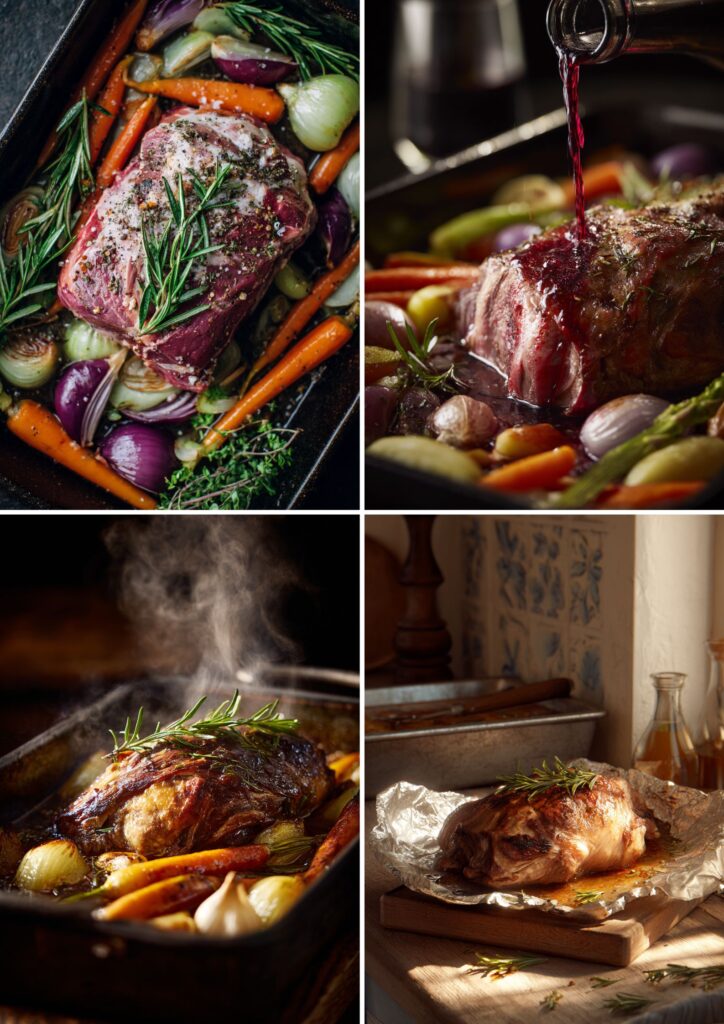
- Prep the Meat: Preheat your oven to 170°C (150°C Fan). Take a small sharp knife and make small incisions all over the fatty side of the lamb. Poke small sprigs of rosemary and slivers of garlic (from 2-3 cloves) deep into these holes.
- Build the Trivet: In a deep roasting tin, scatter the onions, carrots, and the remaining garlic bulb halves. This bed of vegetables prevents the lamb from sticking and flavours the juices.
- Season and Sear: Rub the lamb all over with olive oil and season generously with salt and pepper. Place it on top of the vegetables. (James often skips pan-searing the shoulder if roasting for a long time, as the final blast browns it sufficiently).
- Add Liquid: Pour the red wine and stock around the meat—not over it, so you don’t wash off the seasoning. Cover the entire tin tightly with baking parchment, then a layer of foil. seal the edges well to keep the steam in.
- The Slow Roast: Cook in the oven for 4 hours. Do not open the door during this time; you need consistent gentle heat to break down the fibers.
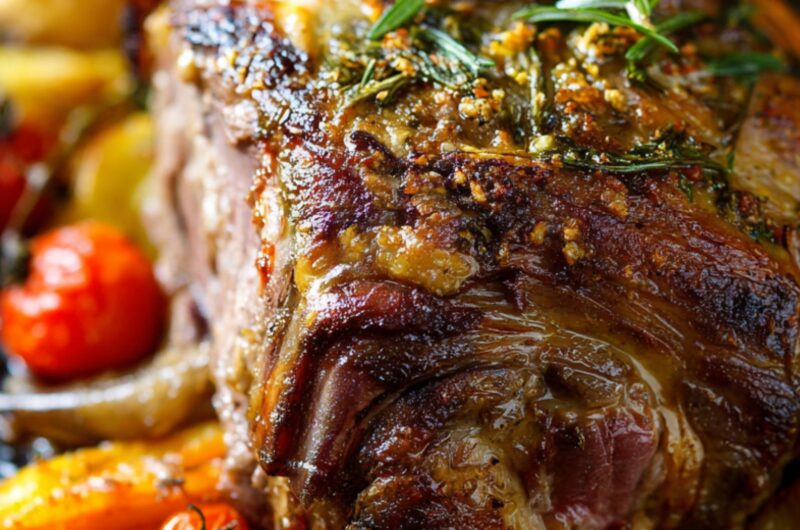
- Crisp the Skin: Remove the tin from the oven and discard the foil and parchment. Turn the oven up to 200°C (180°C Fan). Baste the meat with the juices and return it to the oven uncovered for 30–45 minutes until the skin is dark golden and crispy.
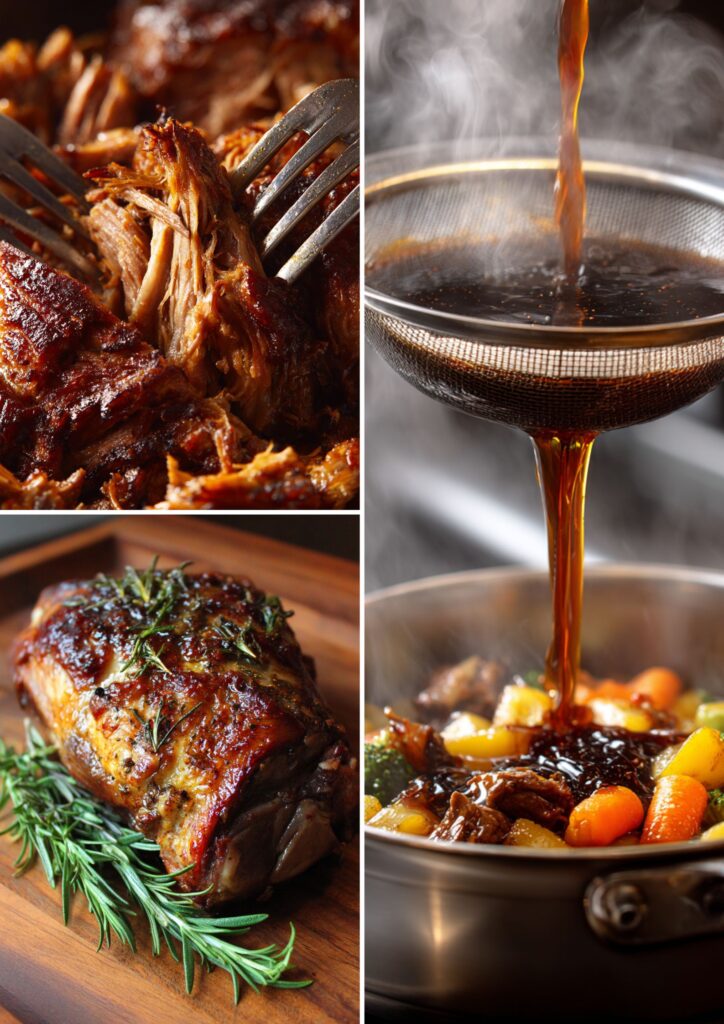
- Rest and Serve: Transfer the lamb to a warm board and cover loosely with foil. Let it rest for at least 30 minutes. Strain the pan juices into a saucepan, skim off the excess fat, and reduce slightly for a delicious gravy.
Recipe Tips
- Room temperature meat: Take the lamb out of the fridge an hour before cooking. Cold meat seizes up in a hot oven, which can make the cooking uneven.
- Don’t skip the seal: When covering the tin with foil, ensure it is airtight. If steam escapes, the lamb will dry roast instead of braising in its own juices, leading to a tougher texture.
- The spoon test: You know the lamb is ready when you can push a spoon into the thickest part of the meat with zero resistance. If it feels springy, cover it back up and give it another 30 minutes.
What To Serve With Slow Roast Shoulder of Lamb ?
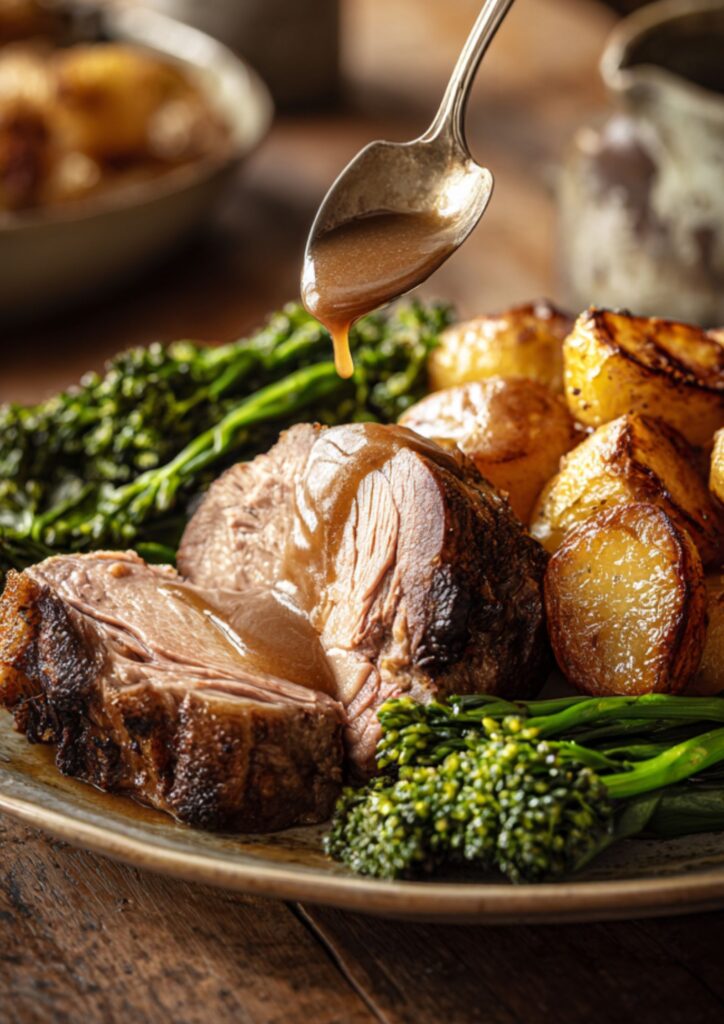
Since the oven is already on, Boulangère potatoes are a classic pairing that James Martin often recommends; they cook in stock and absorb all the savoury aromas. Alternatively, crisp roast potatoes and simple buttered seasonal greens like kale or purple sprouting broccoli help cut through the richness of the lamb fat.
How To Store Leftovers Slow Roast Shoulder of Lamb?
- Refrigerate: Place the cooled lamb in an airtight container along with a splash of its roasting juices to keep it moist for up to 4 days.
- Freeze: Store the shredded or sliced meat in a freezer-safe bag with a little broth or gravy for up to 3 months. Thaw overnight in the fridge before reheating.
How To Reheat Leftovers Slow Roast Shoulder of Lamb?
- Oven (Best Method): Place the lamb in a baking dish with a splash of broth or water, cover tightly with foil, and warm at 325°F (160°C) for 15 to 20 minutes.
- Stovetop: Heat shredded or sliced meat gently in a skillet with leftover gravy over medium-low heat for 5 to 8 minutes until heated through.
- Microwave: Warm individual portions on a microwave-safe plate covered with a damp paper towel in 30-second intervals to prevent the lamb from getting tough.
FAQs
Yes, but it cooks slightly faster. Check it after 3 hours. The bone adds flavour and helps the meat cook evenly, so stick to bone-in if you can find it.
Absolutely. Sear the veg and meat first, then place everything in the slow cooker with reduced liquid (use half the stock). Cook on Low for 8 hours.
It likely hasn’t cooked long enough. Shoulder needs time for the collagen to dissolve. If it’s tough, it needs more time in the oven, not less.
Try More Recipes:
Slow Roast Shoulder of Lamb Nutrition Facts
- Calories: 580 kcal
- Total Fat: 38g
- Saturated Fat: 16g
- Cholesterol: 120mg
- Sodium: 450mg
- Total Carbohydrate: 8g
- Protein: 42g
James Martin Slow Roast Shoulder Of Lamb
Course: Lamb, Main, LunchCuisine: BritishDifficulty: Medium6
servings20
minutes35
minutes580
kcal55
minutesThis tender James Martin Slow Roast Shoulder Of Lamb falls off the bone after cooking low and slow with red wine and garlic. Ready in 5 hours, it’s the ultimate Sunday comfort food that feeds a crowd easily.
Ingredients
2kg lamb shoulder (bone-in)
1 whole garlic bulb
2 large onions
2 carrots
1 bunch fresh rosemary
300ml red wine
500ml lamb or chicken stock
Olive oil
Sea salt and black pepper
Directions
- Prep the Meat: Preheat your oven to 170°C (150°C Fan). Take a small sharp knife and make small incisions all over the fatty side of the lamb. Poke small sprigs of rosemary and slivers of garlic (from 2-3 cloves) deep into these holes.
- Build the Trivet: In a deep roasting tin, scatter the onions, carrots, and the remaining garlic bulb halves. This bed of vegetables prevents the lamb from sticking and flavours the juices.
- Season and Sear: Rub the lamb all over with olive oil and season generously with salt and pepper. Place it on top of the vegetables.
- Add Liquid: Pour the red wine and stock around the meat—not over it, so you don’t wash off the seasoning. Cover the entire tin tightly with baking parchment, then a layer of foil. seal the edges well to keep the steam in.
- The Slow Roast: Cook in the oven for 4 hours. Do not open the door during this time; you need consistent gentle heat to break down the fibers.
- Crisp the Skin: Remove the tin from the oven and discard the foil and parchment. Turn the oven up to 200°C (180°C Fan). Baste the meat with the juices and return it to the oven uncovered for 30–45 minutes until the skin is dark golden and crispy.
- Rest and Serve: Transfer the lamb to a warm board and cover loosely with foil. Let it rest for at least 30 minutes. Strain the pan juices into a saucepan, skim off the excess fat, and reduce slightly for a delicious gravy.
Notes
- Room temperature meat: Take the lamb out of the fridge an hour before cooking. Cold meat seizes up in a hot oven, which can make the cooking uneven.
Don’t skip the seal: When covering the tin with foil, ensure it is airtight. If steam escapes, the lamb will dry roast instead of braising in its own juices, leading to a tougher texture.
The spoon test: You know the lamb is ready when you can push a spoon into the thickest part of the meat with zero resistance. If it feels springy, cover it back up and give it another 30 minutes.