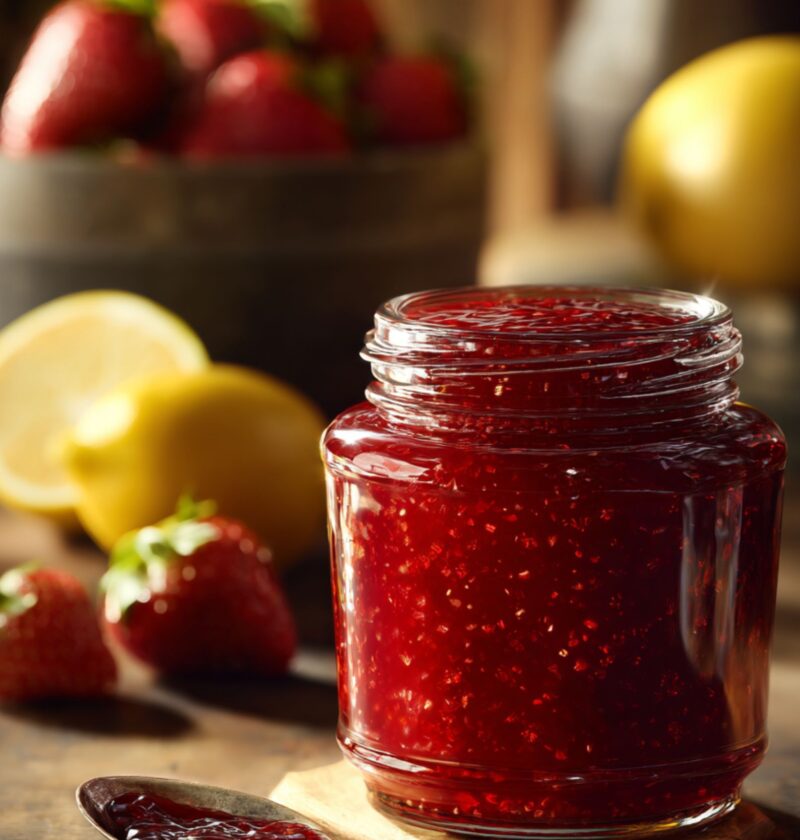
James Martin Strawberry Jam is a celebration of the British summer. James is a staunch believer that homemade jam is vastly superior to store-bought, not just in flavor but in texture. His recipe focuses on keeping the strawberries whole or in large chunks, resulting in a “soft set” preserve that feels luxurious and handmade. He avoids commercial pectin, relying instead on the natural pectin in lemon juice and jam sugar to achieve that perfect, spreadable consistency without turning it into rubber.
Try More Recipes:
Why You Will Love This Strawberry Jam Recipe:
- Whole Fruit Texture: Unlike the uniform mush of supermarket jars, this jam is packed with identifiable pieces of strawberry.
- The “Soft Set”: It doesn’t set hard like jelly; it remains slightly loose and spoonable, perfect for cascading down the side of a scone.
- Vibrant Color: By boiling rapidly for a short time, the strawberries retain their bright ruby red color rather than turning brown.
- Simplicity: It uses just three ingredients: fruit, sugar, and lemon. No thermometers are strictly necessary if you use the “wrinkle test.”
James Martin Strawberry Jam Ingredients
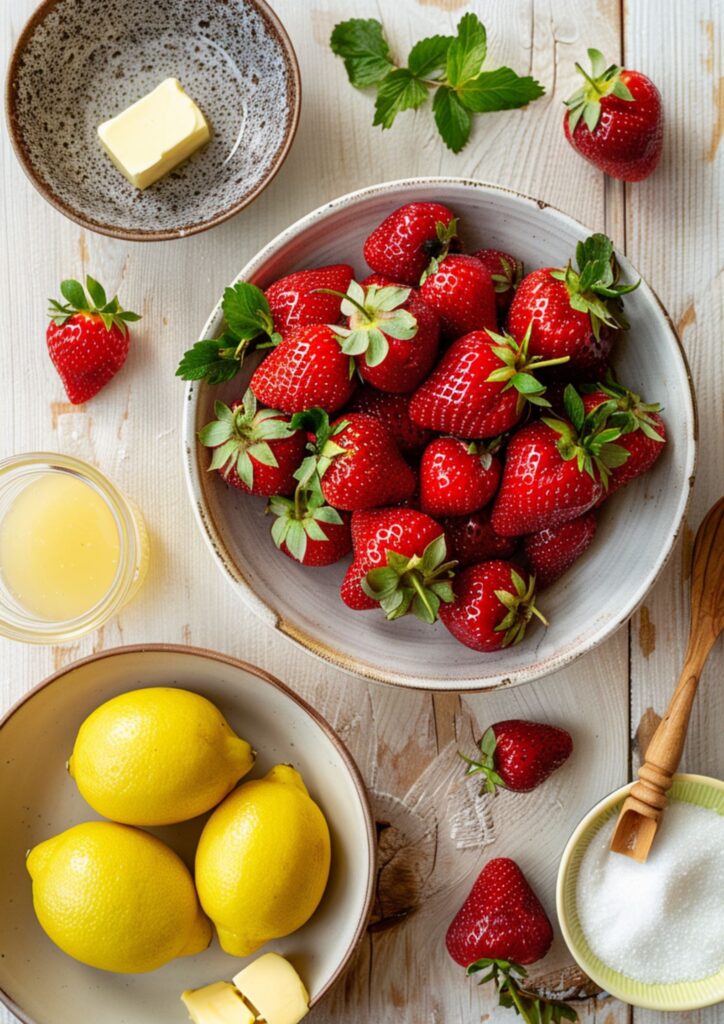
- 1 kg Strawberries
- 1 kg Jam Sugar
- Juice of 1 Lemon: Freshly squeezed.
- 1 Knob of Butter: (Approx 10g) salted or unsalted.
How To Make James Martin Strawberry Jam
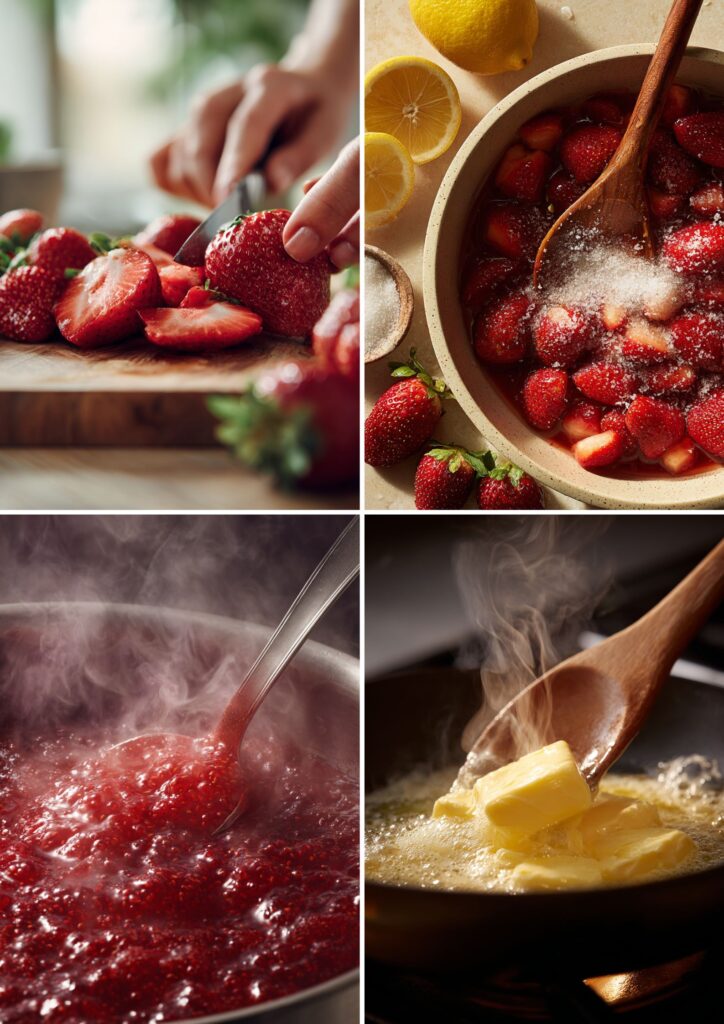
- Prep the Fruit: Hull the strawberries. If they are small, leave them whole. If they are large, cut them in half or quarters. Place them in a very large, deep saucepan or preserving pan.
- Macerate (Optional but Recommended): Pour the sugar over the strawberries and give them a gentle stir. Leave them to sit for 20 minutes (or up to overnight). This draws the juices out of the fruit and starts to dissolve the sugar before you even turn on the heat.
- Dissolve: Place the pan over low heat. Add the lemon juice. Stir gently until the sugar has completely dissolved. Do not let it boil until you can no longer feel grains of sugar on the bottom of the pan.
- The Rolling Boil: Once the sugar is dissolved, crank the heat up to high. Bring the mixture to a “rolling boil”—a boil that doesn’t stop when you stir it. Boil rapidly for 8–10 minutes.
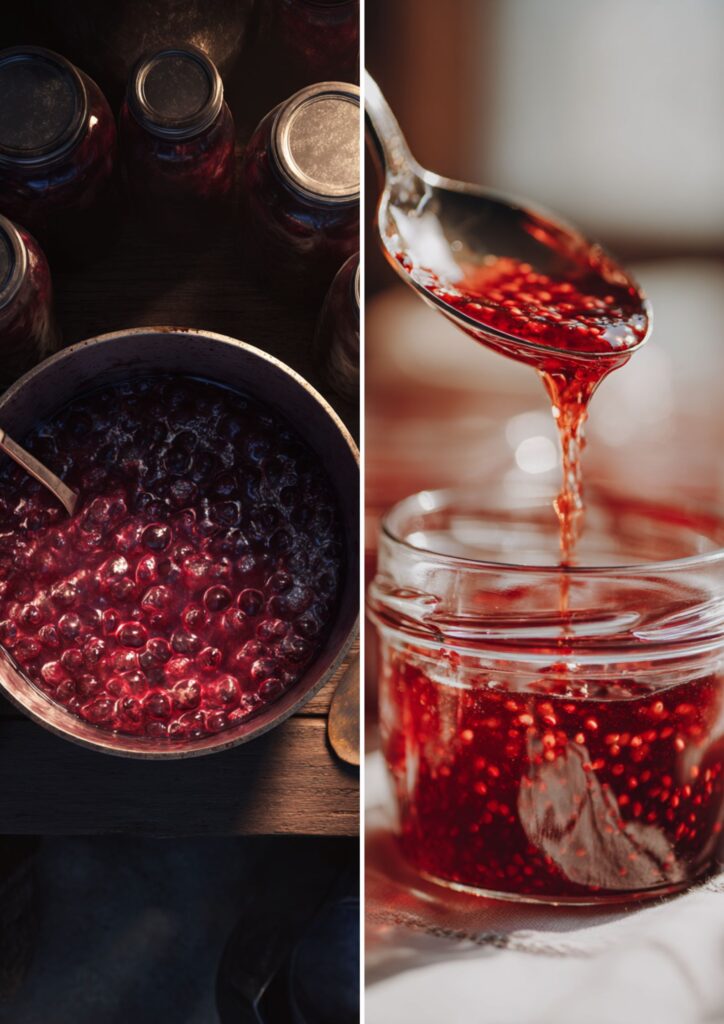
- The Wrinkle Test: To check if it’s set, place a teaspoon of the hot jam on a chilled saucer (put one in the freezer before you start). Let it cool for a minute, then push it with your finger. If the surface wrinkles, it is ready. If it is still liquid, boil for another 2 minutes and test again.
- The Butter Trick: Once the setting point is reached, remove the pan from the heat. You will likely see a pink foam (scum) on top. Stir in the knob of butter; the foam will magically disappear.
- Cool Slightly: Let the jam sit in the pan for 10–15 minutes before potting. This is crucial. If you jar it immediately while piping hot, all the fruit will float to the top. Letting it thicken slightly ensures the fruit stays suspended evenly.
- Potting: Ladle into warm, sterilized jars. Seal immediately with a wax disc and a lid.
Recipe Tips
- Sterilizing Jars: Wash your jars in hot soapy water, rinse, and place them on a baking tray in a 140°C (285°F) oven for 10 minutes to dry and sterilize.
- Don’t Overcook: Strawberries are delicate. If you boil them for 20+ minutes, you lose the fresh flavor and bright color. Trust the high heat and short cooking time.
- Low Pectin Warning: If you cannot find Jam Sugar and use regular sugar, you might need to add a splash of commercial liquid pectin or cook it longer, but the texture won’t be quite the same.
- Batch Size: Don’t try to double the recipe. Jam needs surface area to evaporate water quickly. Making huge batches often leads to overcooked fruit and unset jam.
What To Serve With Strawberry Jam?
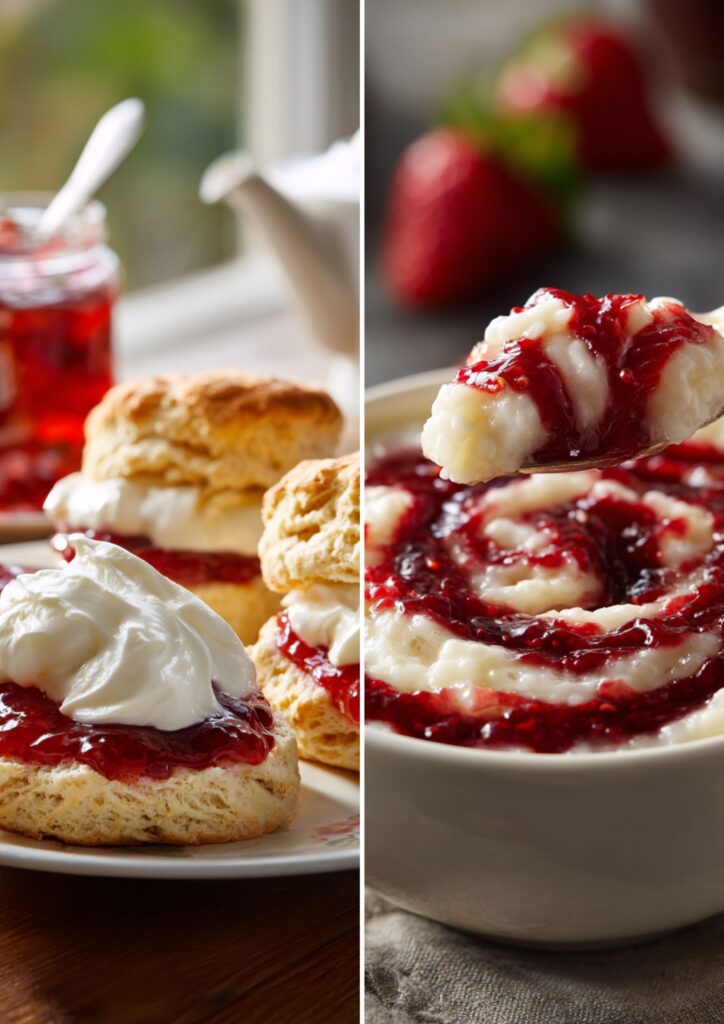
The classic partner is, of course, warm scones with clotted cream for a traditional Cream Tea. It is also exceptional swirled into rice pudding, spread on sourdough toast, or used as a filling for a Victoria Sponge Cake.
How To Store Leftovers Strawberry Jam?
- Unopened: Store in a cool, dark cupboard for up to 1 year. The color may darken slightly over time but the flavor remains.
- Opened: Once opened, store in the fridge and consume within 4–6 weeks.
How To Reheat Leftovers Strawberry Jam?
Caution: Melted jam gets extremely hot (like molten sugar). Let it cool slightly before tasting to avoid burns.
- Microwave (Quickest): Scoop into a bowl. Heat in 10–15 second intervals, stirring in between until liquid. Perfect for pouring over ice cream or pancakes.
- Stovetop: Warm gently in a small pan over low heat. Add a drop of water if it’s too thick.
FAQs
It didn’t reach the setting point (105°C). You can tip it back into the pan, bring it to a boil, and cook for another few minutes.
Yes. They will take longer to come to a boil as they release more water, but the result is still delicious.
You poured it into the jars while it was too hot and liquid. Letting it cool for 15 minutes thickens the syrup enough to hold the fruit in place.
Try More Recipes:
- James Martin Victoria sponge cake with raspberries
- James Martin Cherry Scones
- James Martin Crème Brûlée
Strawberry Jam Nutrition Facts (Per tablespoon)
- Calories: ~50 kcal
- Total Fat: 0g
- Saturated Fat: 0g
- Cholesterol: 0mg
- Sodium: 0mg
- Total Carbohydrate: 13g
- Protein: 0g
James Martin Strawberry Jam
Course: Condiment, Preserve, BreakfastCuisine: British, AmericanDifficulty: Easy4-5
Jars10
minutes15
minutes50
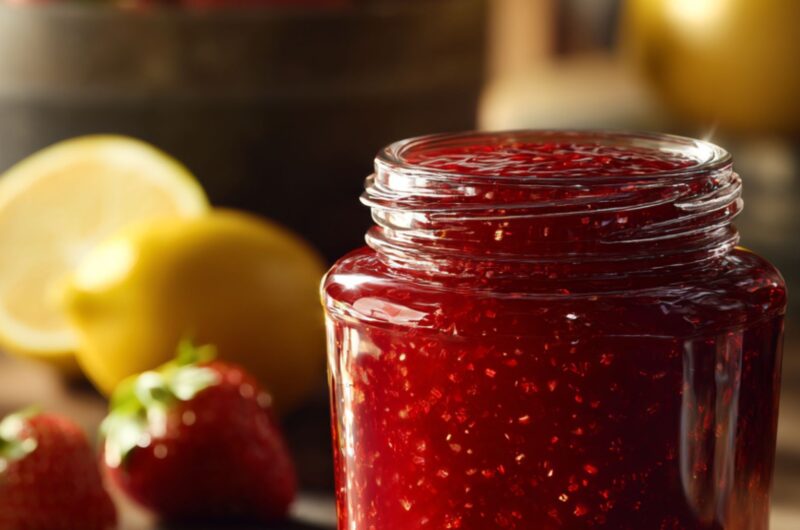
kcalJames Martin’s Strawberry Jam is a classic soft-set preserve. Using whole strawberries, jam sugar, and lemon juice, it retains chunks of fruit and a vibrant red color. The addition of a knob of butter at the end ensures a crystal-clear, glossy finish.
Ingredients
1 kg Strawberries
1 kg Jam Sugar
Juice of 1 Lemon: Freshly squeezed.
1 Knob of Butter: (Approx 10g) salted or unsalted.
Directions
- Prep the Fruit: Hull the strawberries. If they are small, leave them whole. If they are large, cut them in half or quarters. Place them in a very large, deep saucepan or preserving pan.
- Macerate (Optional but Recommended): Pour the sugar over the strawberries and give them a gentle stir. Leave them to sit for 20 minutes (or up to overnight). This draws the juices out of the fruit and starts to dissolve the sugar before you even turn on the heat.
- Dissolve: Place the pan over low heat. Add the lemon juice. Stir gently until the sugar has completely dissolved. Do not let it boil until you can no longer feel grains of sugar on the bottom of the pan.
- The Rolling Boil: Once the sugar is dissolved, crank the heat up to high. Bring the mixture to a “rolling boil”—a boil that doesn’t stop when you stir it. Boil rapidly for 8–10 minutes.
- The Wrinkle Test: To check if it’s set, place a teaspoon of the hot jam on a chilled saucer (put one in the freezer before you start). Let it cool for a minute, then push it with your finger. If the surface wrinkles, it is ready. If it is still liquid, boil for another 2 minutes and test again.
- The Butter Trick: Once the setting point is reached, remove the pan from the heat. You will likely see a pink foam (scum) on top. Stir in the knob of butter; the foam will magically disappear.
- Cool Slightly: Let the jam sit in the pan for 10–15 minutes before potting. This is crucial. If you jar it immediately while piping hot, all the fruit will float to the top. Letting it thicken slightly ensures the fruit stays suspended evenly.
- Potting: Ladle into warm, sterilized jars. Seal immediately with a wax disc and a lid.
Notes
- Sterilizing Jars: Wash your jars in hot soapy water, rinse, and place them on a baking tray in a 140°C (285°F) oven for 10 minutes to dry and sterilize.
Don’t Overcook: Strawberries are delicate. If you boil them for 20+ minutes, you lose the fresh flavor and bright color. Trust the high heat and short cooking time.
Low Pectin Warning: If you cannot find Jam Sugar and use regular sugar, you might need to add a splash of commercial liquid pectin or cook it longer, but the texture won’t be quite the same.
Batch Size: Don’t try to double the recipe. Jam needs surface area to evaporate water quickly. Making huge batches often leads to overcooked fruit and unset jam.