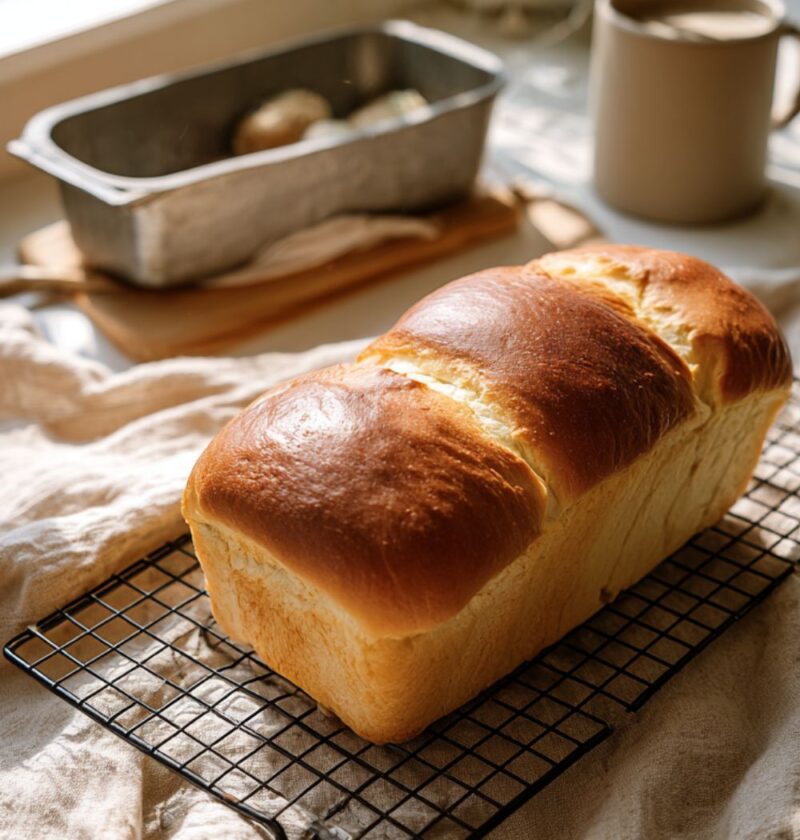
James Martin White Bread recipe is a masterclass in simplicity, proving that you don’t need a bread machine to make a bakery-quality loaf at home. Unlike store-bought bread, which is often laden with preservatives and sugar, this recipe uses just four key ingredients: flour, yeast, salt, and water. James Martin emphasizes the importance of “strong” flour and proper kneading to develop gluten, resulting in a loaf with a crisp, golden crust and a soft, airy crumb. It is the perfect everyday bread, robust enough for toast and sandwiches but delicate enough to eat warm with just a smear of butter.
Try more Recipes:
Why You Will Love This White Bread Recipe:
- Pantry Staples: You likely already have everything you need in your kitchen.
- The Crust: Baking at a high temperature initially creates a professional-style crust that crackles when you cut it.
- Texture: The olive oil (or butter) adds a subtle richness and keeps the crumb soft for days, unlike some homemade breads that go stale quickly.
- Versatile: This dough base can be shaped into a tin loaf, a rustic cob (round), or even divided into dinner rolls.
- Therapeutic Process: The kneading process is hands-on and satisfying, making it a great weekend project.
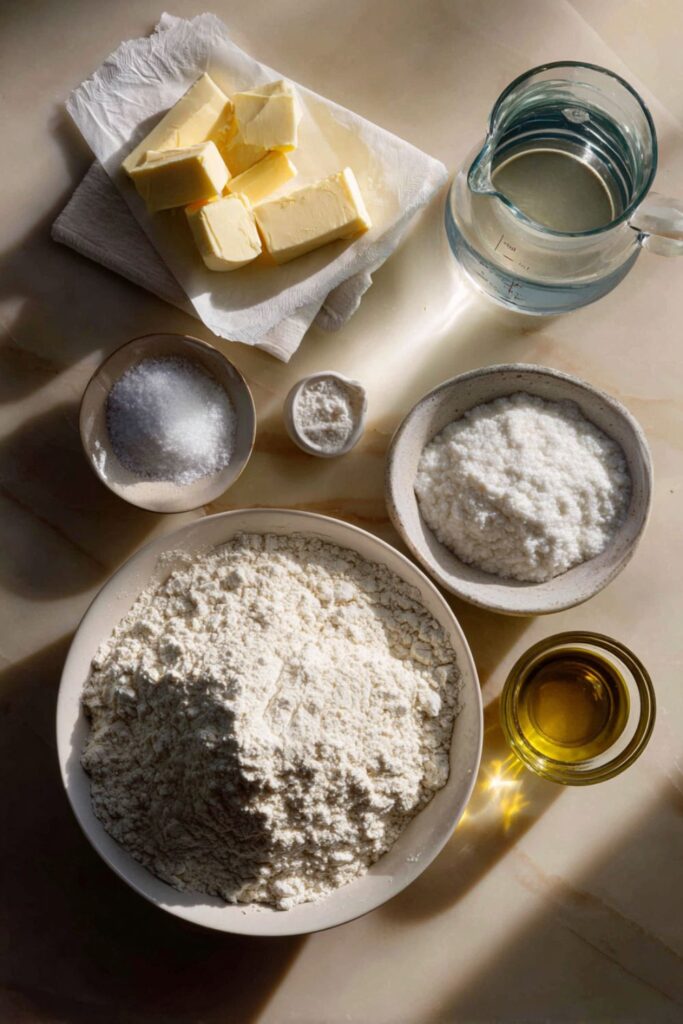
James Martin White Bread Ingredients
- 500g strong white bread flour (plus extra for dusting)
- 10g dried fast-action yeast (approx 1.5 sachets)
- 10g salt
- 30g butter (softened) or 30ml olive oil
- 300ml water (tepid/lukewarm – not hot, not cold)
How To Make James Martin White Bread
- Mix Dry Ingredients: Place the 500g of flour into a large mixing bowl (or the bowl of a stand mixer). Place the yeast on one side of the bowl and the salt on the opposite side.
- Critical Step: Keep the salt and yeast separate initially. Salt kills yeast if they touch directly before mixing.
- Add Wet Ingredients: Add the softened butter (or olive oil) and pour in 3/4 of the tepid water.
- Combine: Mix with your hands or a dough hook. Gradually add the remaining water as needed to pick up all the flour from the sides of the bowl. You want a soft dough that is slightly tacky but not wet.
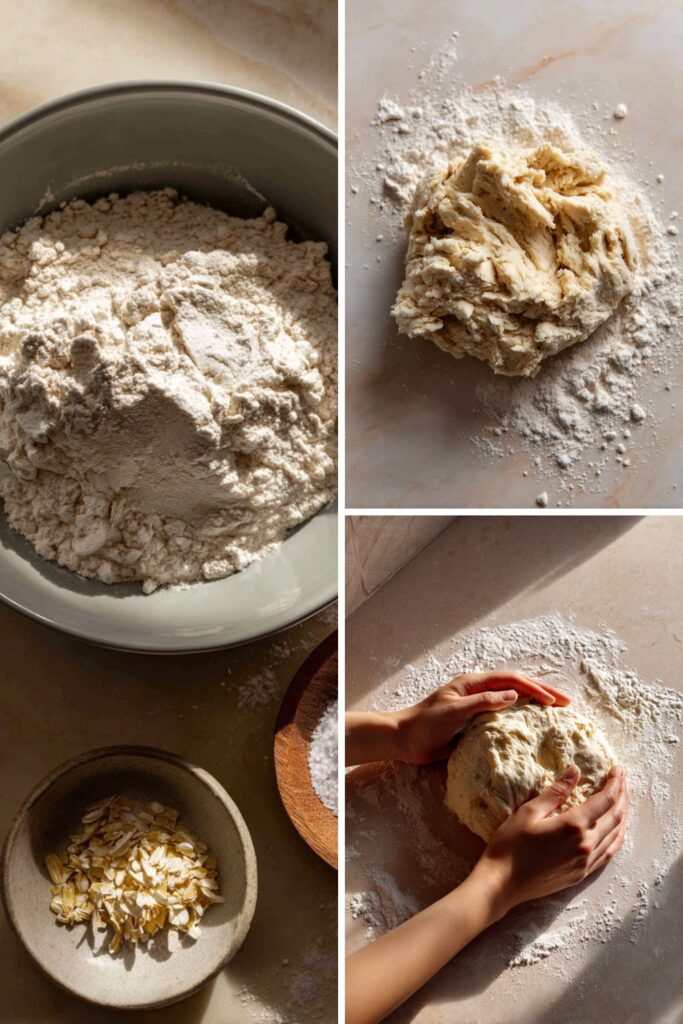
- Knead: Turn the dough out onto a lightly floured surface. Knead vigorously for 10 to 12 minutes. You are looking for a smooth, elastic dough that springs back when you poke it. (If using a mixer, 5-7 minutes on medium speed is sufficient).
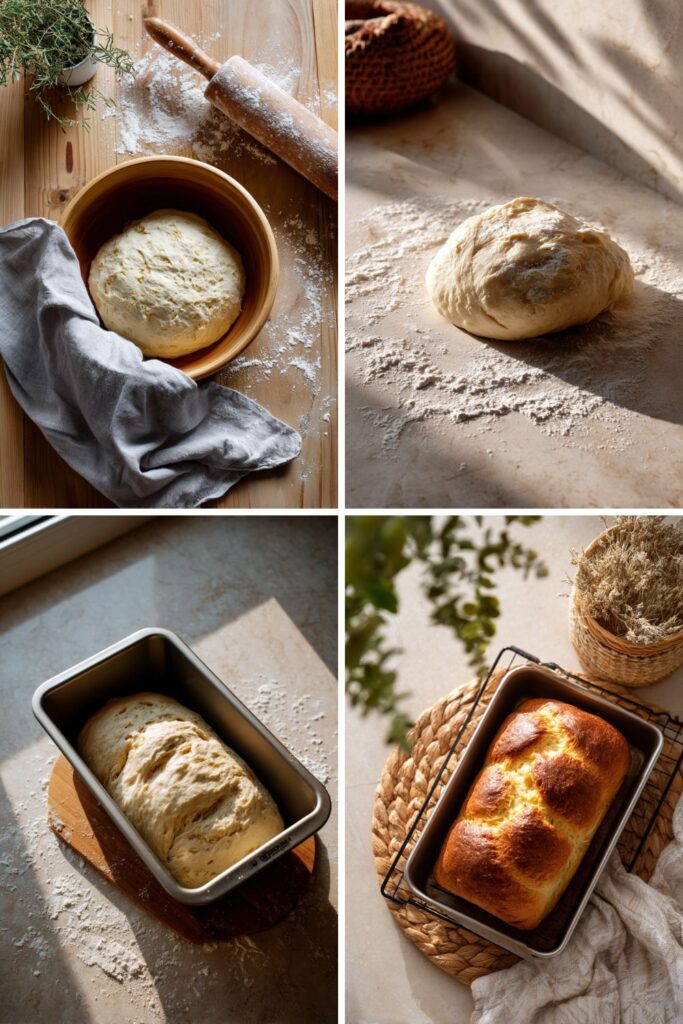
- First Rise (Proof): Lightly oil a large bowl. Place the dough inside and cover with a damp tea towel or cling film. Leave in a warm, draft-free place for 1 hour or until doubled in size.
- Shape: Tip the risen dough onto a floured surface. “Knock back” the dough by folding it inward repeatedly to push out the large air bubbles. Shape it into a smooth oval (for a tin) or a round ball. Place it into a greased 2lb loaf tin or onto a baking tray lined with parchment.
- Second Rise: Cover loosely with oiled cling film. Leave to rise again for 45 minutes to 1 hour. It should rise well above the rim of the tin.
- Preheat: While it rises, preheat your oven to 220°C (425°F) / Fan 200°C.
- Bake: Dust the top of the loaf with a little flour. Bake for 30 minutes.
- The Tap Test: The bread is done when it is golden brown and sounds hollow when you tap the bottom.
- Cool: Remove from the tin immediately and let it cool completely on a wire rack.
Recipe Tips
- Water Temperature: The water should be “blood temperature” (around 37°C). If you stick your finger in, it should feel neither hot nor cold. Too hot kills the yeast; too cold slows the rise.
- The Windowpane Test: To check if you have kneaded enough, tear off a small piece of dough and stretch it. If it stretches thin enough to see light through it without tearing, the gluten is ready.
- Steam for Crust: For an extra crusty loaf, place a roasting tray at the bottom of the oven while it preheats. When you put the bread in, throw a cup of water into the hot tray to create a burst of steam.
- Don’t Slice Hot: It is tempting, but slicing hot bread mashes the crumb and makes it gummy. Wait until it is cool.
What To Serve With White Bread Recipe?
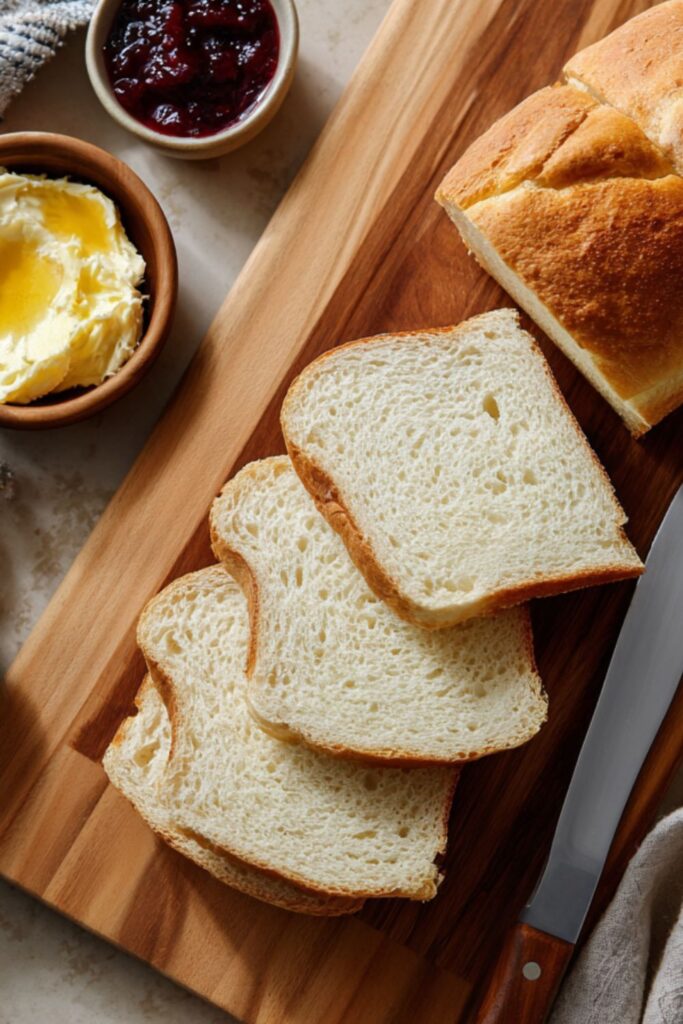
There is nothing better than a slice of this bread while still slightly warm, topped with salted butter and jam. It is also the ideal vehicle for a Bacon Sandwich or served alongside a hearty soup like Tomato Basil or Leek and Potato. For a rustic lunch, serve thick slices with a Ploughman’s Lunch (cheese, pickles, and cold meats).
How To Store Leftovers White Bread?
- Room Temperature: Store in a bread bin or wrapped in a cotton bread bag for up to 3 days. Avoid plastic bags, which soften the crust and encourage mold.
- Freeze: Slice the bread once cooled and freeze the slices in a ziplock bag. You can toast them straight from frozen.
How To Reheat Leftovers White Bread?
Important Rule (The “Microwave” Warning): Avoid the microwave if possible. Microwaving bread changes the gluten structure, making the loaf rubbery and chewy while hot, and rock-hard the second it cools down. If you have no other choice, wrap the slice in a damp paper towel and heat for only 10 seconds to keep it soft.
- Toaster: The best way to revive stale bread.
- Oven: Sprinkle the whole loaf (or chunk) with a little water and bake at 180°C for 5 to 10 minutes to refresh the crust.
FAQs
This usually means the yeast was old, the water was too hot, or it wasn’t left to prove (rise) long enough. It could also mean you didn’t knead it enough to develop the gluten.
Yes, but wholemeal flour is heavier. You may need a little more water, and the loaf will not rise quite as high. A 50/50 mix of white and wholemeal is a good compromise.
Yes; If using fresh yeast, use 20g. Crumble it into the flour or dissolve it in the tepid water first.
Try more Recipes:
White Bread Nutrition Facts
Serving Size: 1 slice (approx 1/12 of loaf)
- Calories: 160 kcal
- Total Fat: 3g
- Saturated Fat: 1.5g
- Cholesterol: 5mg
- Sodium: 300mg
- Total Carbohydrate: 30g
- Dietary Fiber: 1g
- Sugars: 1g
- Protein: 5g
James Martin White Bread
Course: Sides, Staple, Dinner, LunchCuisine: British, AmericanDifficulty: Easy12
servings20
minutes30
minutes120
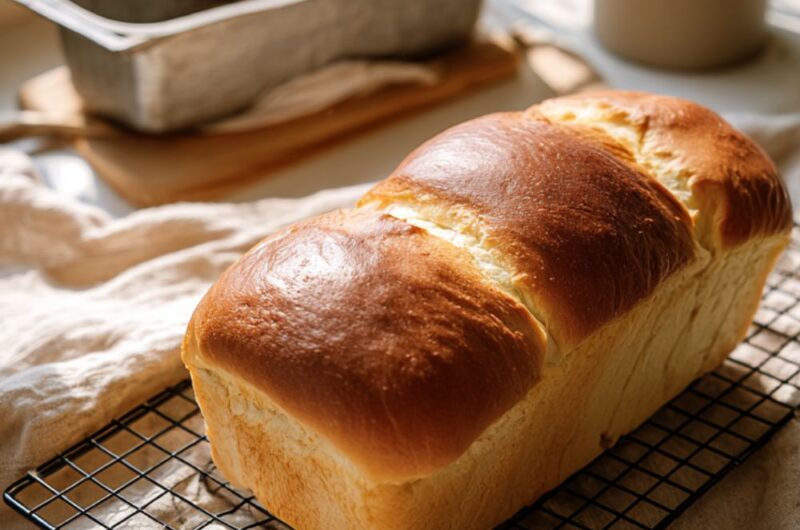
kcalJames Martin’s White Bread is a masterclass in honest, home baking. Using just four simple ingredients—flour, yeast, salt, and water—this recipe produces a classic farmhouse loaf that boasts a substantial, crackling crust and a soft, airy crumb that far surpasses anything you can buy at the supermarket.
Prep time: 20 mins (+ 2 hrs rise)
Ingredients
500g strong white bread flour (plus extra for dusting)
10g dried fast-action yeast (approx 1.5 sachets)
10g salt
30g butter (softened) or 30ml olive oil
300ml water (tepid/lukewarm – not hot, not cold)
Directions
- Mix Dry Ingredients: Place the 500g of flour into a large mixing bowl (or the bowl of a stand mixer). Place the yeast on one side of the bowl and the salt on the opposite side.
Critical Step: Keep the salt and yeast separate initially. Salt kills yeast if they touch directly before mixing. - Add Wet Ingredients: Add the softened butter (or olive oil) and pour in 3/4 of the tepid water.
- Combine: Mix with your hands or a dough hook. Gradually add the remaining water as needed to pick up all the flour from the sides of the bowl. You want a soft dough that is slightly tacky but not wet.
- Knead: Turn the dough out onto a lightly floured surface. Knead vigorously for 10 to 12 minutes. You are looking for a smooth, elastic dough that springs back when you poke it. (If using a mixer, 5-7 minutes on medium speed is sufficient).
- First Rise (Proof): Lightly oil a large bowl. Place the dough inside and cover with a damp tea towel or cling film. Leave in a warm, draft-free place for 1 hour or until doubled in size.
- Shape: Tip the risen dough onto a floured surface. “Knock back” the dough by folding it inward repeatedly to push out the large air bubbles. Shape it into a smooth oval (for a tin) or a round ball. Place it into a greased 2lb loaf tin or onto a baking tray lined with parchment.
- Second Rise: Cover loosely with oiled cling film. Leave to rise again for 45 minutes to 1 hour. It should rise well above the rim of the tin.
- Preheat: While it rises, preheat your oven to 220°C (425°F) / Fan 200°C.
- Bake: Dust the top of the loaf with a little flour. Bake for 30 minutes.
The Tap Test: The bread is done when it is golden brown and sounds hollow when you tap the bottom. - Cool: Remove from the tin immediately and let it cool completely on a wire rack.
Notes
- Water Temperature: The water should be “blood temperature” (around 37°C). If you stick your finger in, it should feel neither hot nor cold. Too hot kills the yeast; too cold slows the rise.
The Windowpane Test: To check if you have kneaded enough, tear off a small piece of dough and stretch it. If it stretches thin enough to see light through it without tearing, the gluten is ready.
Steam for Crust: For an extra crusty loaf, place a roasting tray at the bottom of the oven while it preheats. When you put the bread in, throw a cup of water into the hot tray to create a burst of steam.
Don’t Slice Hot: It is tempting, but slicing hot bread mashes the crumb and makes it gummy. Wait until it is cool.